





It’s no surprise that Shoreditch, with its rich musical legacy and vibrant cultural energy, is the setting for Asian Tones’ latest live show. At the heart of it all is Anna Hazarika, the visionary founder of the platform spotlighting artists across the Asian diaspora. What began as a humble Instagram curation has since grown into a powerful movement, reshaping line-ups, challenging industry norms, and building community through music. You can feel the pulse of Asian Tones in venues like 93 Feet East, which we also featured in our roundup of the best live music venues in Shoreditch.We caught up with Anna Hazarika to dive into her story, her ethos, and what comes next.
What inspired you to create Asian Tones, and did you ever imagine it would grow into what it is today?
I discovered artists such as Joy Crookes, Griff, Priya Ragu, Rina Sawayama etc. and a part of me realised that I wanted to make more of an effort to find artists of a shared heritage across different genres. The instagram initially was just to share my findings, a kind of keeping accountability I guess! It didn’t take too long before newer/emerging artists started to ask if they could be featured, I thought why not.
And no, definitely not! It’s all been a somewhat natural evolution. Alongside the instagram, I started live shows – for me live music is one of the best forms of music discovery, therapy and fun. When lllp get the absolutely wonderful comments of how the platform/shows have inspired artists, made them feel like they have a place and generally supported – you want to keep developing this special space you’ve created.
How has the British-Asian music scene changed since Asian Tones launched in 2021?
The inclusion into festival line ups, mainstream radio plays, more live shows from the community has significantly increased. Bigger industry businesses have started making conscious efforts to support and highlight the community. Platforms such as Daytimers and Eastern Margins are thriving. ESEA Music and Lila Music are doing the work to collect data and push for changes behind the scenes. More Asian led/focused music platforms have popped up over the last year or so in particular. Collectively we’re all a piece of the puzzle with a shared end goal of pushing our community forwards, ripples are turning into waves and I’m excited to see what the picture may look like in the next few years.

Why was it important to you that Asian Tones artists at Liverpool Sound City weren’t separated into a ‘showcase’ stage?
I do believe having our own spaces and events are important and necessary, but if this is the only way the community gets to play live we’re still being segregated from the general scene. There are amazing artists from the community across all genres and they should be able to be included in these line ups in their own right as an artist, irrespective of their heritage. As they say, ‘great music is great music’ right? We make up ~10% of the UK population, it is time this started getting reflected in the live music scene – the talent is there. It should be normal to see Asian heritage artists in a festival lineup. We’re on the right path, however there is plenty more work to do.
What challenges do Asian diaspora artists still face in the UK music industry today?
I’d say stereotyping based on name/appearance is still a key one – Artists are expected to play a certain type of music and so with that lose a lot of opportunities from the get go. As well as having to cross many additional hurdles compared to counterparts for the same opportunities.
However, that said the beauty of the industry being so much more open with eg. social media and various other avenues. If you do the work, find people/platforms who will support you (there are plenty!), educate yourself on the industry – you can really build a solid audience outside of these structures. There is so much you can do by yourself/your own team. At the end of the day as an artist you define what success means to you, not the industry.
How did the partnership with Generation W come about, and what makes this collaboration meaningful for Asian Tones?
We’ve been friends with the Gen W team from the year we started running live shows! They had already worked with some of the artists we had playing for that particular show, Yijia and Fifi Rong. The July show will be the 2nd collaboration we’ve done together (& Urban Kingdom), the first time we had a full house in Camden.
It’s no secret the underrepresentation of females in this industry. What I love in particular about Gen W, is that they really tell the stories of women from all walks of life and from across the world. They also don’t shy away from telling the more difficult life stories. What we’re both trying to do is share this wonderful diversity and talent with the world, so it’s a wonderful collaboration to have.
What drew you to 93 Feet East as the venue for your Shoreditch show – was there a deeper reason behind the choice?
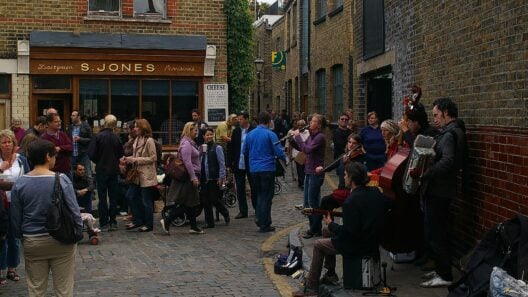
93 Feet East is one the longest running music venues in London, but also on a lane with significant Asian culture and history attached to it – in particular the Bangladeshi community. Beyond this there is both significant musical and artistic history attached to this lane that make it such a vibrant, diverse creative hub. It is so important to use and support independent venues like this so as not to lose them.
With such diverse genres in your shows, from electro-punk to desi fusion, how do you curate line-ups that still feel cohesive?
Asian Tones have a few different show formats. The shows that are more standard gig style generally are genre cohesive throughout the line up. Some are showcase and open mic style where there can be more fluidity in the genres. We’re here to provide opportunities and highlight the Asian community across all genres as best as we can, there’s still so many genres we’re yet to touch!
Either way the shows are very much open to everyone, underpinned by the ability to discover great new music and great talent. There is far too much good music out there for you to just be listening to 1 genre.
How do you balance celebrating distinct Asian heritages while building a shared space for the diaspora community?
One thing I love about the Asian Tones insta is that it is filled with faces from across the Asian continent, across various regions, communities, genres etc – you realise there are plenty of like minded people, in this space (especially UK industry wise you can feel isolated). Particularly for the diaspora, many people feel stuck between their various cultural worlds – eg being British and their own resective heritage. I believe you can be all, however that is totally individual and you’ll find your own balance. Asian Tones I hope plays in role in being a safe space to explore that.
Asia across its continent has so much shared heritage, outlooks, history and customs – under the surface we share more experiences than we probably realise. We’re just out here trying to build a nice big community who love music in all its forms.
Via our ‘Get To Know’ series online, the main reason we ask artists to disclose their heritage is to show the diversity of what being Asian actually spans. But also, you know, it’s important to be proud of your roots!
You’ve worked with platforms like Discover Live and State Is Flow – what role do grassroots collectives play in real change?
The key role grassroots collectives play are creating an accessible, true community and also championing the music and artists they fervently believe in. There is so much diversity and genuine love of music to be found in these spaces. Alongside grassroots venues, the spaces where talent learn their craft and create connections to their audience. These spaces are ultimately nurturing the next waves of talent, they are part of most every artist’s journey. Since covid and now the increase in AI, we know these spaces are going to be more important than ever.
I’m a real believer that we get more done in terms of change in the direction we want, the more we support each other. Which is why I love working with other platforms where there is a shared ethos. The Liverpool Sound City collab is another example of this – they were so welcoming and took the time to really make the partnership one that mirrored both parties.
What do you hope audiences take away from this upcoming event in Shoreditch – beyond justgreat music?
As with all our shows – to show the immense talent and diversity of sounds that come from the community. A place to discover new music and connect with others. We hope to see you on the 10th!