





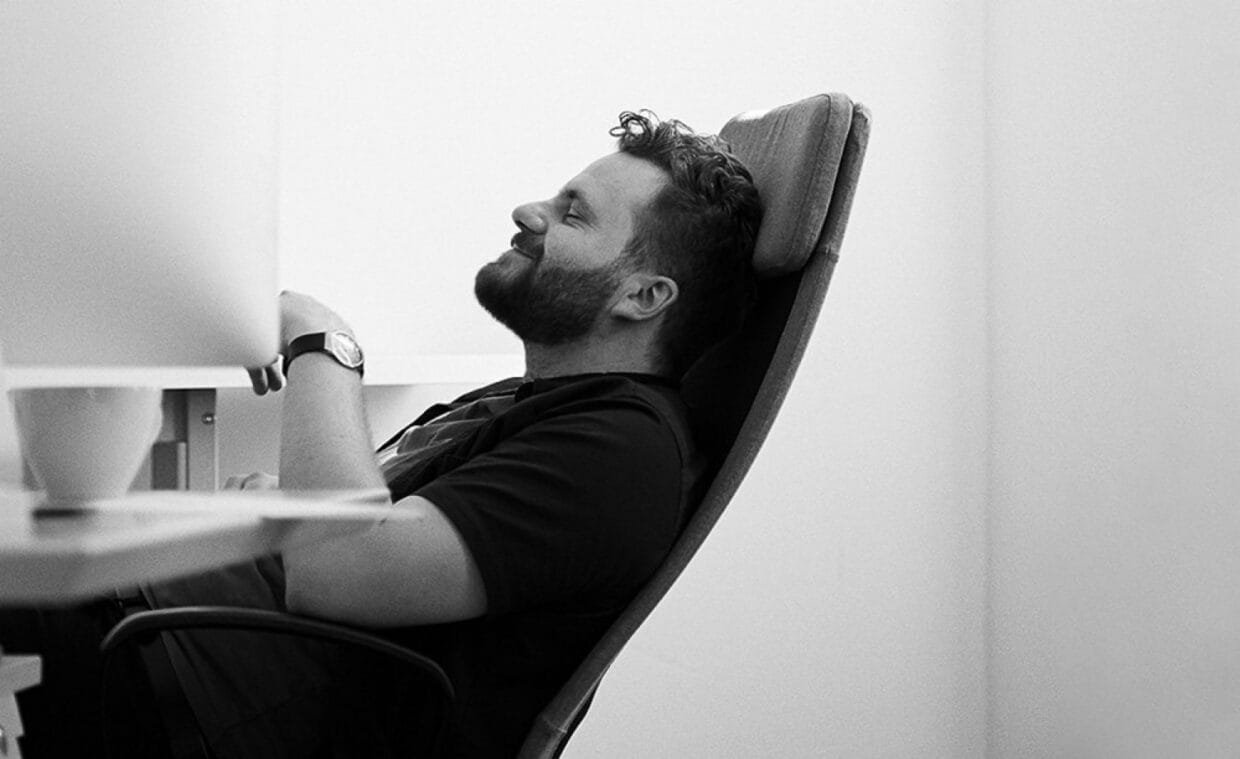
With Klanglicht, the Berlin-based video artist Boris Seewald transforms cutting-edge hearing science into a swirling spectacle of colour, choreography, and emotion. The project explores a radical new concept: “hearing with light,” using optogenetic cochlear implants to imagine restored hearing in a richer, more natural form. We caught up with Boris Seewald to discuss the collaboration, personal resonance, and how 2,500 hand-drawn frames brought the sound of the future to life.
How did you first become involved in the Klanglicht project, and what drew you to its concept of ‘hearing with light’?
I’ve been working with Ralf Hildenbeutel for many years, and he brought me on board for this project. He introduced me to Jenny Blum, an audiologist from the University Medical Center Göttingen. The art project is based on the idea of linking the currently effective technologies for hearing rehabilitation for deafness with the vision for future developments and bringing them to society. Another aim is to illustrate to the audience the current research in Göttingen on restoring “hearing with light”. This is intended to illustrate the possibilities of “hearing with light” through a possible future optical cochlear implant (oCI). This is the result of many years of research in Göttingen. The aim is to achieve a more natural sound impression than with the eCI by using the tonotopic frequency structure of the cochlea more precisely.
As someone who wears a hearing aid myself and knows the challenges of not hearing well, I felt a personal connection to the subject from the very beginning.
This project brings together researchers, audiologists, and artists to visualise a new kind of hearing. What was it like collaborating across disciplines to turn scientific innovation into an emotional and artistic experience?
It was definitely a new experience — unlike anything I had done before. I’ve worked in the fields of culture, music, entertainment, and commercial work, but never directly with scientists.
From the very beginning, it was clear to all of us that we didn’t want to create an “explainer” video. The goal wasn’t to illustrate the technology, but to explore its emotional and sensory impact. We started asking questions like: “What does it sound like when someone hears again for the first time after years of profound hearing loss or deafness?” Or “how might it feel to hear music for the very first time?” Or even as simple as: “What if you could hear music in full brilliance and top-notch quality?”
These questions opened up an emotional space — something that could be felt rather than understood intellectually. Since Ralf Hildenbeutel has roots in techno and electronic music, and Jenny Blum is also a huge fan of electronic sounds, we often imagined the sensation of being on a dancefloor: that moment when the music takes over, when you lose yourself completely in rhythm and vibration.
It’s that trance-like state — almost psychedelic — where everything else fades and it’s just you and the music. We tried to translate that feeling into imagery.
What made this collaboration especially rewarding was the trust and openness from the scientific team. I was given a lot of creative freedom — which, honestly, is a dream for any artist.
You worked with over 2,500 hand-drawn frames for this music video. Why did you choose that analogue approach for such futuristic technology?
Very good question. I must admit that, in the beginning, I actually considered using AI to create the visuals — especially since the project itself is centered around cutting-edge, futuristic technology. But after diving into the relationship between image and sound, I found myself going back to the roots — to the early days of cinema when sound and image were first brought together.
I was inspired by pioneers like Oskar Fischinger, who in the late 1920s animated geometric shapes and abstract forms in perfect sync with music. His work can be seen as some of the very first “music videos,” where each note and rhythm was meticulously animated, frame by frame, by hand. Klanglicht is, in many ways, a homage to this tradition of “visual music” and the experimental abstract films of that era.
At the same time, I had a strong desire to step away from screens. We’re constantly surrounded by digital interfaces — whether it’s a computer, phone, or tablet — and I felt the urge to reconnect with something physical. I needed that haptic experience, that analog imperfection, to balance the digital noise around us.
And let’s be honest — it’s just way more fun than prompting.
As a visual artist, how do you even begin to translate something as intangible as ‘new hearing’ into animation and imagery?
When we describe sound, we surprisingly often reach for visual comparisons. A sound can be “crystal clear”, “airy” or “crisp.” A song mix might be described as “muddy” when it lacks definition. These metaphors reveal just how much we rely on visual language to make sense of what we hear — especially when trying to convey sound to someone else.
In this project, we also used a visual analogy: experiencing this new kind of hearing is like going from watching with a black-and-white tube TV to a modern 4K LED screen in full color. The difference in clarity, depth, and brilliance can be overwhelming, especially if it’s your first time perceiving that richness. We wanted to capture that moment of transition: the shift from limited perception to a vibrant new sensory world. In the film, that’s the moment when the beat kicks in and the image explodes into color.
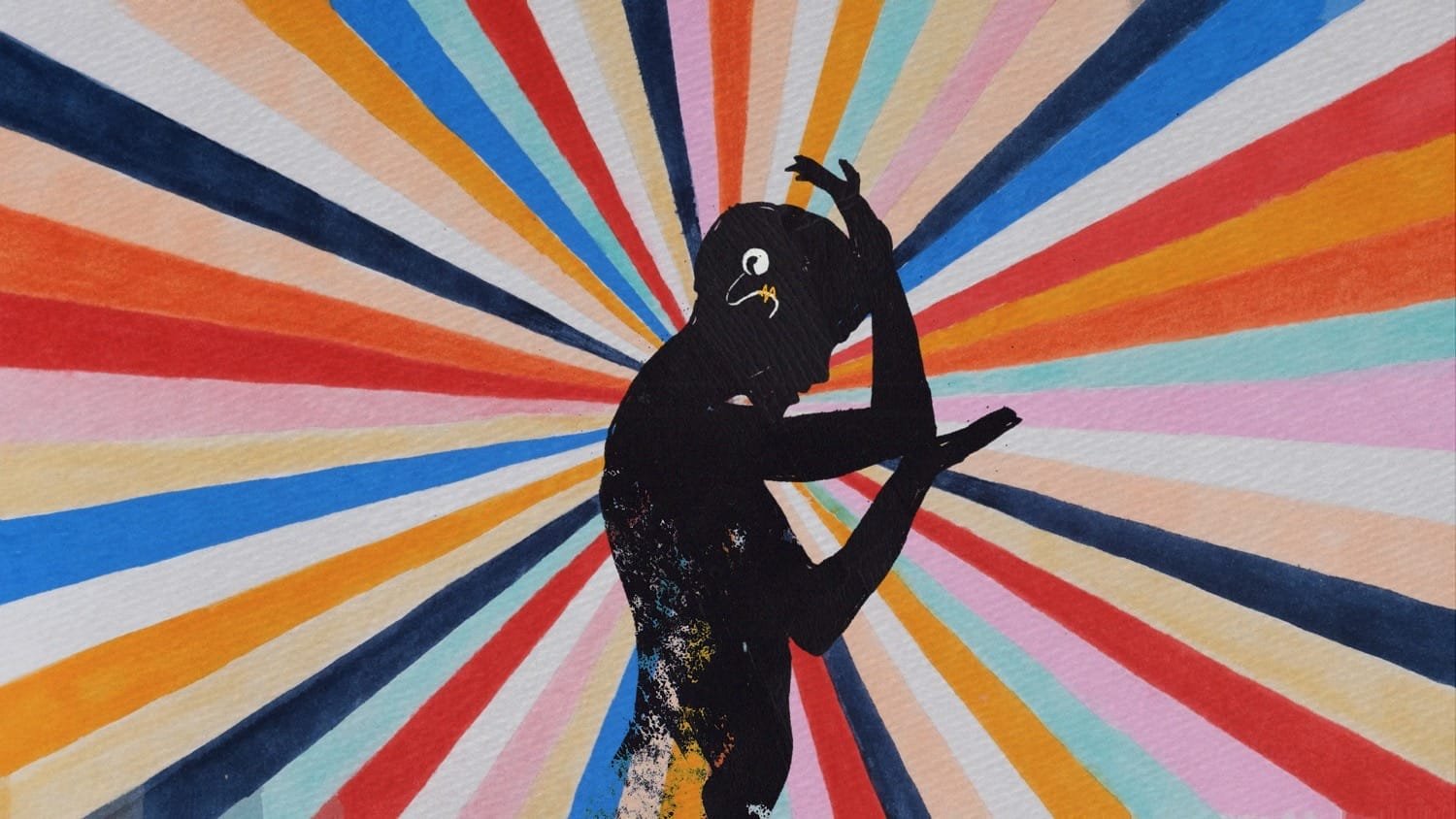
From that point on, I animated colorful rays — as if sound itself was breaking apart into its visible frequencies, like light passing through a prism.
What was the biggest creative challenge in conveying a sensory experience many viewers will never physically feel?
I did not want to make assumptions about what it’s like to live with deafness. Instead of trying to define someone else’s reality, I took an associative and emotive approach.
We did, however, approach the subject also from a sonic perspective as well. In the first part of the track, you hear vocals, but the lyrics are difficult to understand. It mirrors the reality many people with hearing loss experience — hearing sound, but not necessarily understanding speech. We used visuals like close-ups of the dancer’s lips moving, which helps decode what’s being said. This reflects a common coping strategy for people with hearing impairments: lip-reading.
It’s something I relate to personally — I sometimes rely on lip-reading myself. During the pandemic, when everyone wore masks, it became especially difficult to follow conversations.
Later in the film, as the lyrics becomes clearer, it’s as if the distortion lifts — like a moment of improved hearing.
Your collaboration with Ralf Hildenbeutel blends sound and vision beautifully. How did you approach syncing emotion between the audio and visuals?
For me, one of the most powerful ways to express music visually is through dance. It gives sound a physical form — a body — and translates emotion into movement. It’s the perfect symbiosis of image and sound.
Marie Zechiel created a beautiful choreography and gave an incredible performance for the film. Since we worked mainly with her silhouette, we had to make sure her movements would still read clearly as a pure 2D shape in the final composition.
At its core, I basically wanted to express a kind of inner awakening — a joy that spreads through every cell of the body, moving from the cochlea through the nervous system into the brain. It’s as if the synapses are firing like disco lights, celebrating this new dimension of hearing.
The subject of deafness and hearing restoration is incredibly personal. How did you balance sensitivity with artistic freedom?
As someone who wears a hearing aid myself, I’m familiar with the subtle challenges of not hearing well. That personal connection helped me navigate the line between authenticity and imagination. Jenny Blum from the University Medical Center Göttingen also shared sound examples of how the world can sound for people with profound hearing loss, which gave me deeper insight into the everyday realities and challenges they face.
Hearing loss isn’t just a physical condition — it shapes how people connect, communicate, and experience the world. My goal was to express what a shift in perception might feel like. It’s not a literal representation of deafness or restoration, but rather an artistic interpretation of an emotional transformation — a feeling, not a fact.
You’ve created dance films and music videos before—what set Klanglicht apart in terms of emotional resonance and visual narrative?
What was new in this production was the integration of biological imagery and anatomical references. I worked with visual elements from inside the body — cells, synapses, neural networks — and transformed them into animated textures. These patterns became part of the film’s visual language, either filling the dancer’s silhouette or forming abstract backgrounds that subtly referenced the inner workings of the human body.
What do you hope viewers walk away with after watching Klanglicht—not just artistically, but in terms of awareness or empathy?
Our main goal with this music video was to bring a complex and highly technical scientific topic to a broader audience — beyond academic papers and niche medical articles that most people wouldn’t normally engage with. The science behind optogenetic cochlear implants is groundbreaking, and it holds the potential to significantly improve the quality of life for many people — but very few are even aware it exists.
We wanted to offer a more accessible and emotionally resonant entry point into the subject — something that speaks to the heart, not just the brain.
According to the World Health Organization, over 466 million people worldwide suffer from hearing loss that requires treatment. For those born deaf or with profound hearing loss, learning to speak and communicate can be an enormous challenge. And even with conventional cochlear implants, complex auditory perception — like understanding speech in noisy environments, catching emotional nuance in a voice, or enjoying the richness of music — remains limited. Optogenetics could be a game-changer in this regard.