





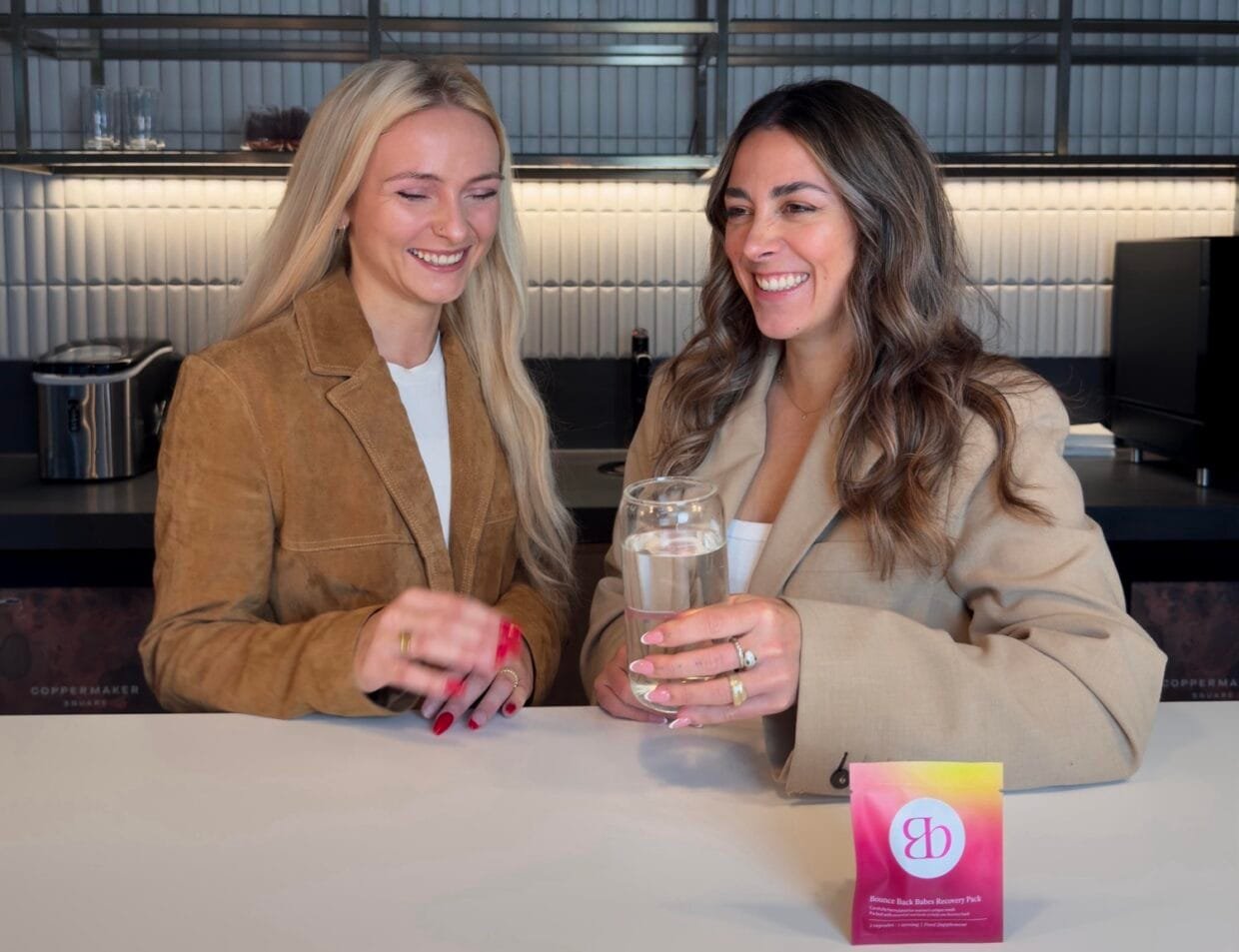
In the heart of London’s ever-buzzing wellness-meets-nightlife culture, a new kind of health movement is rising—and it’s called Blōma. Co-founded by Laurine Hanquez, this female-focused recovery supplement is shaking up tired wellness norms with a powerful message: you can celebrate and feel good after. Designed for how women actually experience alcohol, Blōma is part science, part rebellion, and all joy. We caught up with Laurine to talk about the science, the stigma, and the future of feeling better without giving anything up.
Blōma is all about ‘joyful health.’ What does that phrase mean to you—and why did it need inventing?
Joyful health is our answer to a wellness industry that, ironically, has become anything but well. What started as a movement to feel better has morphed into something rigid, guilt-driven, and impossible to keep up with.
Everywhere we looked, we saw the same message: control more, restrict more, optimise everything. And if you fall off track? That’s on you. It felt like the freedom to just feel good had disappeared.
For us, joyful health means something different. It’s about caring for your body without punishing it. It’s about curiosity over control, consistency over perfection, and finding a rhythm that fits your real life even when that life includes 2 a.m. pizza, skipped workouts, or a spontaneous glass of wine.
We believe health should be rooted in pleasure, not pressure. That it should support you, not shame you, when you’re living fully. There’s been a lot of conversation about changing the narrative, but we weren’t seeing brands actually say it out loud.
So we did. And we called it what we believe health should feel like: joyful.
Most hangover cures ignore how women actually experience drinking. Why has that gap gone unaddressed for so long?
In all fairness, we have no clear evidence why no one thought of this sooner. It’s no secret that women process alcohol differently—even women know it. We feel it in our bodies. But most of the industry has been designed for men: biologically, culturally, and historically. Women weren’t even included in medical research until the 1990s, so it’s no surprise that recovery solutions are no exception.
There’s likely an economic side to it as well. This is still a niche space, and it may not appeal to large corporations chasing fast growth and mass-market appeal.
But beyond that, there’s something deeper. Right now, the wellness industry still operates on a very fragmented model: one symptom, one product. You’re dehydrated? Take electrolytes. You drank? Take a liver supplement. You’re bloated? Buy a debloat powder.
It’s partly a legacy of Western medicine, which often treats body systems in isolation—and partly because companies benefit from selling you five different solutions rather than one that looks at the whole picture. That’s what we’re trying to change with Blōma. Women’s health deserves a more integrated, connected, and truly holistic approach.

You launched Blōma in March and already have 3,000+ women on board. What’s been the most surprising feedback so far?
Honestly? That it actually works.
Hangover prevention is often seen as either futile or a bit of a scam. And we get it,there are so many “miracle” products out there that barely make a dent. People assume Blōma will be the same.
So the most surprising and fun feedback has been the shift from scepticism to full-blown loyalty. We’ve had women say they genuinely can’t imagine drinking without it now. Once they try it, they realise it’s not just about avoiding a headache, it’s about feeling clear, steady, and full of energy the next day.
Let’s talk ingredients—Maca, Ashwagandha, Artichoke Leaf… How did you choose this dreamy botanical squad?
We worked backward,s from how alcohol actually affects women’s bodies: liver strain, hormonal disruption, digestive upset, mood dips, and built our formula around those systems.
Every ingredient had to earn its place. We made sure they worked in synergy, that none cancelled each other out, and most importantly none would negatively impact hormonal health. That’s something the wellness industry rarely talks about.
For example, ashwagandha is incredibly effective for anxiety and cortisol support, but it’s not something we’d recommend women taking every single day, which works out, because you’re not meant to be drinking daily either (hopefully!).
We were also really intentional about keeping the formula clean and streamlined. Some recovery products on the market have 50+ ingredients. That’s not only unnecessary, it’s overwhelming, especially for someone who isn’t a biochemist.
We finalised the formulation with an incredible team based in Oxford who helped us perfect the blend through R&D. It’s science-backed, real-life tested, and designed to work with the female body, not against it.
You’ve been featured by Charlotte Tilbury, River Island, Soho House, and now Vogue’s Summer Party. How did you break into those circles so fast?
Honestly? Two things.
First, Trisha and I both come from sales. We’ve been prospecting for years, so we know how to find the right contact, write a personalised message, and just ask. That’s literally how we got into the Vogue Summer Party. No secrets, just smart outreach and a bit of boldness.
Second, networking. Since January, we’ve joined some incredible female-led communities. The energy, the support, the introductions… it’s genuinely powerful. Women backing women is no longer just a slogan, it’s what’s making this all happen.
Blōma supports recovery but doesn’t shame the celebration. How important is this non-judgy message in today’s wellness scene?
It’s everything. There’s this undertone in wellness that if you choose to go out, drink, or deviate from the routine, you’ve failed. You’re “undoing progress” or not taking yourself seriously enough. That mindset is exhausting, and honestly? It’s outdated.
We created Blōma for women who care about their health but also want to live fully. Women who track their cycle, book the Pilates class, and still love a celebration. We don’t see those things as contradictions, we see them as reality.
Our message is simple: if you choose to drink, it’s okay to want to take care of your body after. That doesn’t make you less disciplined. It makes you human.
Health shouldn’t come with guilt. And recovery shouldn’t feel like a punishment.
From ‘hangxiety’ to hormonal havoc—women’s hangovers hit differently. How does Blōma address the science and the stigma?
Women experience hangovers differently and more intensely. We metabolise alcohol more slowly than men, meaning it stays in our system longer. On top of that, our hormones fluctuate across the month and alcohol directly impacts the liver, which plays a key role in regulating estrogen. That disruption can lead to stronger PMS symptoms, increased bloating, nausea, and what many of us know too well: hangxiety.
Women are more likely to experience anxiety after drinking because of differences in brain chemistry and how alcohol affects serotonin and cortisol regulation. Combine that with a period or luteal phase, and it’s the perfect storm.
That’s why Blōma exists. We created a formula that supports the systems alcohol hits hardest in women: liver detox (with NAC and artichoke), hormonal balance (with B6, zinc, maca), digestion and bloating (with ginger and dandelion), and nervous system recovery (with ashwagandha, saffron, and B12).
But beyond a “hangover cure,” we see Blōma as a routine. Because even one glass, especially around your period, already has an impact on women’s bodies.
So we say: prevention first. You have a drink, you take Blōma. Just like some people use electrolytes after the gym. We want this to be a recovery ritual women actually rely on.
You manufacture within 100km of your Oxford lab and use sustainable packaging. Was eco-consciousness part of your mission from day one?
To be honest, it wasn’t even something we debated. At this point, it just feels like common sense. If you’re building a wellness brand in 2025, caring about how things are made, and where, is the bare minimum.
We’ve also been lucky. Being based in London meant we had access to a huge network of partners. That’s allowed us to reduce unnecessary shipping, build closer relationships, and keep our footprint low.
That said, we know it’s not this accessible or affordable or every brand, especially if you’re based outside a major city. So while sustainability was a no-brainer for us, we also recognise the role privilege and geography can play. We’re doing what we can, where we are, and we’ll keep finding ways to do better as we grow.
With so many products marketed as wellness, what sets Blōma apart from the sea of pink branding and empty promises?
When we were looking for manufacturers, we were honestly shocked by how many offered white-label formulas with nothing more than a design team to “make it look female.” Just slap some blush-toned packaging on a generic product and call it a day. That felt wildly out of touch with what women actually need.
We built Blōma the other way around: substance first, packaging second. Yes, we did end up with pink in our colour palette (even though we tried to resist it at first, haha). But we’re not here to reject femininity just to be taken seriously. You can say “babes,” care about balance, and still build a science-backed product that works.
What sets us apart is that we created Blōma from scratch, no white label, no shortcuts. It’s grounded in science, made by women, for women. And most of all, we’re transparent. We’re not selling miracle fixes or vague promises.
Does it work for every woman the same way? No and as it should, because we’re all different. And we’re more than okay with that.
Looking ahead: what’s your wildest dream for Blōma’s future—and what would success look like five years from now?
We have a few new products in development for next year, but our real ambition goes beyond just product launches. We want Blōma to help shift the industry towards more joyful health, more honesty, and more personalisation at scale.
Right now, we’re still creating products for women. But the dream? To create products for every kind of woman. For every phase of the cycle, every mood, every moment because women aren’t one-size-fits-all, and our wellness support shouldn’t be either.
Success, for us, would mean building a brand that not only supports women’s bodies but also reflects their lives: flexible, full, complex, and never needing to apologise for wanting to feel good.