







Tama Matheson isn’t just performing Beethoven—he’s becoming him. In Beethoven – I Shall Hear in Heaven, Matheson channels the towering spirit and turbulent soul of the composer through a bold mix of theatre and live classical music. As the show prepares to take over Opera Holland Park this August, Matheson reflects on deafness, defiance, and the messy glory of genius. We caught up with Tama Matheson to talk about fusing drama with music and why Beethoven remains timeless.
Your ‘Beethoven – I Shall Hear in Heaven’ production blends theatre and classical music in a uniquely visceral way. What inspired this “half drama, half music” format?
When I was very, very young – growing up, as it happened, in Germany – I had a cassette tape of the life of Beethoven, narrated by Karlheinz Bohm. It had music and drama scattered through it, and I absolutely adored it. It wasn’t a complete drama, by any means, but it had elements of drama in it, and I remember being utterly carried away by it, even as a kid. That tape stayed in my consciousness all these years. When, many years later, I began working in the opera, and with orchestras (alongside the theatre), I began to see the potential of combining the two world of music and drama – as I had heard it as a kid. There is something incredibly powerful about drama played over music – provided the words are specifically written to be spoken with music. I felt how music could elevate drama, how it could beautify it, poeticize it. Plus, it can create atmosphere, set a scene, express a time-period – even carry us through time. So music is a truly extraordinary addition to drama: it makes all of life into a thundering symphony.
Rather than a straight biography, this play takes a more emotional, psychological route. Why did you choose this approach to tell Beethoven’s story?
Well, the show is really a bit of both – biography and psychological drama – but, of course, because one has to choose which parts of the life to show and which parts to leave out for a 2 hour stage-show, it can’t be a full biography. It has to be a sort of ‘highlights’ reel. And that’s where psychology guides the writing: I chose the parts of Beethoven’s life I thought best expressed his art. for, what is truly interesting about a genius is not simply the incidents of his life, but how he converts those experiences into art – how his life informs his creation; how his artistic spirit develops form his experiences; how circumstance forges his particular mentality; and how he translated the pressures of existence into music. I set myself the challenge: can I show how genius is formed? As such, the most dramatic moments in I Shall Hear are when Beethoven is assimilating his experience into his music. Here we see the incredible transfigurative power of art: the conversion of life into screeds of imperishable beauty.
Beethoven’s deafness and isolation are central themes. How do you translate those deeply internal experiences to the stage?
Well, it’s a fine line we need to tread. Firstly, we have to show Beethoven’s acquaintances shouting louder and louder as his deafness progresses (though one has to be judicious here – we don’t want to spend the evening howling at the audience!). Then we need to show him growing increasingly isolated, increasingly withdrawn, increasingly inward, and, alas, increasingly lonely. And, as he grows more isolated, he disconnects from the world of propriety and social norms: Beethoven is alone even among other people. But within that solitude, we show him delving deeper and deeper into the world of music. Music becomes his refuge from silence, until, in the end, he hears in his silence things he would never have dreamt to hear with hearing ears. Thus silence becomes translated into music, and we see the miracle take place: the deaf composer building a universe of music within himself – and thus gifting the world some of the most triumphant works of art ever created.
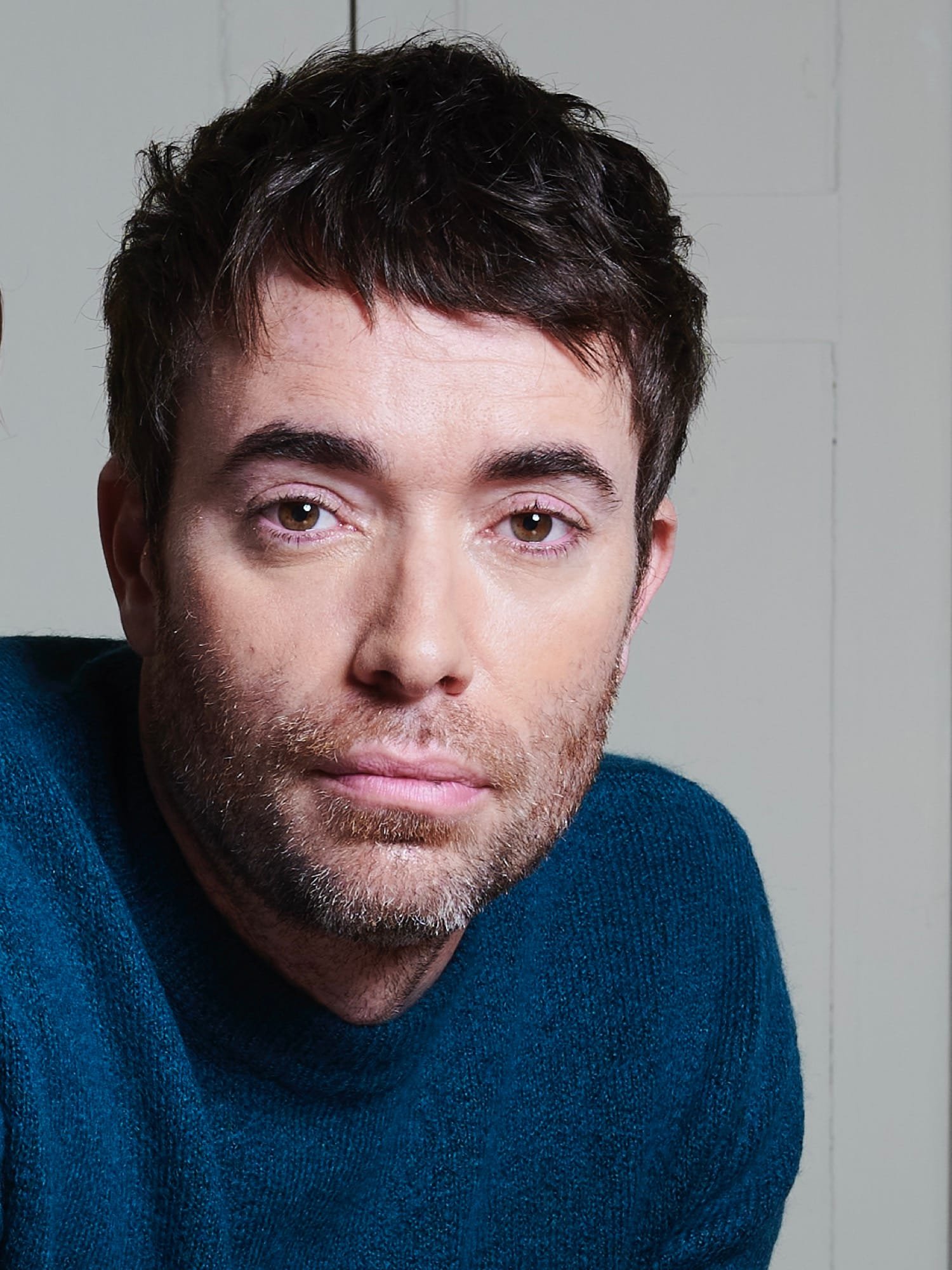
You’ve performed this production across continents. What feels different—or electric—about bringing it to Opera Holland Park in London?
Well, the first thing is the scale of it. This is the largest stage I’ve ever performed it on, and it seems condign to the scope of the drama: Beethoven’s life was titanic – I hope the stage will help to reflect that. His imagination was cosmically vast, his will Jove-like, his life monumental, his music thunderous, his experience universal. I think – I hope! – the Holland Park stage will help us capture that sense of grandeur. But there’s also something exciting about working outdoors – with the sounds of nature near us. Beethoven was a huge nature-lover – his muse seemed always to take inspiration in, and comfort from, nature – so there’s something appropriate in the semi-outdoor setting. Finally, it’s also just great to do the show on a big stage, right in the middle of London. It makes it easier for audiences to get to…
You’ve written and performed works on Bach, Britten, Byron, and more. What is it about historical figures that draws you back to their stories?
For me, these are figures which sit at the centre of Western consciousness. Their works, their ideas, their feelings have informed our lives to a degree we’re not even aware of. The way we see the world, hear the world, understand the world – and ourselves – have, to a great extent, been formed by the work of these extraordinary people. As such, delving into their lives is fascinating both in itself and in the way it delves into the centre of us all. (Plus, when it comes to Beethoven, there’s also a ready soundtrack of some of the greatest music ever written. That’s a pretty good addition.) My other hope is to bring these great characters from history shimmering to life anew – because, for me, these writers and composers are as alive today as they were the days they actually breathed and trod the earth: when you play Beethoven’s music, you are hearing him speak just as he spoke when he was alive. This is extraordinary. If I can show his life with the same immediacy, the same fresh excitement, then his work can stream forth into the world with refreshed energy.
This show has been described as providing musical and emotional insight. How did you and Jayson Gillham shape that balance between word and sound?
Well, this is something that takes a great deal of negotiation. Over several weeks and months, we think about the drama, and try to find pieces that best express and illuminate what it is trying to say. Then Jayson and I spend a while working out how to fit the music into the drama: should it sound under the words, after the words, over the words? Should we play a whole movement, a small section, a few notes? And so on and so forth. Then we try it out, change our minds, try something different, etc. So the whole process is rather Beethovenian in nature: a sort of painstaking trial and error that doesn’t end until we are absolutely satisfied that we have expressed exactly what we want to say. The result is (we hope) a fusion of music and drama that is incredibly dramatic and exciting.
You’ve portrayed everyone from Shakespearean kings to EastEnders roles. How does stepping into Beethoven’s mind compare?
It’s an absolute chaos – a chaos of human genius: titanic emotions, ungovernable drama, fathomless beauty, irrepressible anger, childlike wonder, profound philosophy, revolutionary politics, impatience, sympathy, frustration, self-justification, kindness, despair, and – enclosing them all – a sort of triumphant determination that outshines all tribulation. I don’t think I’ve ever come across a character quite like Beethoven – even in Shakespeare. In his mercurial variety, he seems to embody all of human life –to its uttermost degree. Indeed, I wonder if there has ever been anyone quite so multiform in humanity as Beethoven. It’s as though he subsumes all life within his own – grasps it all in his imagination. Which is why his music appeals so widely – somehow we all hear our experience in it. And Beethoven’s life was certainly one of extremes – which transfer into his music. Perhaps, living on the vertiginous pinnacles of existence, the only way he could cope with life was to turn it into music. And he never stopped developing. Until the last moment of his life, he was doing new things, treading where he had never trod before. I’ve never played anyone like him.
What do you hope London audiences take away—not just about Beethoven, but about the human drive to create against all odds?
As you say, the idea of continuing to create against all odds – never giving up in the face of adversity – is one of the most powerful messages in this play. Beethoven refused to submit. In fact, his spirit seemed to draw strength from opposition. He answered ‘thou shalt not’ with ‘nobody can’t stop me.’ To lose the one faculty he needed above all others, and to think ‘I shall not only carry on, but place myself at the summit of Olympus’ – that seems to me an almost inconceivable force of will. There is no one like Beethoven for the spirit of human triumph. But I would also like to show – hope to show – that the constant fight – which we must all wage against the ceaseless onslaught of misfortune – is the true stuff of human life. This is life – and it is also what makes great art. Were there no tribulation, what would we have to express? So, we suffer that we may have art: we have art to ease our suffering. Thus, when we struggle against misfortune, we are at our most human. Understanding this, perhaps, can make us more philosophical in the face of misfortune. And then we have art to help us – we have music. For Beethoven, art was the counterblast to tribulation. And it is for all of us, if we only look: art is like the starfield on a cloudless night – it beautifies and brightens the all-encroaching darkness.