






While many curators start young, Wei Mo arrived on the scene with something rarer: time-earned clarity.
It wasn’t through an MFA program or an early-career internship that she came into her own. Wei Mo entered the curatorial world not in her twenties, but with the quiet certainty of someone who has seen systems from the inside and outside. That vantage point – neither rushed nor idealistic – allows her to support emerging artists with both empathy and precision. In a world obsessed with early achievement and accelerated timelines, Mo’s story offers something quietly radical: the affirmation that you don’t need to peak young to be relevant.
At a time when most professionals her age are deeply institutionalised, Mo is still building her vision from the ground up — one thoughtful, open-ended exhibition at a time.
A Journey Through Media, Education, and Craft
Before London, before the galleries, Wei Mo’s world was composed of regional festivals, community arts centres, and printed newspapers. Raised and educated in Kaifeng, a historic city on China’s Yellow River Plain, she spent over two decades working across local journalism and art education. Her earliest professional life was steeped in cultural reporting, covering traditional crafts, rural rituals, and the quiet rhythms of provincial life. Later, she moved into arts education, helping young students navigate creativity in studio settings inspired by both Chinese and British pedagogical models.
None of this, at the time, appeared to be curatorial training. But in hindsight, it was precisely this slow gathering of perspectives — the attention to everyday aesthetics, the instinct for communication, the experience of translation across disciplines — that became the scaffolding of her later curatorial practice.
“Back then,” she says, “I didn’t think of myself as a curator. I was trying to hold space for what I thought mattered. That impulse never changed — just the medium did.”
Her eventual turn toward curating wasn’t prompted by ambition or trend-chasing. Instead, it came from a deeper need: to create public spaces that could accommodate emotional nuance, cross-generational dialogue, and visual storytelling rooted in lived experience.
Gallery and the Space of Feeling
Now based in London, her exhibitions are subtle, structured, and rarely flashy. But beneath their quiet exterior lies a commitment to depth: to giving both objects and artists enough space to speak in their own time.
Take Temporary Dwelling: Memories and Emotions in Transit, a 2025 exhibition that recreated intimate living spaces with everyday materials like moving boxes, curtain rails, and bamboo mats. The exhibition explored how transient homes, particularly in the context of migration, carry memory, trauma, and tenderness in equal measure. Artists contributed works that were fragmentary and deeply personal, but it was Mo’s spatial design and narrative thread that turned them into a collective atmosphere. The result wasn’t just an exhibition — it was a room full of feelings you didn’t know you needed to process.
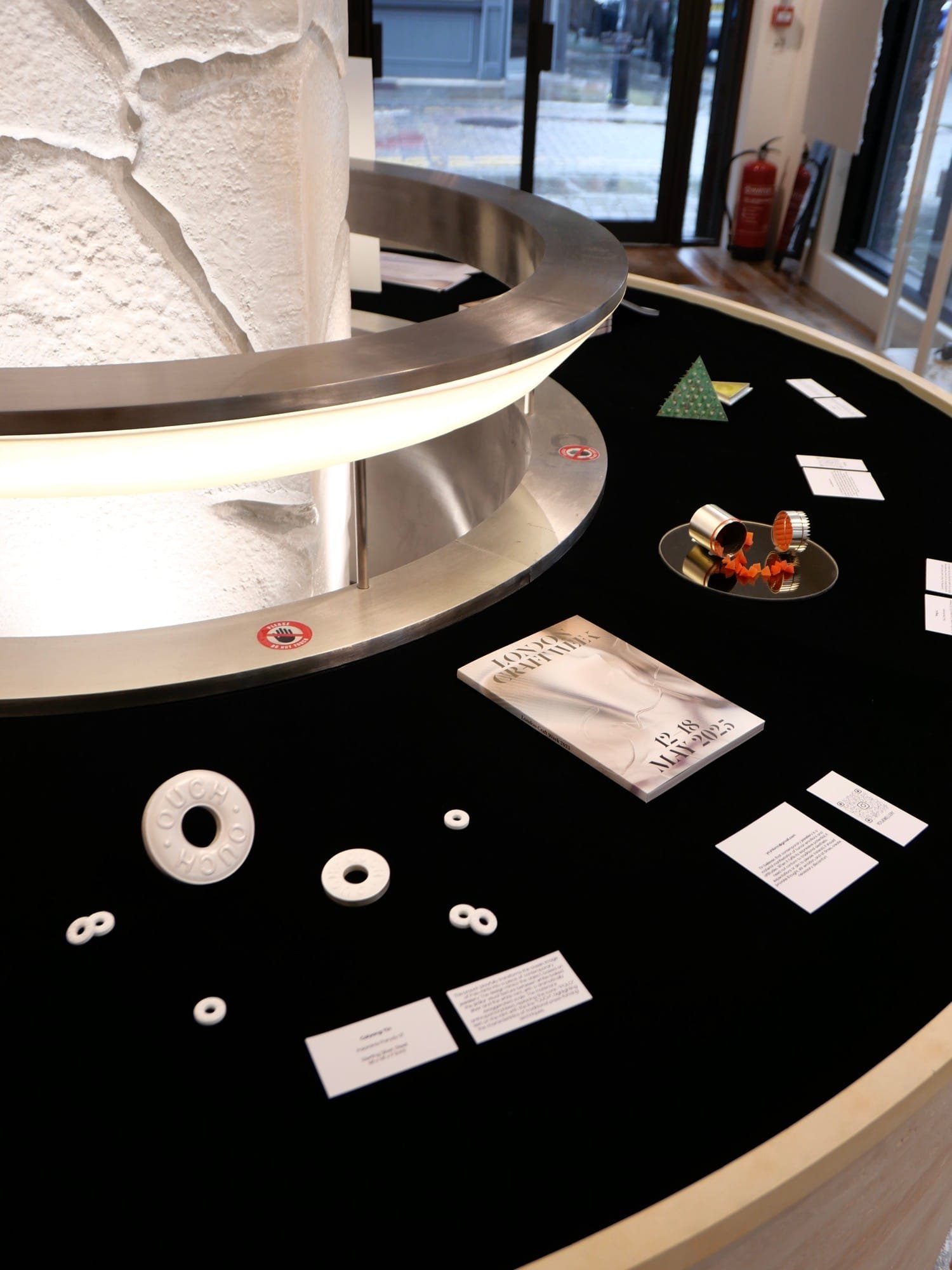
Or Unanchored Crafting, presented during London Craft Week the same year. Featuring over 20 international makers, many of them early-career artists from across East and Southeast Asia, the show interrogated what “craft” can mean in diasporic conditions. Rather than presenting neatly polished works, Mo encouraged experimentation with unstable materials, hybrid forms, and cultural dislocations. The result was messy, moving, and gloriously unresolved — like migration itself.
What ties her exhibitions together is not a single aesthetic or medium, but an ethos: she doesn’t dictate direction, she designs containers. As she puts it, “My role is not to lead the conversation. It’s to hold the room steady enough that others can speak fully.”
The Non-Competitive Curator
Wei Mo’s approach to curating stands in quiet contrast to the competitive, brand-driven pace of the contemporary art world. She does not rush deadlines. She does not seek visibility for herself. And most strikingly, she does not see young artists as vessels for her own vision.
“I don’t want to be their mentor,” she says. “I want to be their tempo adjuster. Someone who helps them find their rhythm, not impose mine.”
This subtle difference has made her a trusted collaborator among emerging artists. Rather than centring her own intellectual framework, she adapts, letting the artist’s ideas lead, while offering structural clarity and emotional resonance. Her exhibitions are known for their careful pacing, where no single work dominates and no theme is hammered too hard. Instead, viewers are invited to linger, to feel, to arrive at meaning gradually.
This restraint, born from age and patience, gives her credibility that younger curators often struggle to earn. She is not in competition with the artists she supports — she is a witness, a facilitator, a quiet co-builder of worlds.
It’s no surprise that many of her most successful shows have featured artists barely out of school. While the industry still prizes novelty and youth, Mo is proving that support doesn’t have to mean control, and that experience can be a resource without becoming a hierarchy.
A Language Built from Objects
Mo’s curatorial language is deeply material. Rather than focusing on heavy wall texts or theoretical framing, she lets objects do the talking. In her recent exhibitions, everyday materials — foil, cardboard, textiles, LED light, insulation foam — become narrative agents. These aren’t props or metaphors. In Mo’s hands, they are protagonists.
Her 2025 exhibition Object-Oriented Ontology (OOO) was a philosophical investigation of object agency. Drawing on posthuman theory, the show asked what happens when we stop looking at objects through the lens of human use or symbolism. “Don’t explain, don’t name, don’t use,” the wall text read. “Let the object simply be.”
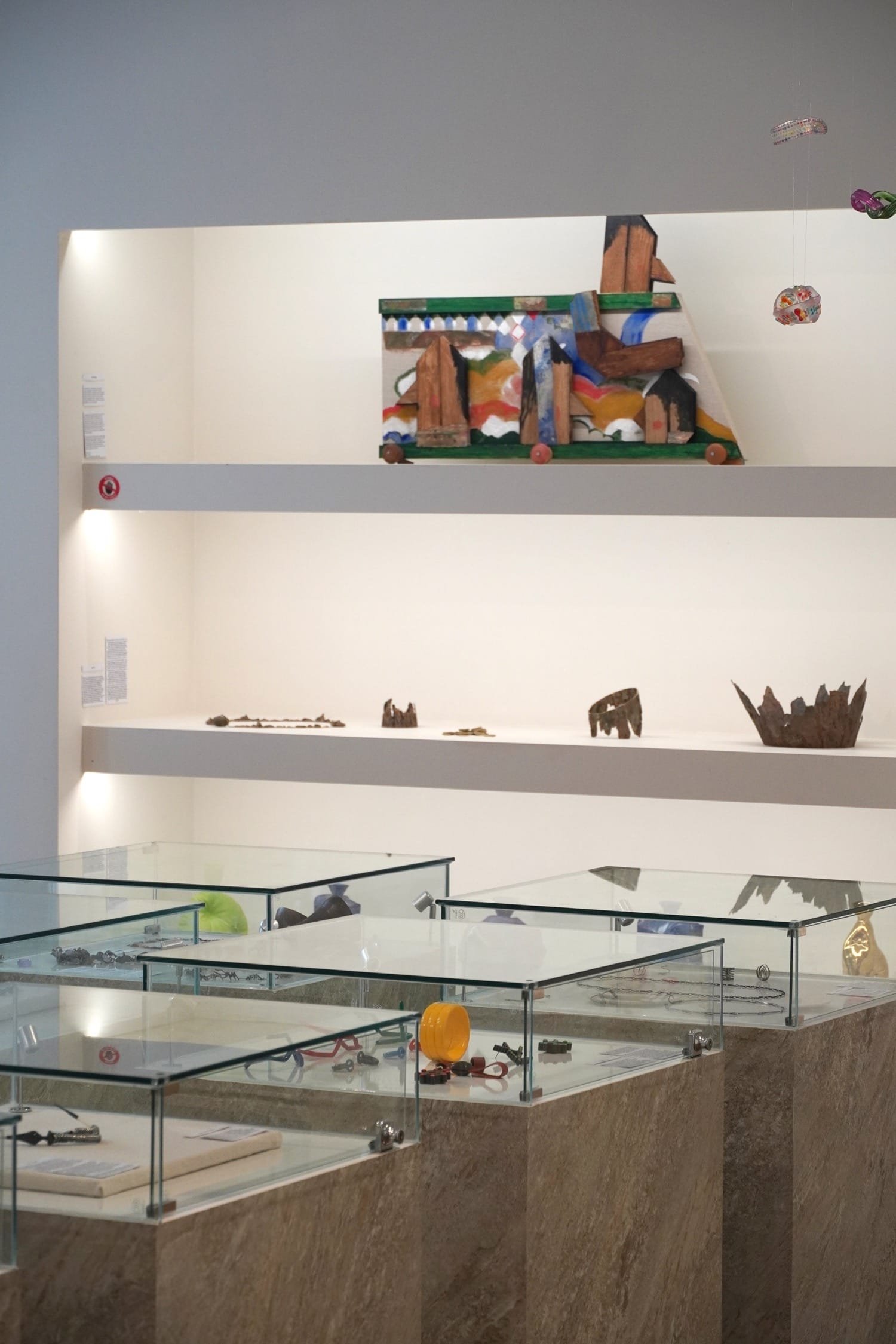
In practice, that meant installations without labels, fragmented soundscapes, and non-linear exhibition layouts that encouraged wandering and chance encounters. Viewers were not told what to think — they were invited to be present, to notice, to attune themselves to materials on their own terms.
OOO wasn’t trying to prove a point. It was offering an environment, one where humans weren’t the only ones allowed to matter.
Substance & Recoding, held the same year in South Bermondsey’s Mezzanine space, extended these ideas through the lens of digital culture. Inspired by “The Semantic Turn” in design theory, the exhibition proposed that objects are no longer passive carriers of meaning, but active participants in how we construct it. Audiences were invited to engage directly — to rearrange installations, annotate works, and co-author new interpretations.
Here again, Mo’s focus was not on spectacle, but on process. What does it mean to share meaning-making with a non-human material? How does a piece of insulation tape or a misfired sensor become part of a story? In Mo’s world, these are not rhetorical questions — they are curatorial prompts.
The Luxury of Time
In an era of compressed timelines, Mo’s practice is a gentle rebellion. She does not aspire to produce more, faster. She does not chase market cycles. Her exhibitions rarely coincide with major art fairs, and she shows no interest in institutional appointments. What she does want — and fiercely protects — is the ability to choose when and how she works.
“It’s not about slowing down for the sake of it,” she explains. “It’s about listening to what needs time — and not overriding that with urgency.”
That awareness extends to her collaborations with younger artists. She encourages long lead times, flexible deadlines, and revisions. She’s known to revisit concepts months after initial meetings, often returning with new questions rather than fixed answers. In doing so, she models a different kind of success—one rooted in sustainability, not speed.
This is not just a personal philosophy. It’s a political position. In resisting accelerationism, Mo makes room for slower voices, marginal narratives, and emergent forms. She builds exhibitions that are generous, not in budget, but in attention.
The Long-term View: Curating as Intergenerational Dialogue
Wei Mo’s age is not an aside. It’s a framework — one that shapes how she relates to others, and how she understands her own role in the art ecosystem. She doesn’t see herself as “catching up,” nor does she frame her career as a comeback. Instead, she sees it as a continuation — a turning of perspective.
“There are things I can do now,” she reflects, “that I couldn’t have done twenty years ago — not because I lacked skill, but because I didn’t yet understand stillness.”
That stillness — that space between reaction and response — is the foundation of her curatorial thinking. She rarely offers interpretations. Instead, she asks questions. Not grand, academic ones, but small, surprising ones like: What kind of silence does this object need? What if this shelf were 10 cm lower? Would that change the viewer’s breath?
Her exhibitions don’t shout. They murmur. They wait. And in a world that increasingly demands declarations, that kind of patience becomes its own kind of power.
Not Too Late — Just Right On Time
In the end, Wei Mo’s story is not about reinvention or second chances. It’s about returning to herself, to her instincts, to a form of expression that aligns with the tempo of her life.
For younger readers, her path offers an antidote to the pressure of early success. You don’t have to “make it” by 25. You don’t have to pick your lane by 30. You can begin again — with more context, more compassion, and a deeper sense of what you want to hold space for.
At a stage when others seek certainty, Wei Mo seeks newness, not to catch up, but to stay awake.
Because in curating, as in life, timing is not about being early. It’s about being ready.