







Set in a near-future hospital consumed by chaos, Plastic Surgery is a short thriller that turns plastic pollution into a terrifying bodily threat. Written and directed by Guy Trevellyan, the film follows Dr. Terra on her final day before maternity leave as she confronts the horrifying reality of microplastics infecting human bodies—hers included. With powerful metaphors, cinematic tension, and an unforgettable performance from Anna Popplewell, the film imagines plastic as a disease we can no longer ignore. We caught up with Guy Trevellyan to explore the making of Plastic Surgery and the urgent message behind the madness.
Can you walk us through the story of Plastic Surgery?
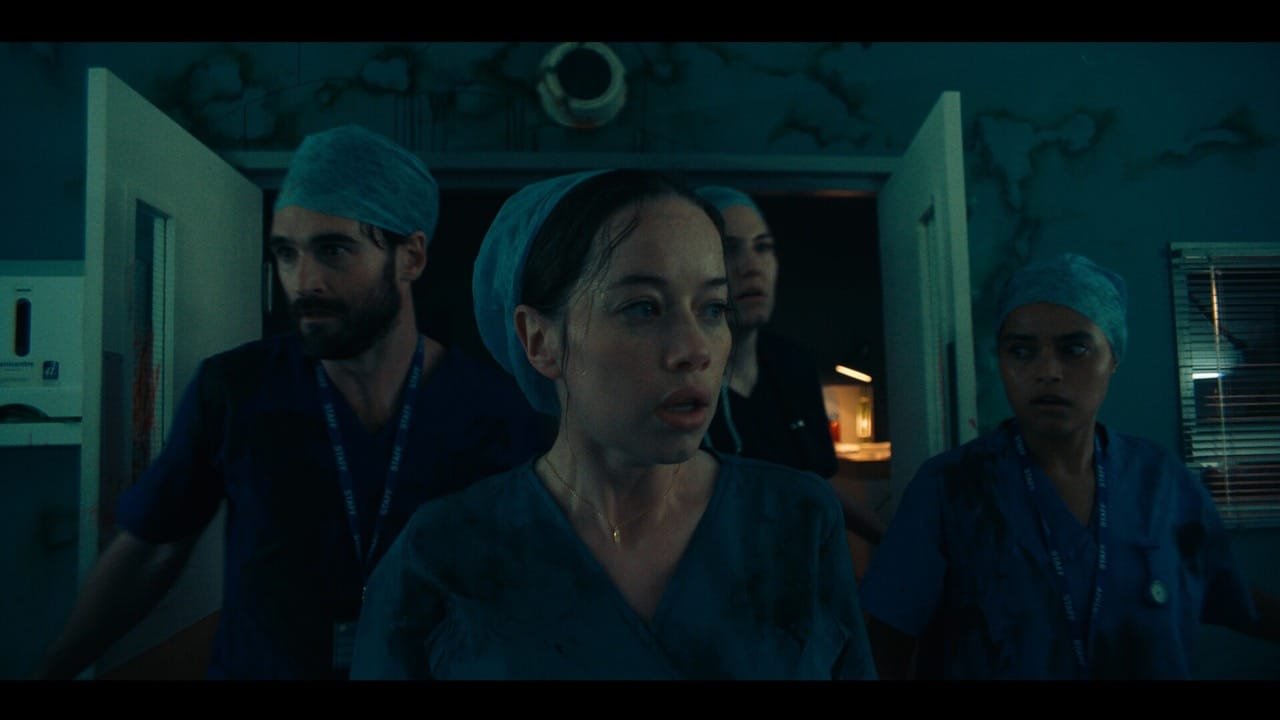
Plastic Surgery is a short thriller which examines the effects of plastic pollution on the human body through a cinematic storytelling lens. On her final day before maternity leave, Dr Terra undertakes what she hopes is her final routine operation. While packing up her desk, the intercom chimes calling her back to the theatre. Alongside her team, Dr Terra begins to discover that all of their patients have increasing amounts of plastic hidden within their bodies. What starts with a small plastic fork evolves into finding plastic shopping bags, bottles, six-pack rings, toys, food packaging, fishing nets and even PPE equipment. The team is quickly overwhelmed with the scale of infected patients. Running from room to room, they attempt to save as many people as they can until they themselves start showing signs of infection. Dr Terra is left to make the impossible decision, save herself or her patients.
What motivated you to explore the issue of microplastics?
I was motivated to write Plastic Surgery after working alongside The Ocean Agency and following the global news and discussions surrounding plastic pollution and its effects on our health. I was able to see first-hand how plastic has threatened marine life, trapping, suffocating, and forcing them to live amongst our toxic creation. I sometimes find it ironic the very items we created to protect ourselves from disease (PPE) is now washing up on shores around the world. Knowing that we are now consuming plastic through the air, water, food and even clothing makes us wonder; how does this affect us? And how damaging is this to our immune system? As the British Heart Foundation stated “microplastics and nanoplastic particles are present in human arteries”, threatening the health of our hearts. We hope Plastic Surgery will turn heads and shock the audience into the harsh reality that we have been poisoning ourselves all along. Now is the time to act and we hope change is on the horizon.
The film uses the medical profession as a metaphor for plastic pollution. What inspired that creative connection?
I was originally inspired by watching Denis Villeneuve’s short film ‘The Next Floor’ which uses waiting staff as a metaphor for mother nature, desperately trying to serve and keep up with a table of people eating endangered species and breaking through the floor with the weight of their consumption and greed. This creative approach was exactly what I wanted to achieve with Plastic Surgery. So I looked at exploring plastic as a visible disease, coming from within the human body to represent all the ways in which we consume it. This evolved into following a character driven story of a pregnant women who represents mother nature.
What kind of research went into developing the film? Did you collaborate with any scientists, doctors, or environmental experts?
When researching a topic like this I wanted to better understand the full weight of the plastic threat on our health. To do this I reached out to various doctors and professors in this field including Kieran Cox, who wrote the informative study on “Human Consumption of Microplastics” in 2019 while at the University of Victoria. Reading a lot of his studies was the foundation of my research which sadly increased dramatically when I looked at other organisations and charities. For example, a similar study was conducted by the British Heart Foundation which identified microplastics in our arteries and fatty plaques surrounding the heart which could pose a significant risk to our health – “These markers are known to play a role in the build-up of these fatty plaques in the blood vessels, which raises the risk of a blood clot developing that can cause a heart attack or stroke. The more plastic a person had the higher their blood levels of inflammatory markers, reported the research team who followed the study’s participants for almost three years after they’d had the plaques removed”.
When researching the characters and roles for Plastic Surgery I wanted to create a realistic hospital environment. The actors had to portray medical professionals, thrown into this world of chaos. To achieve this, I worked with doctors and nurses who are medically trained to review the script and make sure the dialogue was accurate to reflect how a hospital would operate. For example, we looked at all the different colour warning codes hospitals would use on their intercom systems to communicate, which was then incorporated into the intercom dialogue and general atmosphere of the ward. We also had a medical advisor on set every day who helped us understand and operate the medical equipment and apparatus around the hospital. All of the work above helped make Plastic Surgery feel gritty and real within an extremely surreal event.
How did you navigate the balance between the realism and metaphor to effectively convey the urgency of the public health threat?
The realism in Plastic Surgery comes from the performances of the cast, especially Anna who plays Dr Terra. Normal working people in a very real setting who end up being thrown into a very surreal world of chaos and suddenly have to react to this. This already helps build tension and pace which helps convey the urgency of the threat. When we finally see Dr Terra has also been infected by this plastic disease we truly understand that everyone is at risk and there is no escaping the effects of our own toxic creation.
Anna Popplewell delivers a powerful performance as Dr. Terra. How did she come on board the project, and what made her right for the role?
I had watched Anna in a play and had always wanted to work with her. She has an incredible ability to switch into character and really wants to explore the reasons why and the world in which a character lives. She has a beautiful rawness to her emotion, something which blew me away everyday on set. When her team of surgeons enter the hospital ward into chaos was the moment I realised Anna was perfect for the role. I purposely kept her away from the prosthetics and film set so we could shoot the first take as her true experience of seeing the space on camera for the first time. This ended up being used in the edit because her reaction and emotion was so real, she felt completely overwhelmed and portrayed exactly how I believe mother nature feels today.
In addition to her performance, it was actually Anna’s involvement in development which made the story what it is today. She revealed on our first call that she was in fact 6 months pregnant and asked if that would be an issue for the story. I had a sort of epiphany moment and re-wrote the script for her in mind. Who better to represent mother nature than a pregnant women about to give life, and how would this effect her decisions and make us feel more connected to her journey.
In your view, where does the greatest responsibility lie when it comes to the environmental crisis of plastic pollution? Is it individuals, corporations or governments?
I believe there is an element of dual responsibility. If you choose to change your daily use of plastic even in a tiny way it can have a great impact. For example, if you choose to use a water bootle you can save over 250 plastic bottles which end up in the ocean / landfill every year. Change can happen now and that is a very effective method of defeating plastic. If we cut out the demand, the supply will diminish.
However, this doesn’t take the responsibility away from companies and governments, as there are many places which don’t have the luxury of choice or clean water supply for example. So there is an element of dual responsibility of the supplier to develop plastic alternatives and the customer to consciously choose sustainable methods. As an example the deposit return scheme is being rolled out in the UK as of 2027 which will allow people to return single use plastic and received a deposit back from the initial payment.
Any plans on your next project?
There are a few projects in development, however my recent focus has been on a short animation called Haven. This is an animated thriller set 100 years after the environmental disaster of the MT Haven oil tanker in 1991 which saw 50,000 tonnes of crude oil flood into the Mediterranean sea. We follow a team of divers canvasing the wreckage looking for any sign of oil to salvage, until one of the divers is separated from the team and saved by an unexpected character.