




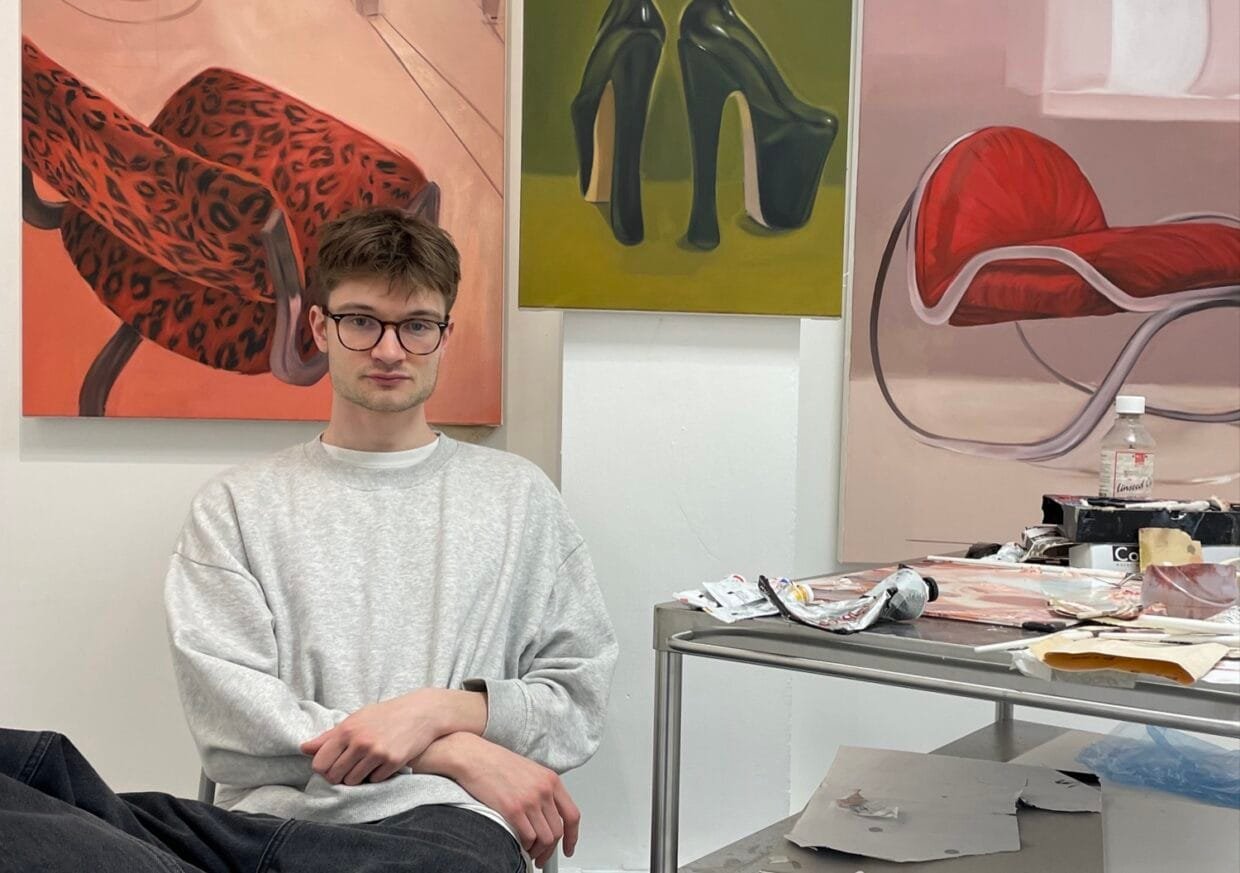
In the layered streets of Shoreditch, where fashion and identity blur into art, Ollie White debuts his solo exhibition Something Borrowed. The works transform boxed shoes into psychological portraits—objects that hold memory, intimacy, and traces of human presence. Inspired by his training at Goldsmiths and the Royal College of Art, White’s practice balances fragility, narrative suggestion, and emotional weight. We caught up with Ollie White to talk about his process, his fascination with shoes, and how Shoreditch shapes the dialogue around identity in his work.
Tell us about the emotional spark behind Something Borrowed. What drew you to the motif of shoes in boxes?
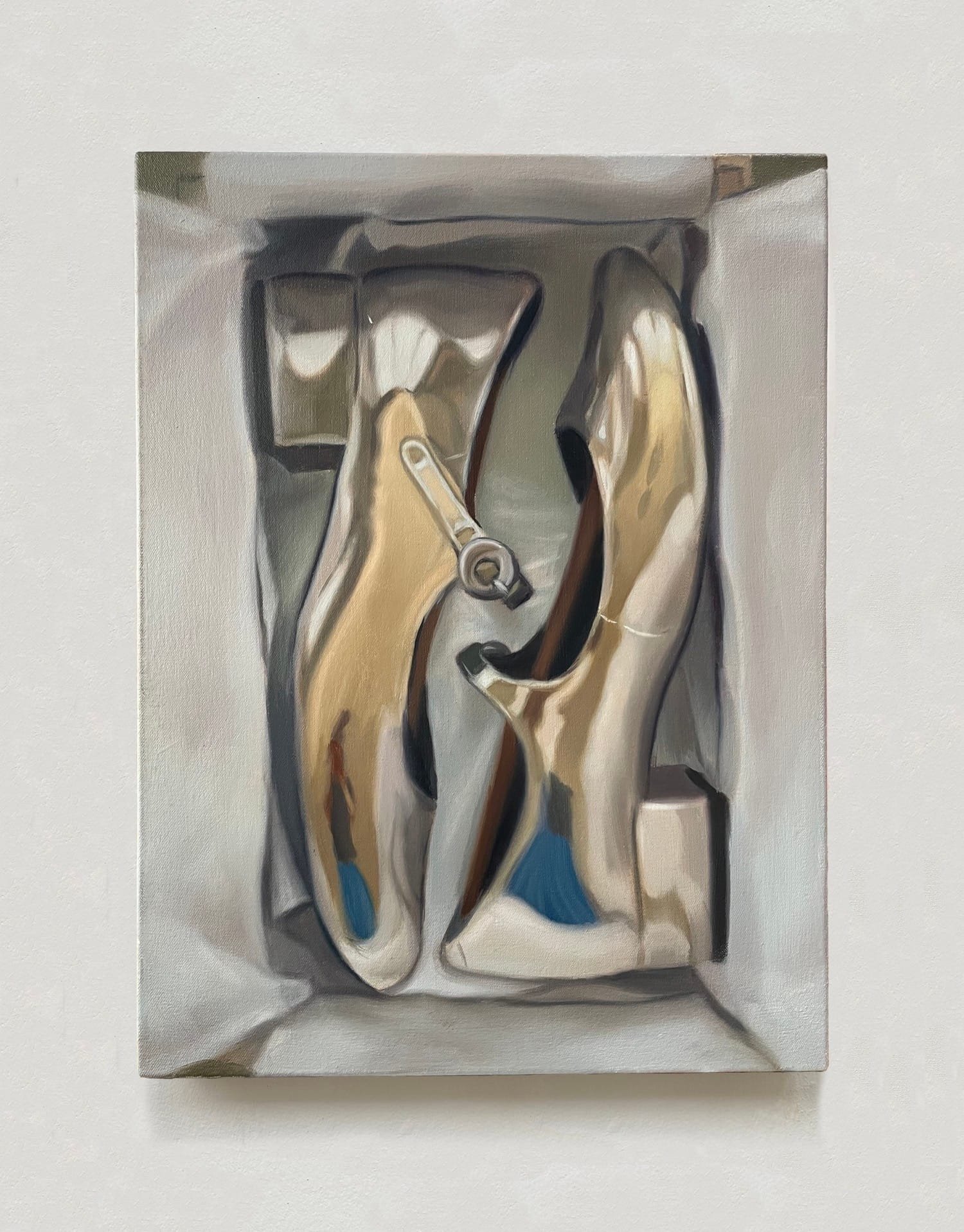
The emotional spark lies in the quiet, intimate drama of objects that hold stories. The motif of shoes in boxes began as a fascination with moments in time, where shoes are chosen, worn, and then carefully returned to their place, with each boxed pair acting as a vessel of memory.
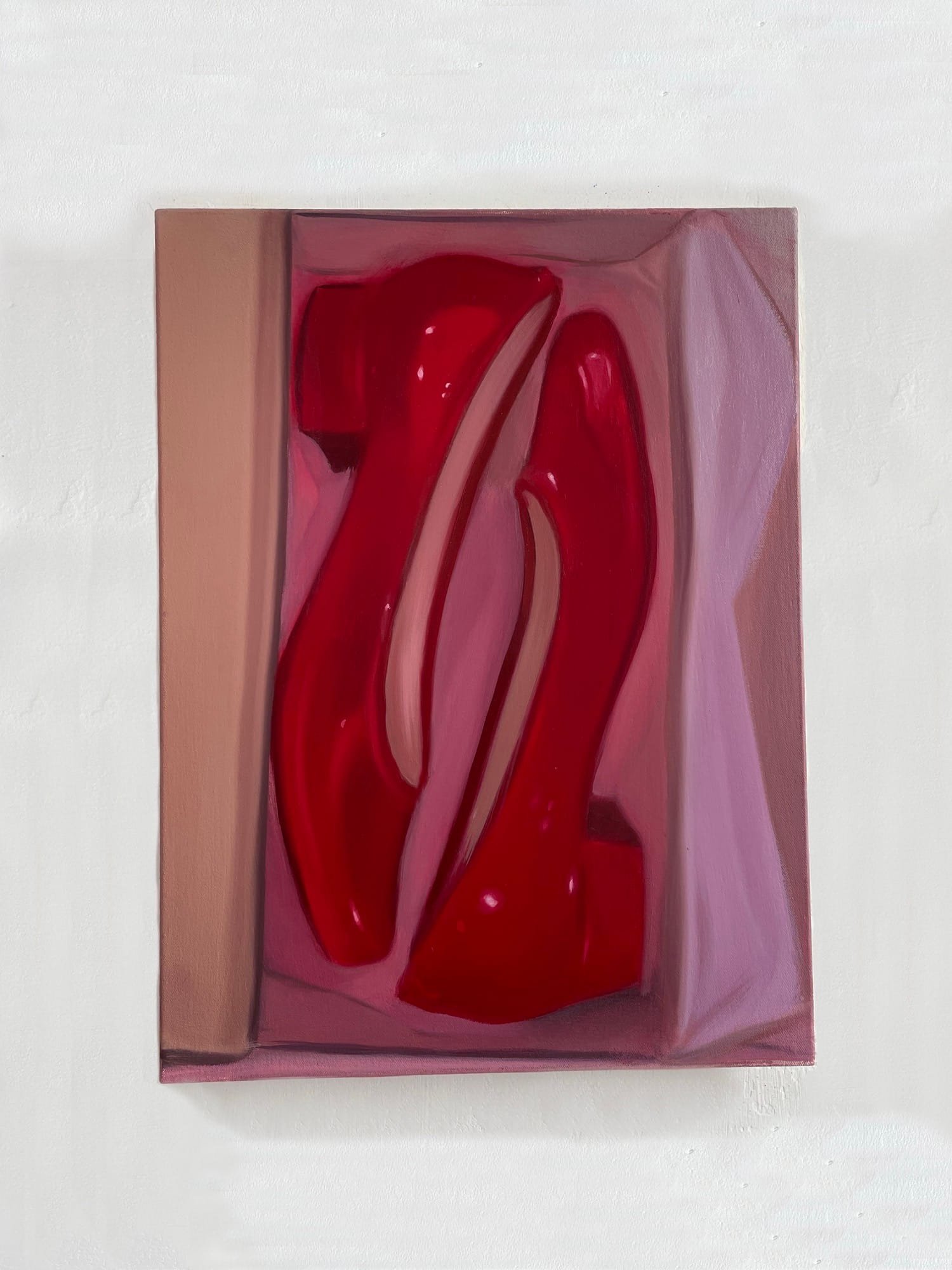
The boxes act as both stage and shelter, evoking themes of enclosure and preservation. Tissue paper becomes a shroud, hinting at care, secrecy, and the fragile traces of human presence. Shoes – deeply personal, shaped by the body, and marked by wear – become stand-ins for the absent figure, suggesting anthropomorphic qualities. They can appear poised in conversation, leaning toward each other or retreating into shadow.
Your paintings blur the line between object and identity. How do you see the role of the shoe—icon, relic, or portrait?
The shoe is primarily seen as a portrait, though it carries qualities of an icon and a relic as well; I want viewers to see the shoe as moving beyond being a simple object and transitioning into being viewed as a vessel of memory, intimacy, and identity. The boxed shoe acts as a character or gesture, holding traces of a human presence and inviting viewers to explore the emotional life behind the object.
The use of tissue paper and shadow creates a dreamlike quality. How does materiality shape the psychological tension in your work?
The tissue paper surrounding the shoes introduces delicate folds and shadows to the paintings, adding a sense of depth and fragility, and transforming the boxes from simple containers into intimate spaces which are vessels for human memory. The use of different textures and shadows creates pauses and silences, inviting viewers to linger and reflect on the emotional weight carried by the objects, and adding deeper meaning to each work.
Do you view the shoe boxes as literal containers—or as emotional spaces, holding memories, characters, and echoes of the human body?
While the shoe boxes may appear as literal containers, I prefer to view them as emotional spaces, capturing and containing memory, intimacy, and traces of the human body. These quiet scenes are filled with pauses and unspoken emotions, encouraging viewers to look beyond the scenes of still life into something that is more personal and alive. In this way, the boxes become portraits which reflect their owners’ identities and memories.
How has studying at the RCA and Goldsmiths shaped your approach to painting—and how did those experiences inform this debut?
Studying at Goldsmiths and the Royal College of Art deeply shaped my approach to painting, and made me into the artist I am today. Both schools encouraged me to explore painting beyond traditional boundaries, pushing me to investigate the psychological and emotional dimensions of objects. My time there helped me develop a visual language in which simple, everyday motifs like shoes become complex portraits charged with memory and identity. This debut solo exhibition reflects that training, combining rigorous technique with a layered, introspective exploration of presence, absence, and the human experience.
The exhibition lives in Shoreditch, a hub for reinvention and identity play. How does the area influence your creative outlook?
Shoreditch is a place where identity is constantly being reshaped through fashion, art, and music, and therefore feels like the perfect home for Something Borrowed. The shoes in the paintings aren’t just objects, they hold memory and character, and in Shoreditch, where individuality and personal style are celebrated, they take on a new life as portraits. The area’s layered histories and contrasts – old and new, polished and worn – echo the visual and emotional textures captured in each piece.
There’s a subtle theatricality in titles like The Party and Soirée. How important is narrative, or even absence of narrative, in your process?
Titles like The Party and Soirée hint at scenes just beyond the frame. Narrative in my process is both present and absent – offering enough suggestion to ignite the viewer’s imagination but resisting defining the story. This deliberate openness is central to my practice; absence of narrative can be as evocative as its presence, allowing the objects to speak in their own quiet language. In this way, Something Borrowed becomes a collaborative act between artist and viewer, each filling the silences with their own memories and interpretations.
As an emerging voice in contemporary painting, what conversations do you hope Something Borrowed starts within today’s art world?
I hope that Something Borrowed sparks conversations around the emotional and psychological lives of everyday objects and how they carry sensations of memory, identity, and intimacy beyond their physical form. The exhibition invites viewers to reconsider what a still life can be, encouraging them to see these carefully crafted paintings as a portrait of human experience through simple, domestic motifs of shoes, moving away from the perception of the still life as simply being a physical representation of objects.
xxx
Ollie White’s debut solo exhibition Something Borrowed showing at Shoreditch’s Haricot Gallery from Friday 05 to Saturday 27 September.