





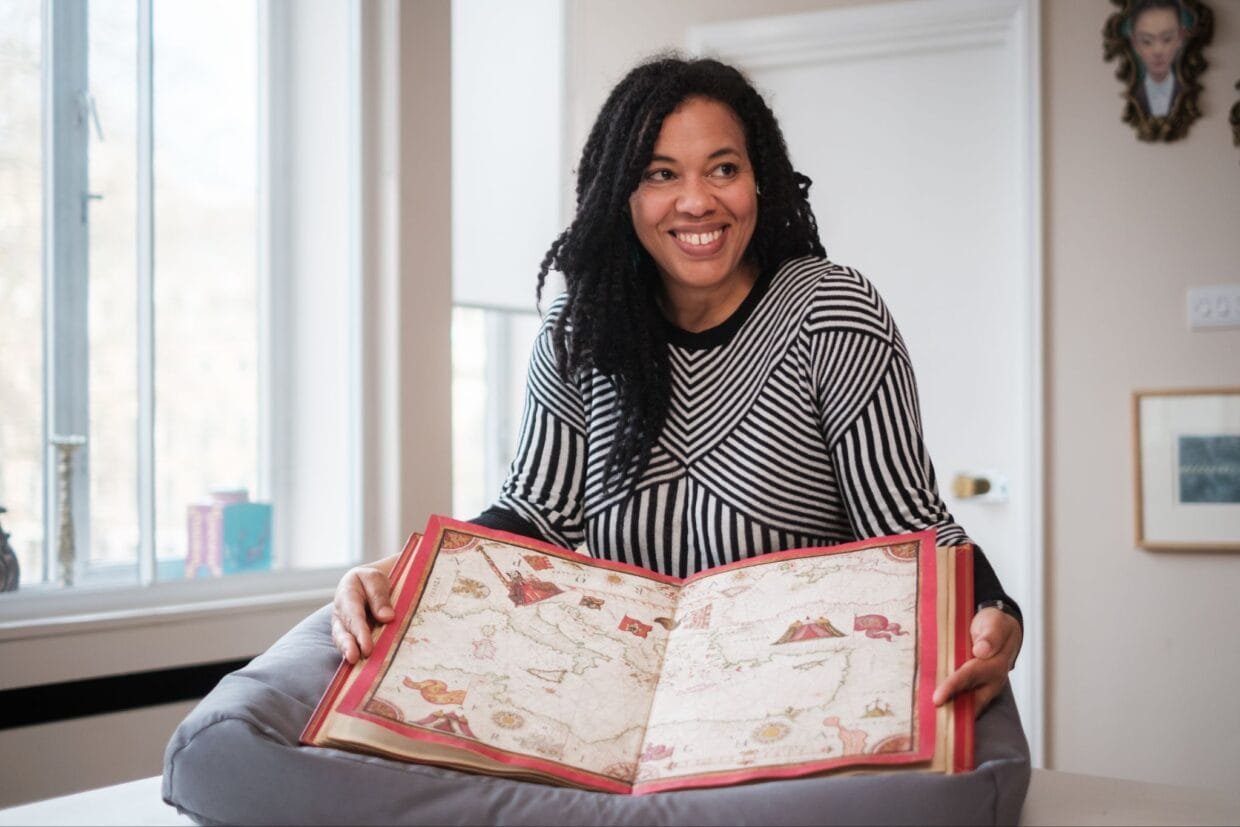
Sonia E. Barrett has built a practice that transforms history into lived, tactile experiences. Her recent commission 9 Nights reimagines the City of London’s centuries-old Ceremony of Quit Rents, shifting the focus from debts paid to debts still outstanding—to the enslaved, to nature, and to silenced communities. Using table linens from both the 18th century and her grandmother’s home, she bridges personal and collective memory with powerful symbolism. To learn more about her artistic process and vision, we caught up with Sonia for an interview.
Your commission, 9 Nights, reimagines the centuries-old Ceremony of Quit Rents. What drew you to this ritual, and how did you approach reframing it?
I have a practice that includes performing furniture and working with tablecloths. It was stunning to discover a ceremony in the City of London that has been practised annually since 1211, where debts are witnessed as paid using a tablecloth and a table.
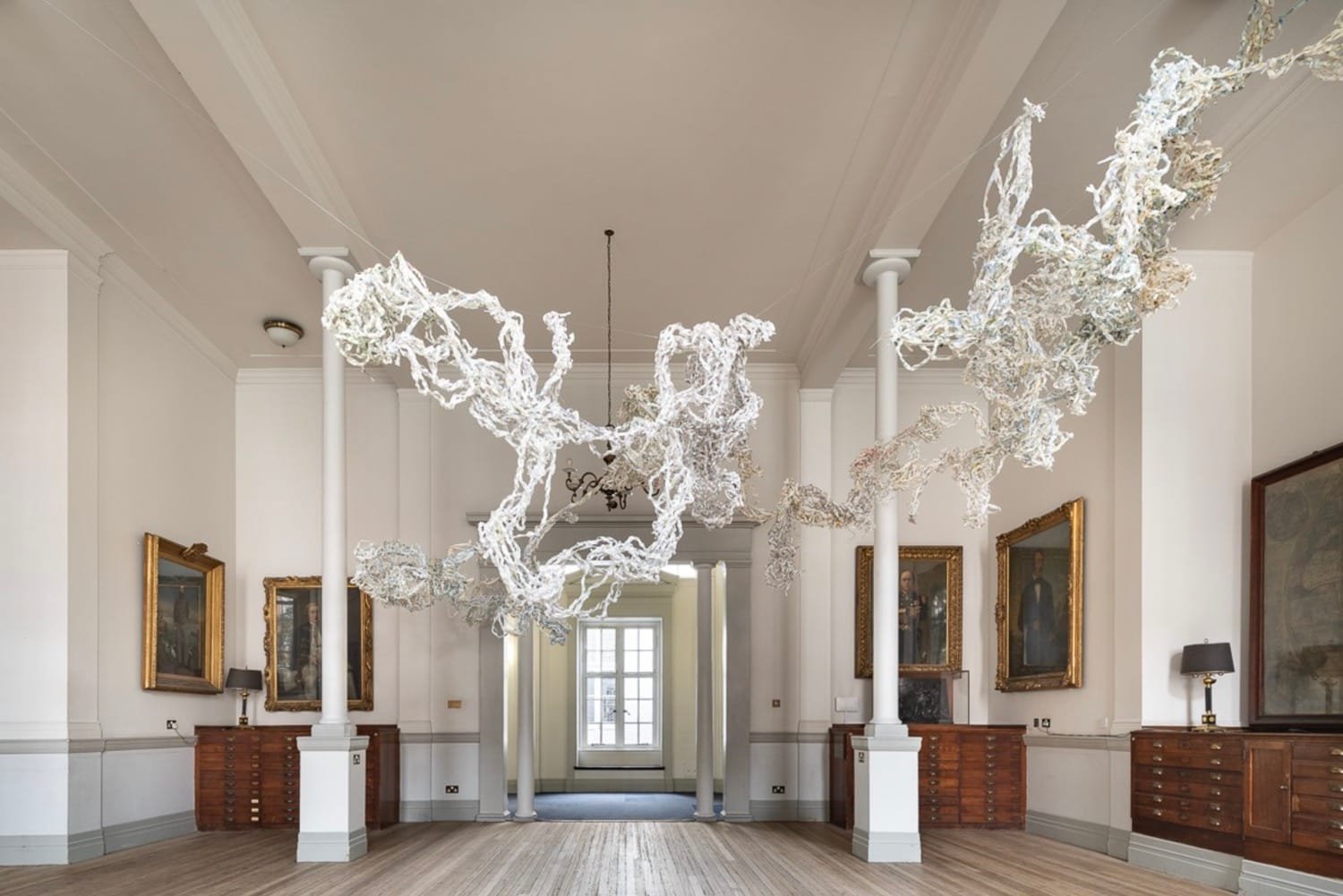
I reframe this ceremony by remaking the remembrance cloth out of tablecloths that look similar but have been on very different tables. I tape the chequered design from the original cloth onto my grandmother’s tablecloths and antique European tablecloths. What all the tablecloths have in common is that they contain lots of lacy open spaces, and these spaces are a visual clue to the infinite losses to humanity and nature that are debts that remain outstanding.
I propose actively reframing the ritual by gathering people wearing the cloth to rethink new metrics that relate to the debts to nature and people that are continually outstanding, as opposed to gathering to make a yearly repayment.
The “remembrancer cloth” incorporates both 18th-century table linens and your grandmother’s fabric. How does weaving the personal into the historical shift the narrative of the work?
It is my grandmother’s cloth, but so many West-Indian homes were full of this kind of broderie. It was interesting to mix up Victorian tablecloths with tablecloths from Caribbean households in the 70s. In my work, I like to combine elements from different time periods and diverse racial spaces.
It is meaningful to start a work using the tablecloth of a black British citizen in London who came to serve in Britain to highlight the services that have been left uncompensated. It is meaningful to use similar tablecloths from other households in France and America to consider this same point.
Instead of debts paid, you focus on debts still outstanding—to the enslaved, to nature, to silenced communities. What conversations do you hope this reframing sparks?
I plan to initiate discussions around trade metrics and what is fair to the environment and those most impacted by climate change. This reframing can create a new event to understand anew. By proposing a banquet for professionals working on these issues, I aim to initiate meaningful changes.
Your practice often uses found materials—furniture, hair, cloth. What role do these everyday objects play in unpicking colonial histories and imagining new futures?
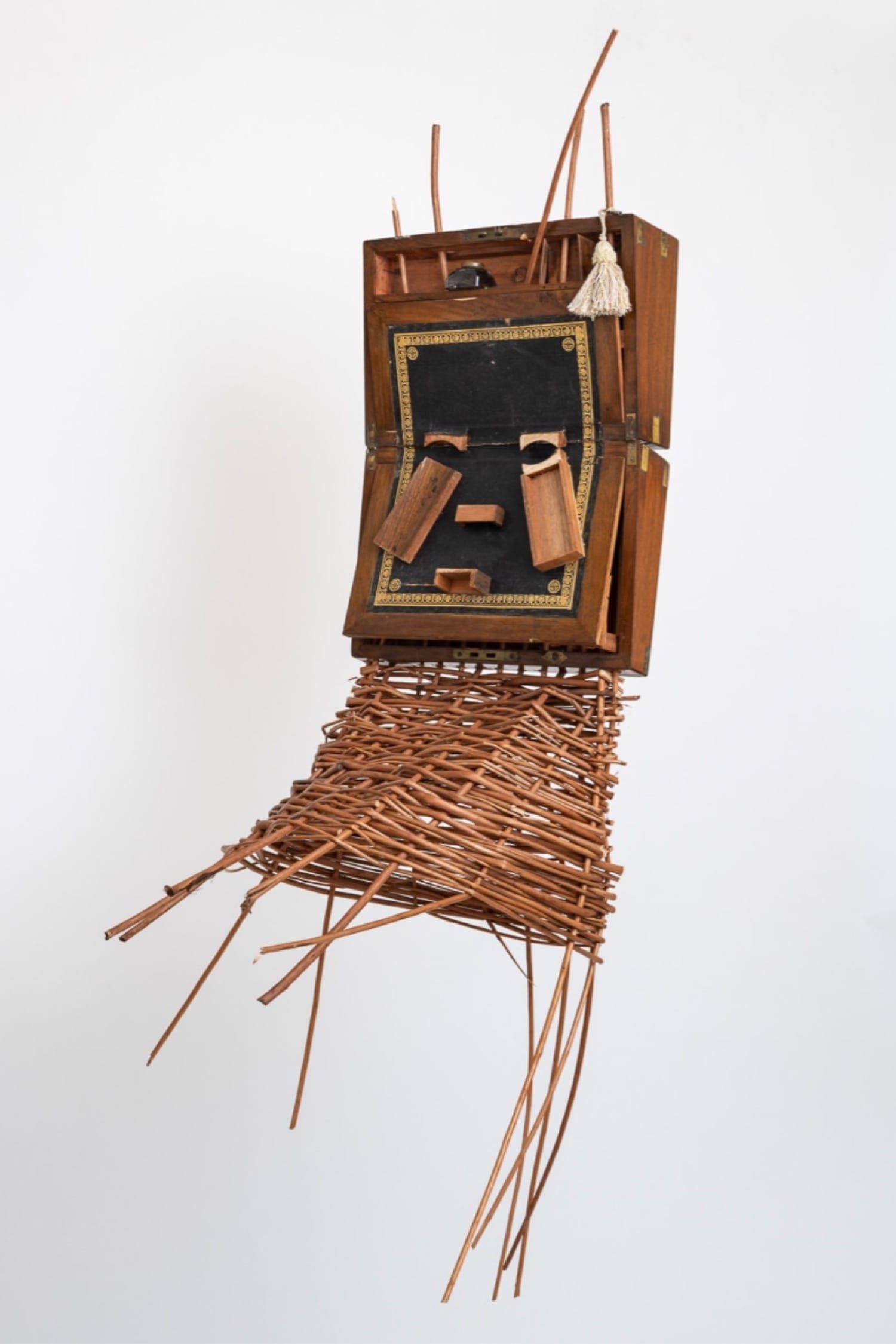
I am not interested in abstract ideas for change but real change that implicates our individual actual bodies. This is why I work with real things, such as furniture and cloth stones, and maps which are in our shared actual lives, things that bridge race and class. Telling your own story is important, but the points at which our stories converge are almost more important. I look for the story that weaves together all the stories which we thought were so different. We have to imagine new futures together, not on our own. Spending time together making sculptural work and installations can create time and space for new collective thinking.
Having grown up between Hong Kong, Zimbabwe, Cyprus, and the UK, how have these diverse geographies shaped your sense of belonging and artistic voice?
I learned that there are multiple ways to do anything, and what is considered correct can be a social construct. What is correct in one place can be incorrect in another. It has given me cross-cultural thinking, especially in language.
Your work challenges Western frameworks of nature, race, and gender. How do you balance critique with the creation of spaces for healing and reorientation?
The critique is arrived at in a group, as one of the prevalent social conditions of late-stage capitalism is loneliness. Just withdrawing from everyday life to gather together to figure things out is in itself restorative and reorienting. That said, we can’t heal a wound when the blows are still falling.
Place-making and community assembly are recurring themes in your work, especially under the shadow of climate threat. What do you see as the role of art in reclaiming space today?
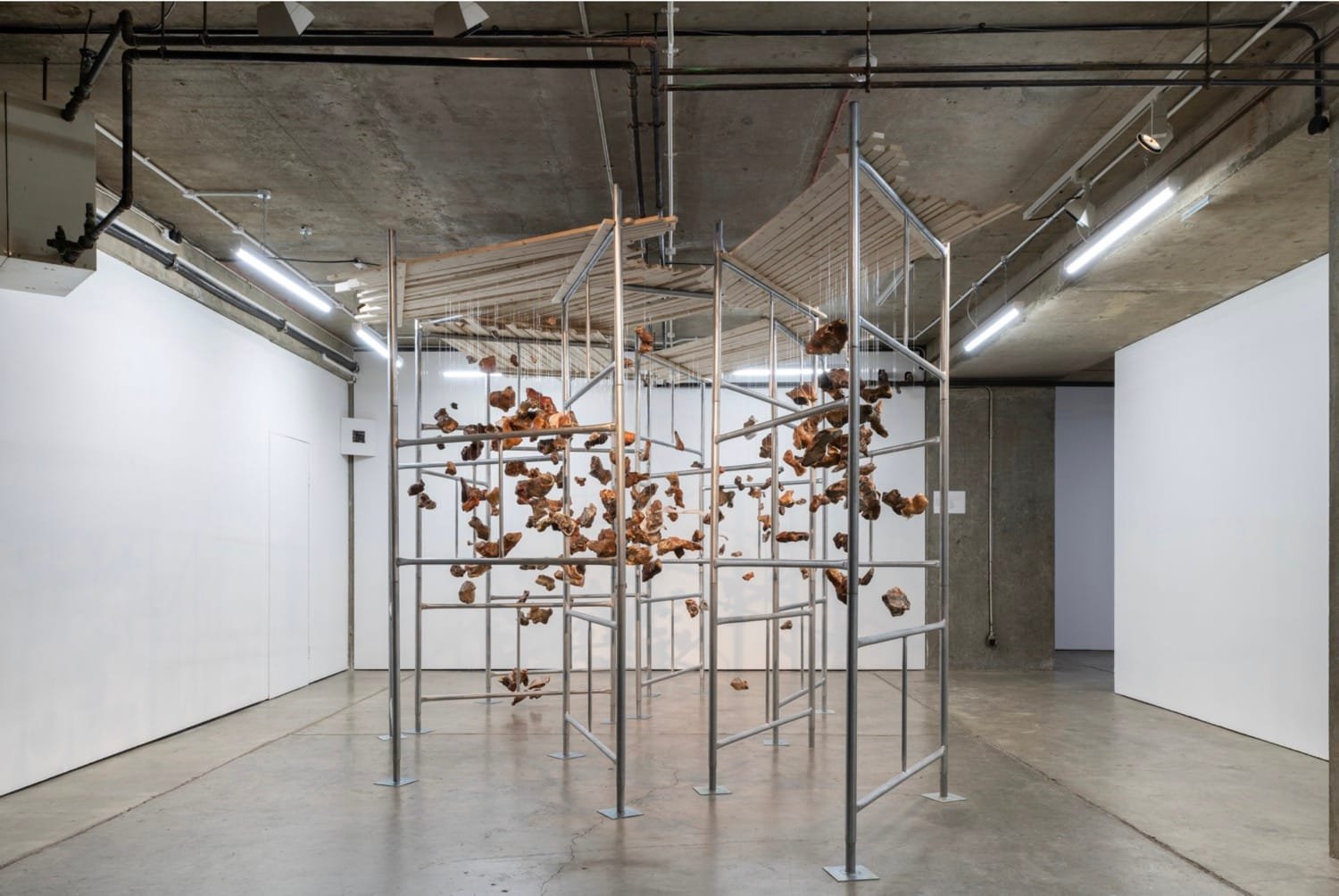
Art can claim space for community. Piazzas, squares, and covered places where we can gather informally without consuming anything are limited. Institutional galleries are some of the largest freely accessible covered spaces. Making sculpture together is a way to claim a big space for the community and create something significant together. What is exciting is what those people could go on to make after having made the sculpture.
From Tate Britain to the National Gallery of Jamaica, your work has resonated in very different contexts. How does showing in spaces like the Guildhall in London add to that evolving dialogue?
The work was only up in the Guildhall for three hours; our map work at the Royal Geographical Society was only up for a day. Longer exhibitions were at the Urban Room at UCL and Tate Britain. These works are interventions, remaking the space for the time they are there and sometimes even after they are gone. What remains from the Guildhall commission is the video sharing the genesis of the idea of an actual banquet next year, where we can discuss new metrics for the environment and humanity. People concerned about the environment and modern-day and historical slavery will have an opportunity to wear the remembrance cloth and gather in central London to discuss new frameworks. Now that I am presenting my most recent work in Miami, I have realised how London-centric my practice has been in recent years. London is a place with a difficult history that can be a place of new beginnings.