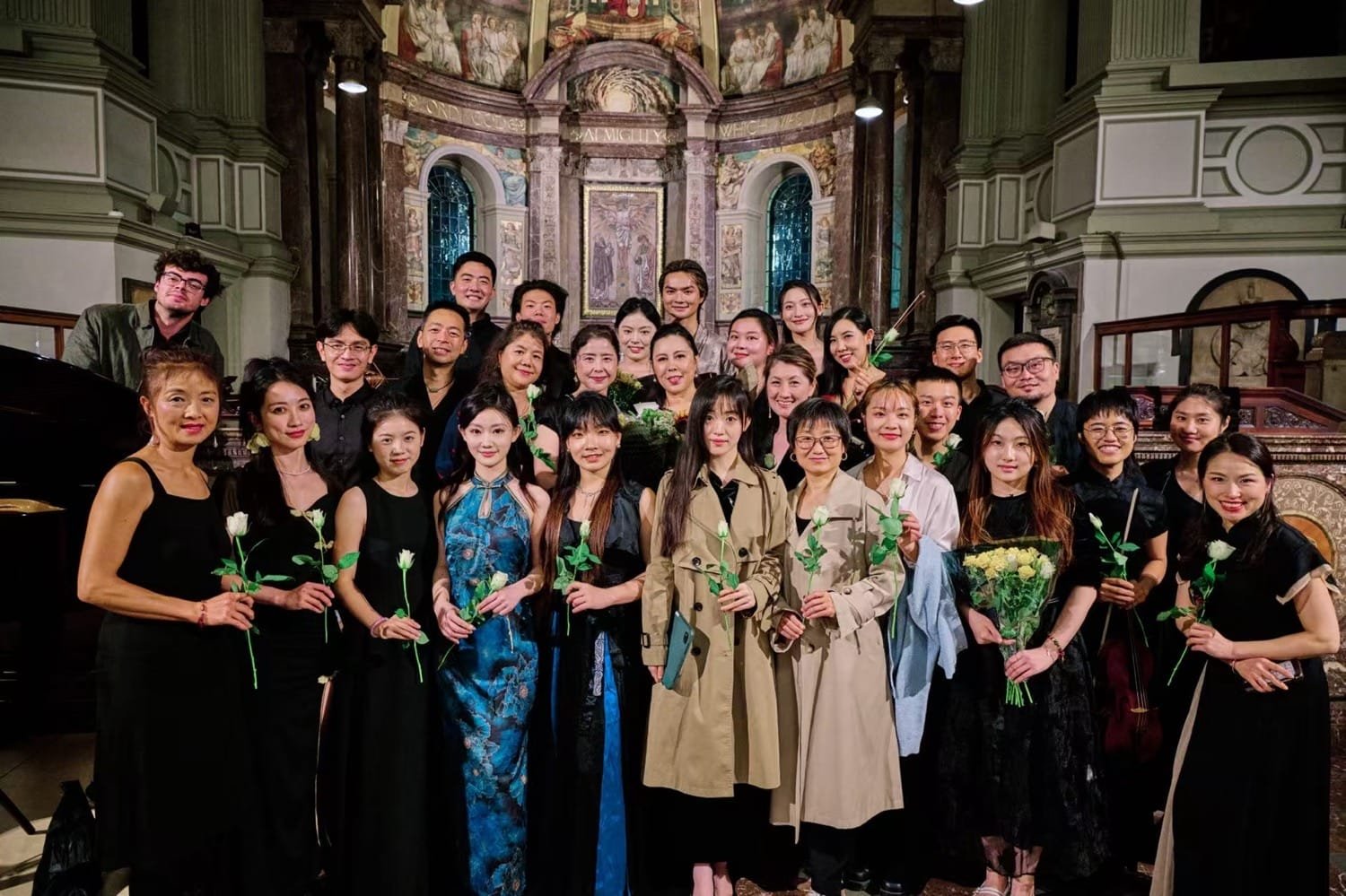






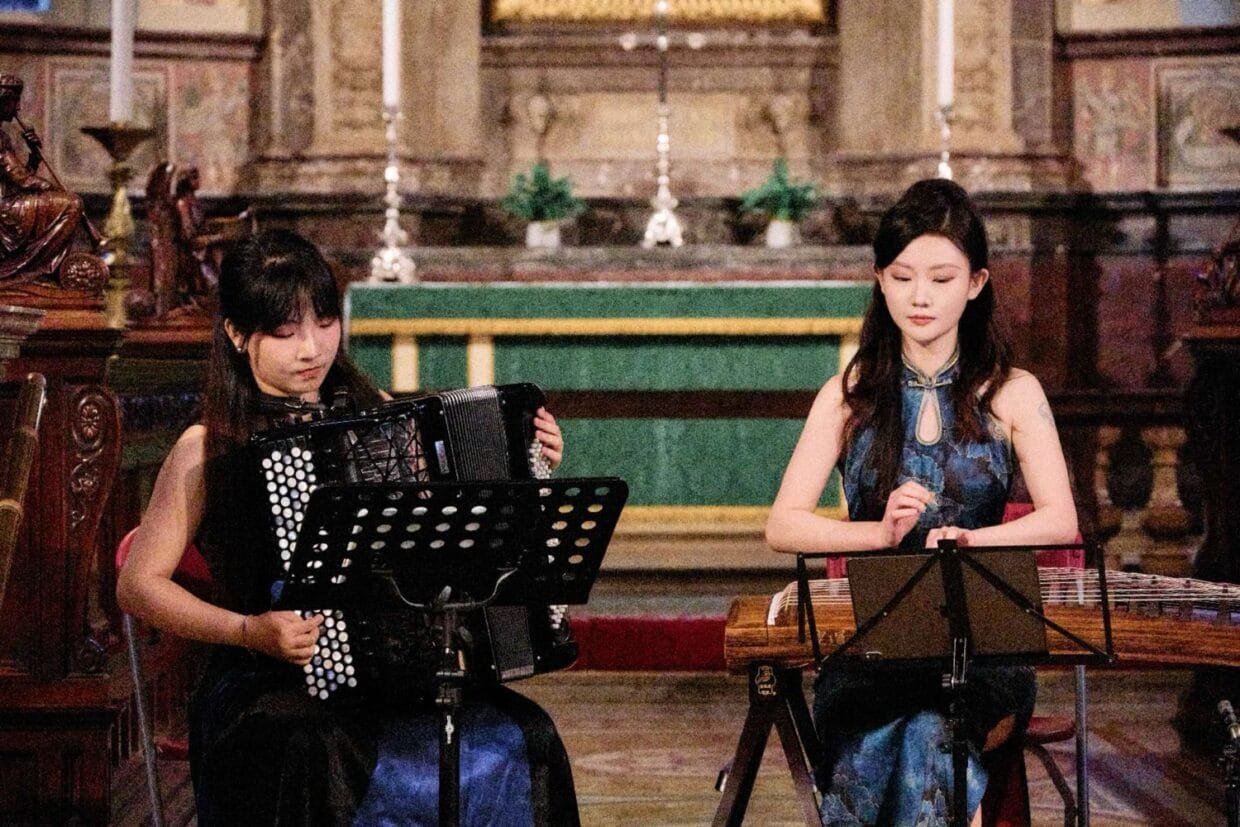
On 28 August 2025, during the China-West Soundscape concert at the London Chinese Music Festival, the world premiered Awakening, a new work by composer Yusheng Chen, performed by guzheng virtuoso Mengdie Ji with accordion. The performance offered a bold meeting of tradition and modernity, showcasing not just what the guzheng can do, but what it could be.
Yusheng Chen, a graduate of the Central Conservatory of Music and recipient of the China National Arts Fund, is known for his rigorous investigations into sound aesthetics. Originally created in 2016 for guzheng and saxophone, Awakening has been specially reworked for this occasion: reorchestrated for guzheng paired with accordion, reduced from five movements to four, and retuned—altering the instrument’s scale in subtle but transformative ways.
Mengdie Ji: From Award-Winning Youth to Innovator
Mengdie Ji began learning the guzheng at age four and quickly distinguished herself in China’s classical music circles, winning numerous guzheng competitions as a child. From 2016 onward she has embraced cross-genre work in Beijing, collaborating beyond traditional repertoire—with jazz, pop, rock—and recording albums that bring the guzheng into unconventional sonic spaces. Her artistic trajectory bridges deep traditional technique with fearless experimentation.
Guzheng Techniques & Their Expression in Awakening
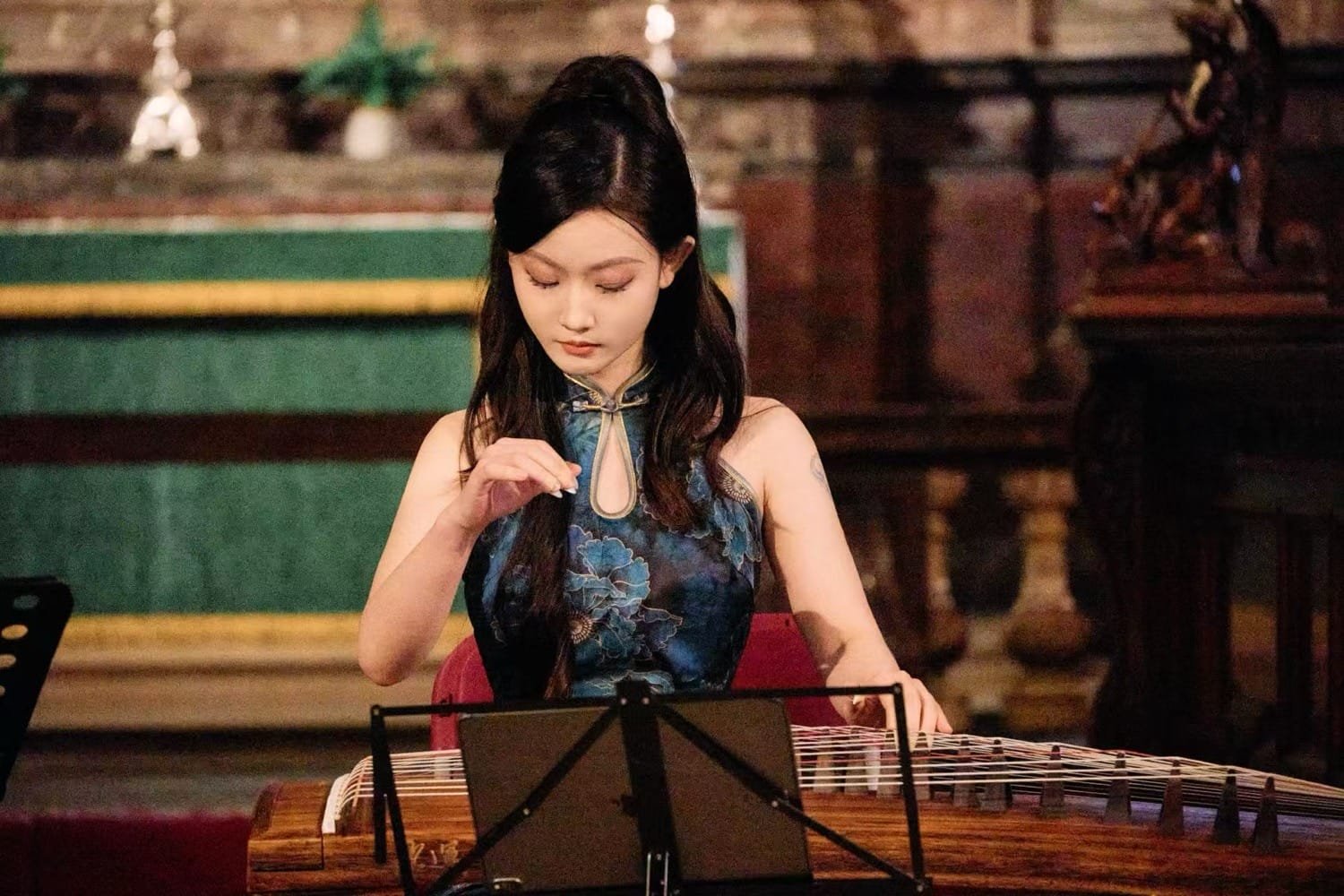
In Awakening, several extended guzheng techniques are employed—not as ornament, but as essential expressive devices. Here are some of the key elements and how they contribute to the piece:
Tuning shift: Mengdie Ji’s guzheng is retuned from the standard pentatonic D–E–F#–A–B to D–E–F#–G#–B. That G# introduces a chromatic inflection, increasing tonal tension—and giving moments an edge of surprise, allowing the melody to wander between the unfamiliar and the familiar.
“Noise” sound effects: Techniques such as scraping the strings with fingernails, striking or tapping the soundboard or strings without producing pitched notes, and mixed textures (combining plucked strings with percussive noise) are used in movements three & four. These effects create contrast: breaking up purely melodic expectations, introducing raw timbral colour.
Left-hand pitch modulation: Sliding, pressing, bending—classic guzheng techniques—are stretched into microtonal or expressive inflections; vibrato and pitch slides not merely for decoration, but to shape emotional contours.
Silence, breathing, physical gestures: The score asks for non-sound actions—breathing, closure of eyes, pauses, gestures by hands—that affect timing and presence. In performance, these moments heighten anticipation and allow audiences to feel the fine boundary between sound and stillness.
These techniques together make Awakening less about fixed melody, more about an evolving soundscape—where every scratch, every pause carries weight.
Performance & Reception
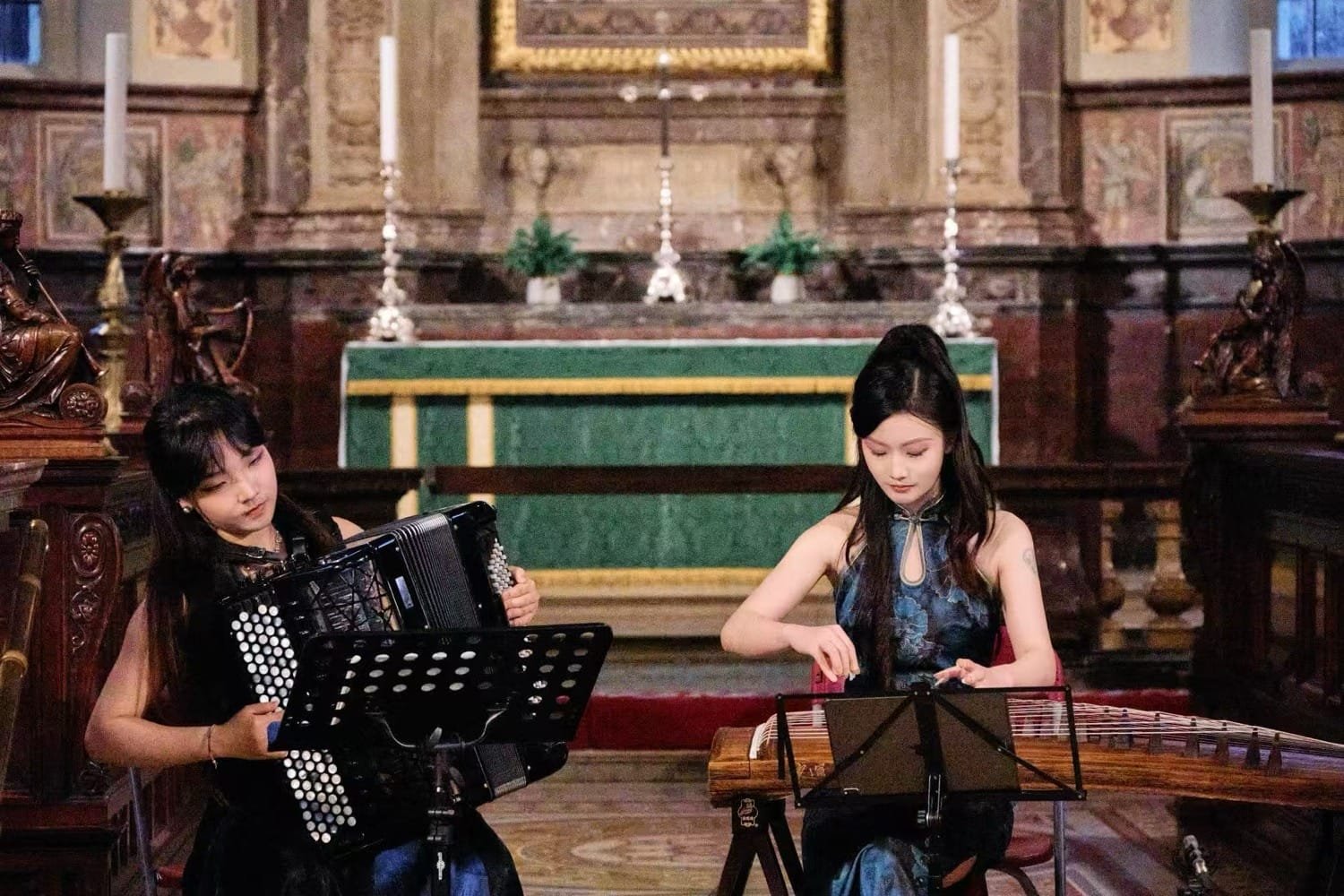
During the evening, the first two movements unfolded with restrained lyricism: The first moment unfolds amidst quietude and restraint, building tension subtly within stillness. The second features alternating melodies from the guzheng and accordion, as if drifting through the spaces of a dream. In the final two movements, notation gave way entirely to instruction: “close your eyes, breathe, summon fear, produce sounds of gasping, nail-scraping, blended textures.” Under Mengdie Ji’s hands, the guzheng became a vessel for atmosphere as much as music.
Audience and peers responded powerfully. Cheng Yu, Director of the London Chinese Music Festival, described Mengdie Ji as “an artist of outstanding technical mastery who at the same time dares to explore the emotional depths at the boundaries of sound, bringing new expressive possibilities for the guzheng on the international stage.”
That evening, British composer Barnaby Taylor, who had previously composed works for Ji Mengdie, was also in attendance. Ji performed his composition Wild China, created for a BBC documentary. Barnaby Taylor praised her ability to ‘convey the soul of diverse musical styles with accuracy and emotion, each note full of vitality’.

Significance & Future Prospects
The guzheng has long been admired for its traditional repertoire, but Awakening shows its evolving voice in contemporary composition. Under Yusheng Chen’s composition, and through Mengdie Ji’s interpretation, this work elevates the guzheng beyond a mere symbol of traditional music, transforming it into a sound that resonates within concert halls worldwide.
Mengdie Ji is emerging as a rising star in the world of guzheng performance, one who carries the instrument from its Chinese roots into international music halls. Awakening marks a key moment in her artistic journey—and promises more work that blends tradition with innovation.