






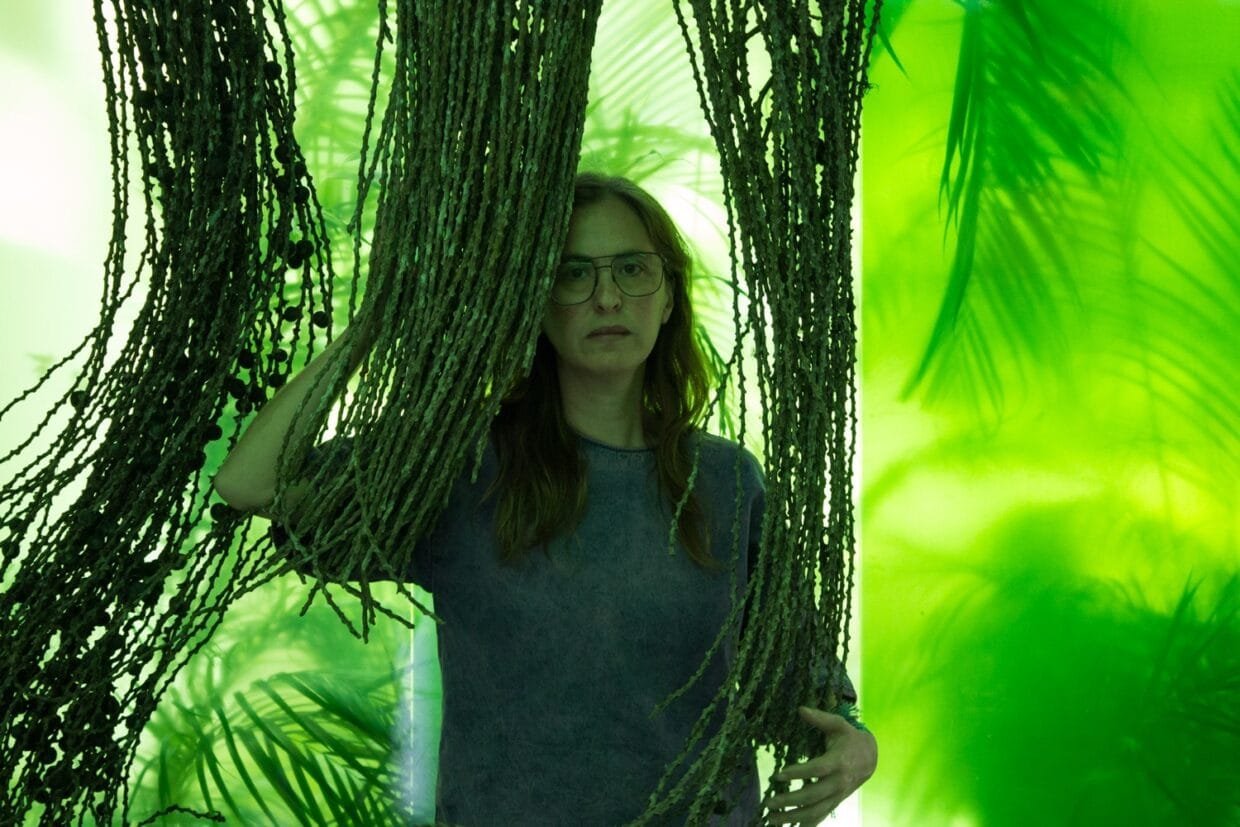
At this year’s Frieze Sculpture 2025, Lucia Pizzani unveils The Tale of the Eye, the Snake and the Seed, a major new site-specific installation in Regent’s Park. The work fuses clay, sound, and storytelling, layering ancient myth with contemporary ecological reflection. Symbolism of fertility, protection, and transformation runs throughout, inviting audiences to pause and consider humanity’s relationship with nature. To learn more about her practice and the themes behind this new piece, we caught up with Lucía Pizzani for a conversation.
Your new work The Tale of the Eye, the Snake and the Seed debuts at Frieze Sculpture 2025. How did the idea for this triad of symbols first emerge?
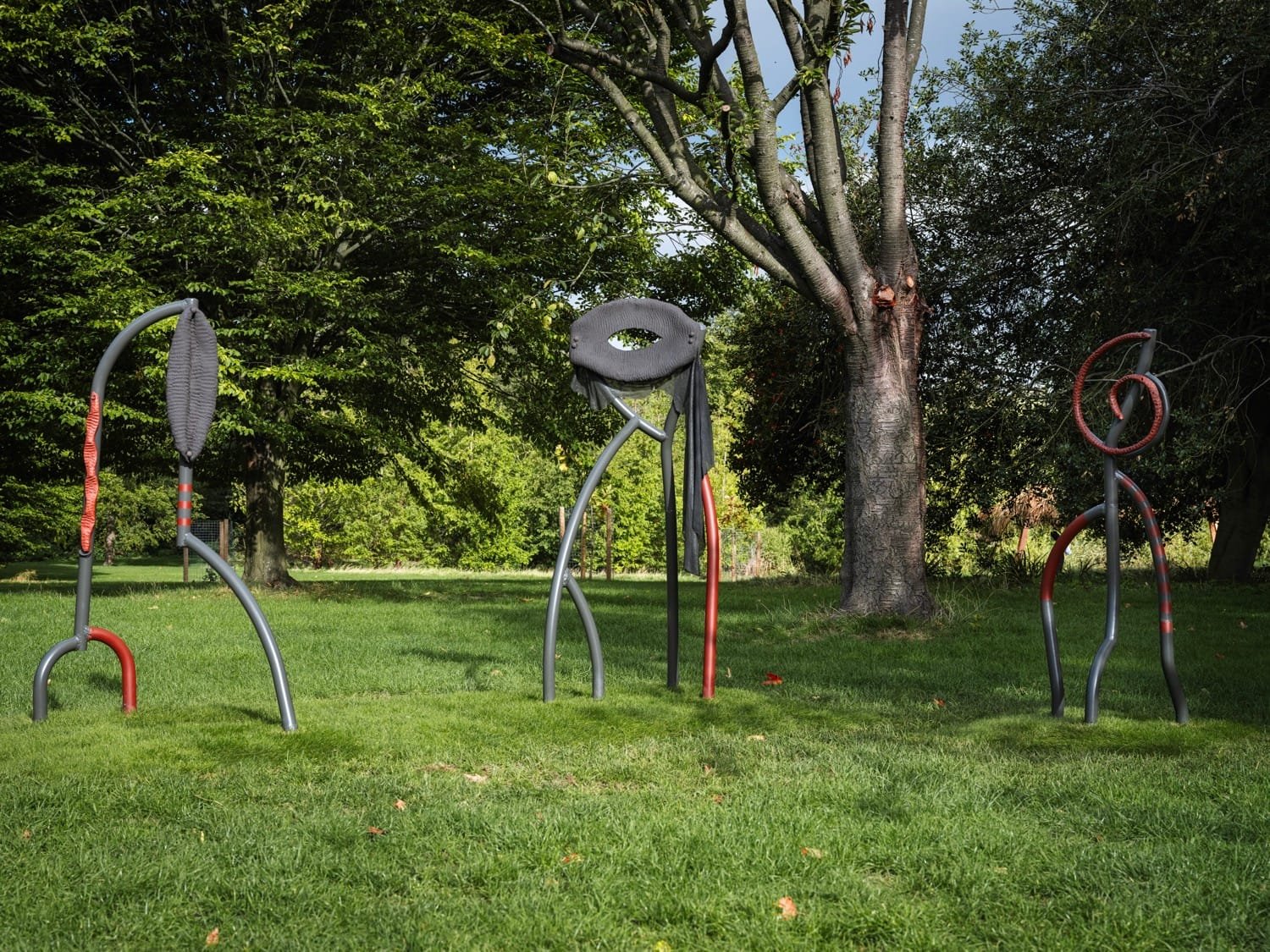
I have been working with the snake as symbols for years now. Thinking of the idea on a second skin, shedding, healing and transformation. The seed is also recurrent, the oval shape that is the mouth, the eye, the vulva and seed. All of these forms carry meaning, the Eye too and I have added it to my ceramic totems or solar prints many times as a way to engage the viewer and to represent the spirits of plants.
The installation blends ceramic sculpture with sound, created in collaboration with Lucia Pietroiusti and Luzmira Zerpa. What role does storytelling play in shaping the audience’s experience?
Storytelling is one of the oldest ways to transmit knowledge. I wanted to depart from ancient symbols but to write our own tale. Lucia Pietroiusti was the perfect partner to think and write and she is also joining the performance. Luzmira Zerpa was key in incorporating instruments and songs in the performance. I have worked with both in the past and these collaborations always shape and enrich the final piece. The work is composed of three dimensional sculptures and a sound piece that is actually composed of vibrations and exists as a digital file, available to access via QR code. Javier Weyler did the sound design and mix of the piece.
The Eye in your piece references a Venezuelan Andean myth of Carú and her tears. How do you connect ancestral stories like this to contemporary ecological and social issues?
I worked for a long time in Provita, an NGO in Venezuela, they always said that to be an environmentalist you need to be an optimist, the Carú legend embodies this hope. The pain becomes a waterfall, water being a source of life for so many living beings. After the spanish colonizers attack Carú’s village and she carries the body of her fiance to ask the god of the mountain to spare his life, she also dies in the long hike and her tears become a waterfall that is still there in the Bailadores area. This story talks about life cycles too. I always layer cultures and historic moments as I believe we live in cycles and these ancient symbols are stored in our collective unconsciousness. Looking into the past we can better assess our present and improve the future.
Frieze Sculpture 2025 is curated under the theme In the Shadows. How did you respond to this idea of darkness—both inner and environmental—through your work?
I think the tear is central to the pain the planet is going through, wars, environmental crisis and an insatiable appetite of a species that doesn’t understand the balance of nature. The black clay also plays with the idea of the shadows, there is always a positive and negative space within the works. The hole through the Eye and the indentations the ceramic has that I made with corn cobs plays with this. The Eye is a symbol for protection, an idea much needed in the present, not only because of the violence some leaders of the world have inflicted on others but also with the recent pandemic where Covid could easily penetrate your body.
You’ve often explored the intersection of the feminine, ecology, and metamorphosis. How does this installation extend or evolve those themes within your practice?
I think the performance is key but also the Snake interacting with the other symbols and the landscape. The roots where the symbols are emerging from come directly from the ground, and seem to extend in the branches of the surrounding trees. The performance is done by three women, the sound piece was co-wrote by women too, the idea of the mother, as in a mother tree, the seed, and the awakening and change that could bring better futures are all addressed in the work.
Material transformation is central to your art. Why was clay, with its ties to earth and cycles of renewal, essential for this project?
My practice is informed by materiality and the stories they carry. Clay is deeply rooted in the human past, it was one of the first places where material culture happened. The minerals present on the ground are what make the pigmentation in the clay, like iron and manganese. So yes Clay is central to this work, the soil becoming rock, a mix of minerals shaped by my hand and the corn cob marks that then become part of the landscape.
Your career spans Venezuela, Europe, and the UK, and your work is held in collections from Tate to Magasin III. How has this global journey influenced the narratives you choose to tell?
My experience as a migrant translates to the work. In Venezuela we have a very syncretic culture, a mix that happened through the colonization process with the indigenous the African and European blended in our culture, religion, music and food. Is almost like a plural self, but at the same time it’s owned and defined. This gets accentuated by the transit into other countries, and now London has been my home for more than 15 years. So yes all this influences the narratives.
Looking ahead, what conversations do you hope The Tale of the Eye, the Snake and the Seed sparks about mythology, ecology, and the role of art in times of crisis?
One where we keep asking questions about our role and relationship with nature, such as: Where does the boundary of the inner body and outside environment start? Which symbols call for inner reflections? How did ancient cultures have a more balanced way of living? How can we create new systems of beliefs and care that will nourish our lives and those of the other living beings on Earth? And any other feelings and inspirations the work can trigger…