






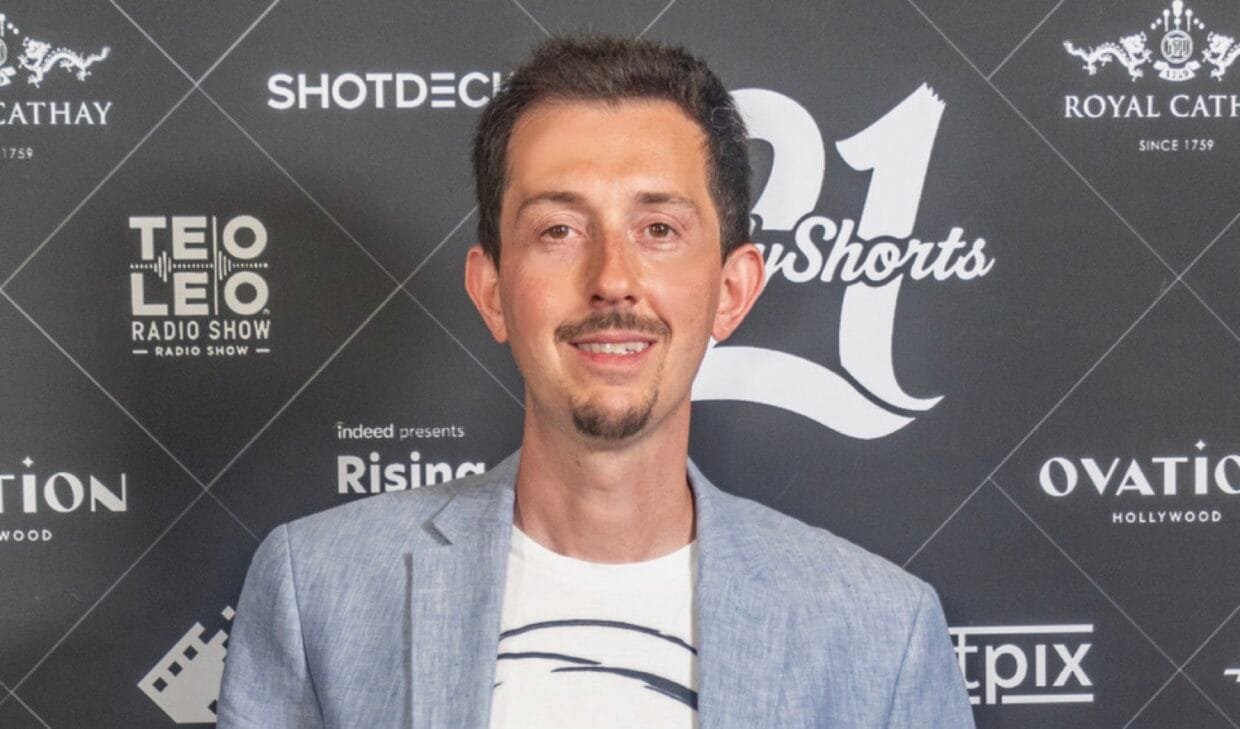
For filmmaker Daniel Persitz, storytelling is deeply personal, often rooted in music and memory. His latest short film, Key of Genius, tells the remarkable true story of blind, autistic pianist Derek Paravicini and his mentor Adam Ockelford. With striking performances and music as its emotional spine, the film explores resilience, connection, and the transformative power of sound. To learn more about his vision and process, we caught up with Daniel Persitz for an interview.
The Key of Genius is adapted from Adam Ockelford’s acclaimed biography “In the Key of Genius”, which tells the story of musical savant Derek Paravicini. How did you first discover the book, and what drew you to Derek’s story?
Everyone on my mom’s side of the family is a professional classical musician and I’ve been playing the violin since I was five, still performing today with the Santa Monica Symphony. My violinist mom sent me a YouTube clip about Derek and I was so dazzled by his playing that I immediately read Adam’s memoir about their history together. I fell in love with their story – in a surprising way, it felt almost like an underdog sports movie. What really struck me was learning that music is Derek’s language. It’s how he communicates with the world. And as a musician, that’s an idea that resonates so deeply with me.
Did you have the opportunity to speak with Adam and Derek during the process? What were your impressions of them?
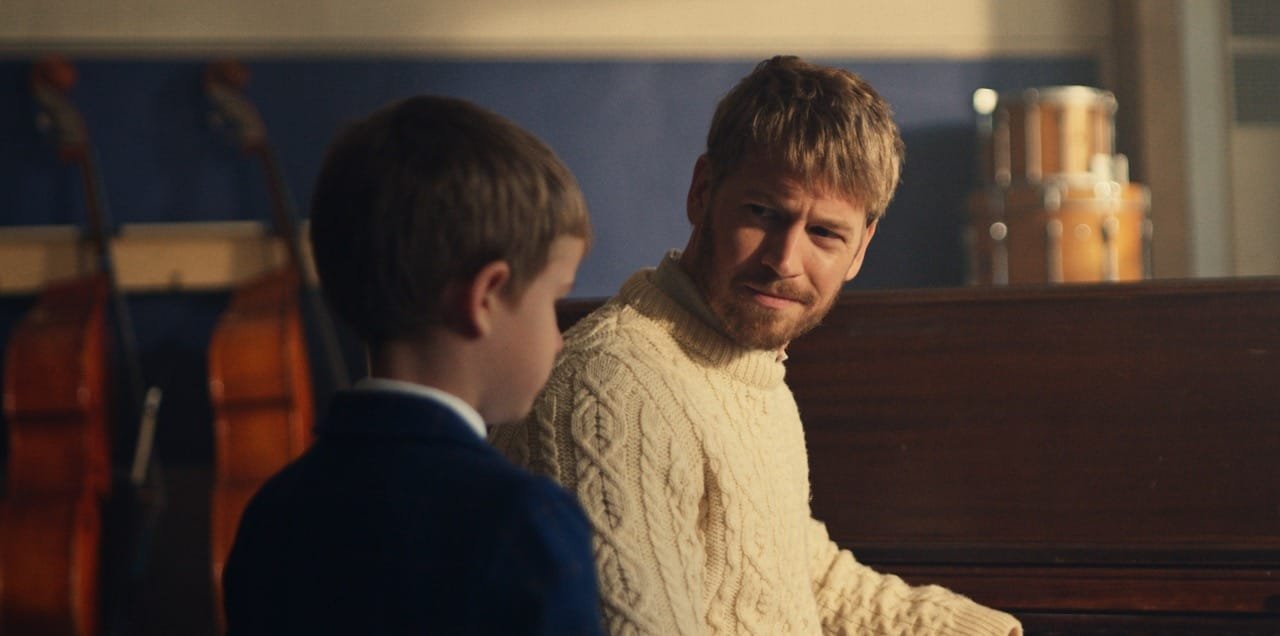
I was very fortunate to build a close relationship with Adam and Derek from the very beginning. As part of my research, I visited them several times in London and even brought my violin to play music with Derek, which was an incredible experience. Adam and Derek share a lifetime of history and it shows in their interactions — there’s such warmth and comfort between them. While Derek mostly answers in short phrases, he has an amazing sense of humor and jokes that Adam is “boring.”
How did you approach the film’s visual style to reflect Derek’s unique perception of the world?
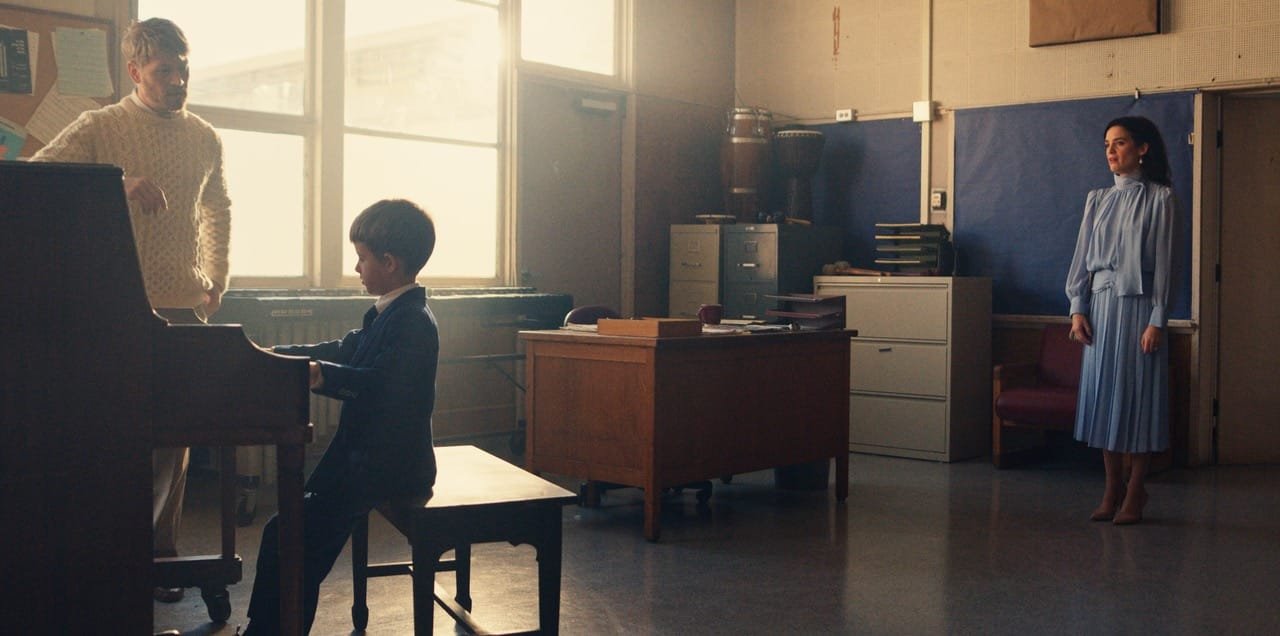
Capturing Derek’s unique perspective was crucial to me. Beyond recreating the feel of 1980s London through production design, we kept the camera and much of the action centered on Derek and the piano, oftentimes uncomfortably close, to show how music completely consumes him. Early on, when Derek and Adam’s relationship is more combative, we frame the keyboard like a battleground between them. But as Derek begins to open up, the frame gradually widens and we reveal larger spaces, so the audience feels his world expanding along with him.
Telling the story of a real person obviously comes with its own set of challenges. What kinds of ethical considerations shaped your choices, and how did you handle the line between fact and drama?
Surprisingly, I found Adam and Derek’s real story so rich and full of drama that we didn’t need to stray too far from the facts. Of course, every adaptation requires taking some liberties, but Adam was always supportive as long as we stayed true to the essence of their shared history. Portraying Derek’s autism and blindness authentically was especially important, so we cast blind actor Cannon Wood as our lead and connected him with Derek and Adam to prepare for the role. That collaboration helped ensure the performance felt both accurate and respectful. Music is central to Derek’s life, but it also plays a vital role in the film’s storytelling.
How did you use music not just as subject matter, but as part of the film’s structure and emotional rhythm?
Since music is Derek’s language, it had to be intricately woven into the film as the story’s emotional spine. Early on, we keep Derek and Adam musically separate – their playing contrasts and even clashes, highlighting their differences. Then as their relationship grows, their music gradually starts to intertwine. By the final scene, it becomes a bridge between them: a place where they finally connect and understand each other.
Cannon Wood delivers a remarkable performance as young Derek. How did you discover him, and what convinced you he was the right choice for the role?
To cast the Derek role, I brought on Danielle Pretsfelder-Demchick, a casting director who specializes in underrepresented communities. She launched a search across the United States, not just reaching out to agents and managers but also posting in parent groups on Facebook. That’s how we found Cannon, who lives in a small town in Ohio. He was born with Norrie disease, which left him blind. While he didn’t have much acting experience, his Zoom auditions were extraordinary – he had incredible instincts for the behaviors he’d need to portray. And just as importantly, he took direction beautifully, adjusting his performance on the fly like a seasoned actor. I knew we had made the right casting decision when his mother got him local piano lessons and had the script transcribed to Braille so he could prepare.
The short feels incredibly cinematic, and one can easily imagine it as a feature-length film. Do you have aspirations to expand The Key of Genius into a feature?
Definitely – Key of Genius was actually a feature film script first. The script was voted onto the Hollywood Black List and then optioned by eOne and Lionsgate. We now have a financier coming on board to help make the feature and we’re planning to be in production by next spring. So this short film is only the beginning!
Finally, what projects are you working on next?
Given my violin playing background, my brain is always drawn to music stories. My next script is a little different though: it’s a high-energy action film set across Europe… it still centers around a musician but explores some of the darker sides of artistry. I’ve just finished the first draft and am deep into rewrites now.