





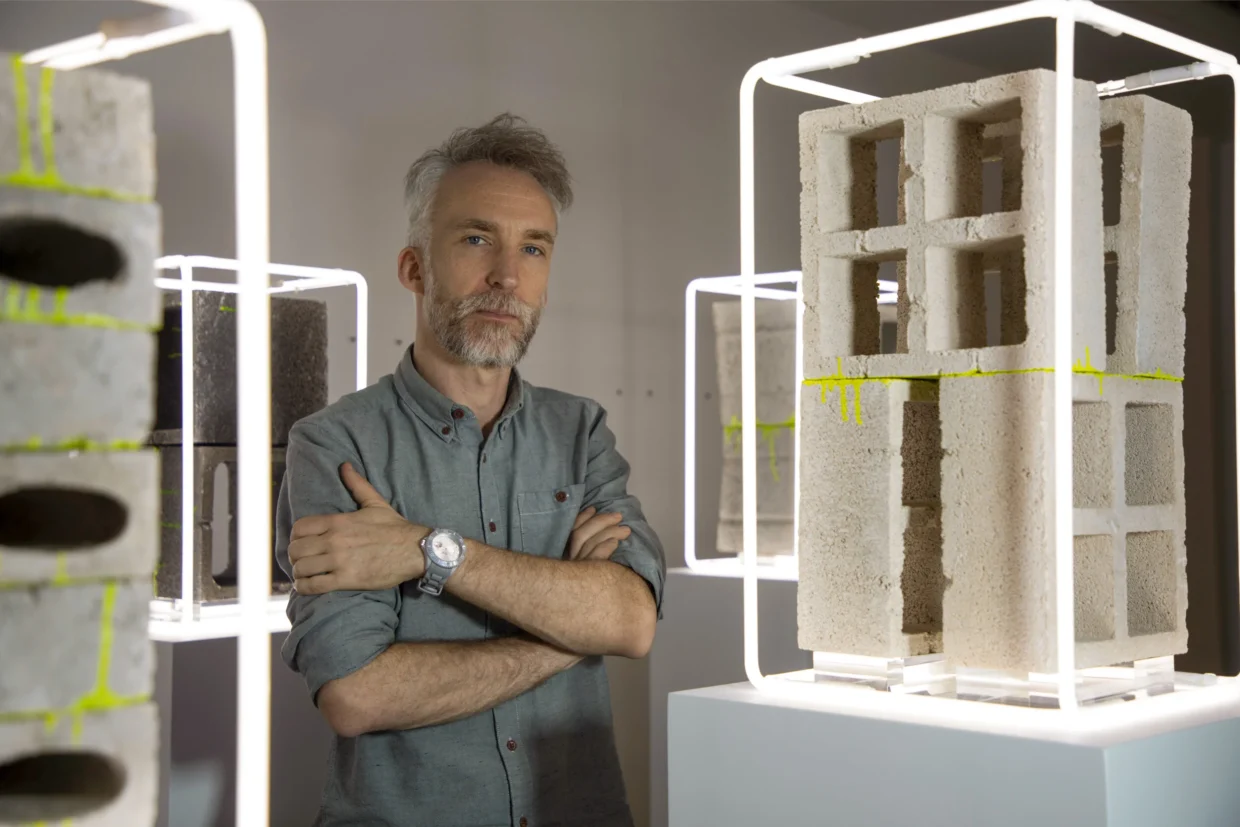
With a career that bridges art, architecture, and human emotion, Nathaniel Rackowe turns light and industrial materials into meditations on the modern city. His new exhibition Asphaltos Phos at Varvara Roza Galleries explores the tension between bitumen and illumination — a meeting of earth and energy that captures both the grit and transcendence of urban life. As the artist also presents work at Southbank Centre’s Winter Light, we caught up with Nathaniel Rackowe to talk about transformation, resilience, and the glow that lives inside darkness.
Your upcoming exhibition Asphaltos Phos brings together two strikingly different materials — bitumen and artificial light. What drew you to explore the relationship between these elements, and what do they represent in your work?
For me these elements are almost polar opposites, and the space between them essentially becomes the “canvas” where the work can exist. They represent light and shade in a fundamental way, while in my use are also imbued with deep references to the built environment.
Your sculptures often balance the industrial and the poetic, using familiar materials in unexpected ways. How do you approach transforming the ordinary textures of the urban environment into moments of quiet beauty?
The process stems from personal observation, and my own emotional responses to the different spaces I move through. The process of conceiving and making the work is an attempt to capture, to make permanent, these fleeting moments. No material is off limits, even light, which I approach as a material, can be transformative in its power to shift the reading of common materials and structure.
→ For readers exploring London’s creative scene, you can also check out our feature on contemporary art galleries in Shoreditch.
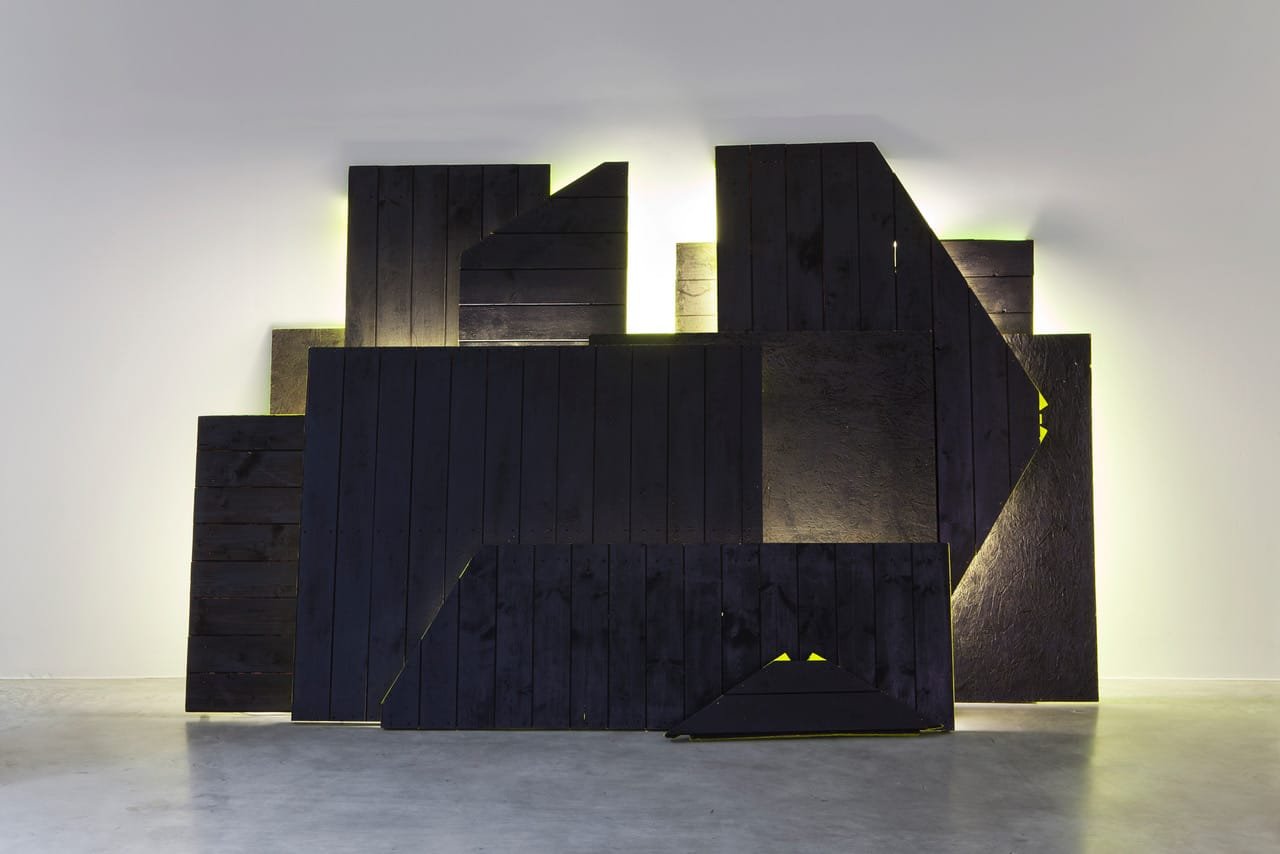
Black Shed Stacked sits at the heart of the show, inspired by your experiences in cities like Beirut. What emotions or memories does this work hold for you, and how do ideas of construction and renewal shape your creative language?
Black Shed Stacked was indeed very much inspired by my Defina Foundation art residency in Beirut. Albeit then filtered through the lens of London. I had become fascinated by the lean-tos, shacks, and flimsy roof top shelters that litter Beirut. This layer of temporary architecture becomes the glue that seems to hold a city together, saying more about a city than its big shiny buildings.
Across Asphaltos Phos, light feels both structural and spiritual. What role does illumination play in how you build atmosphere and guide viewers through your installations?
It plays a vital role! In many of the larger installation scale works, and performance installations, the light will move and sequence, interacting with surfaces that can transform from transparent to reflective in a moment. I use light and illumination to encourage this dance through space, while at the same time echoing something of that dusk moment in the city, just as the warm artificial light balances with the cool retreating sky, and everything suddenly feels different.
You’ve spoken about the “uncanny” quality in your work — something that feels like it belongs and doesn’t at the same time. How do you cultivate that tension between recognition and disorientation?
That happens through constant experimentation and development in the studio. I’m very hands on with making the work, it changes and develops through the making process, I’m searching for and teasing out that little vein of liminal space between those two points. A constant questioning, how far do I need to pull this shed apart for it to become a shed and also something other, how assembled does this tower of brutally cut lengths of industrial aluminium need to be to echo, or trigger, associations we have of the spaces we move through…..
Your career bridges art and architecture, often inviting audiences to move through your work rather than just observe it. How important is that sense of physical engagement in shaping how people experience your installations?
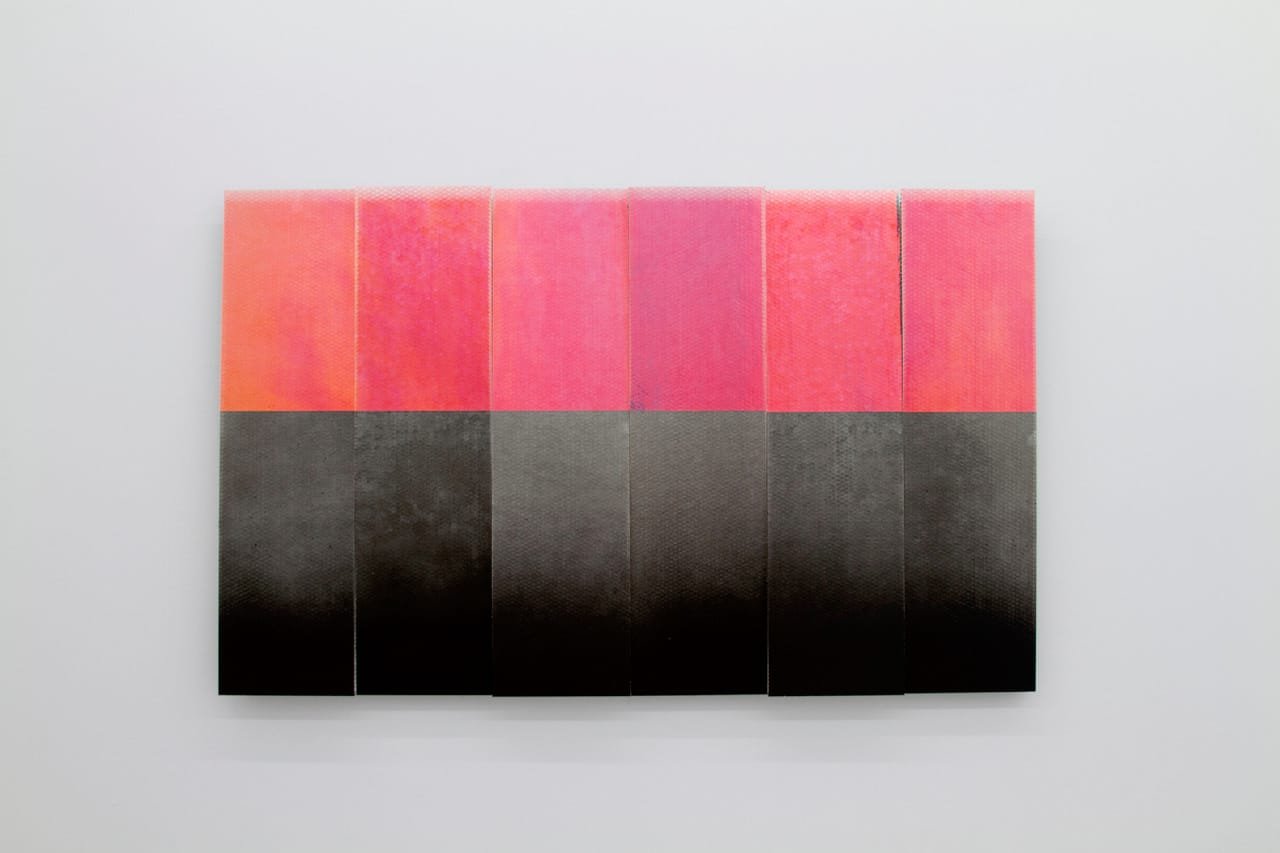
It is vital, even in the smaller wall based works. My use of dichroic glass and surfaces force a dance around the work to observe the changing colours, and multiple configurations revealed. Space, light, structure and movement are the four ingredients of my work, and each is as important as the other.
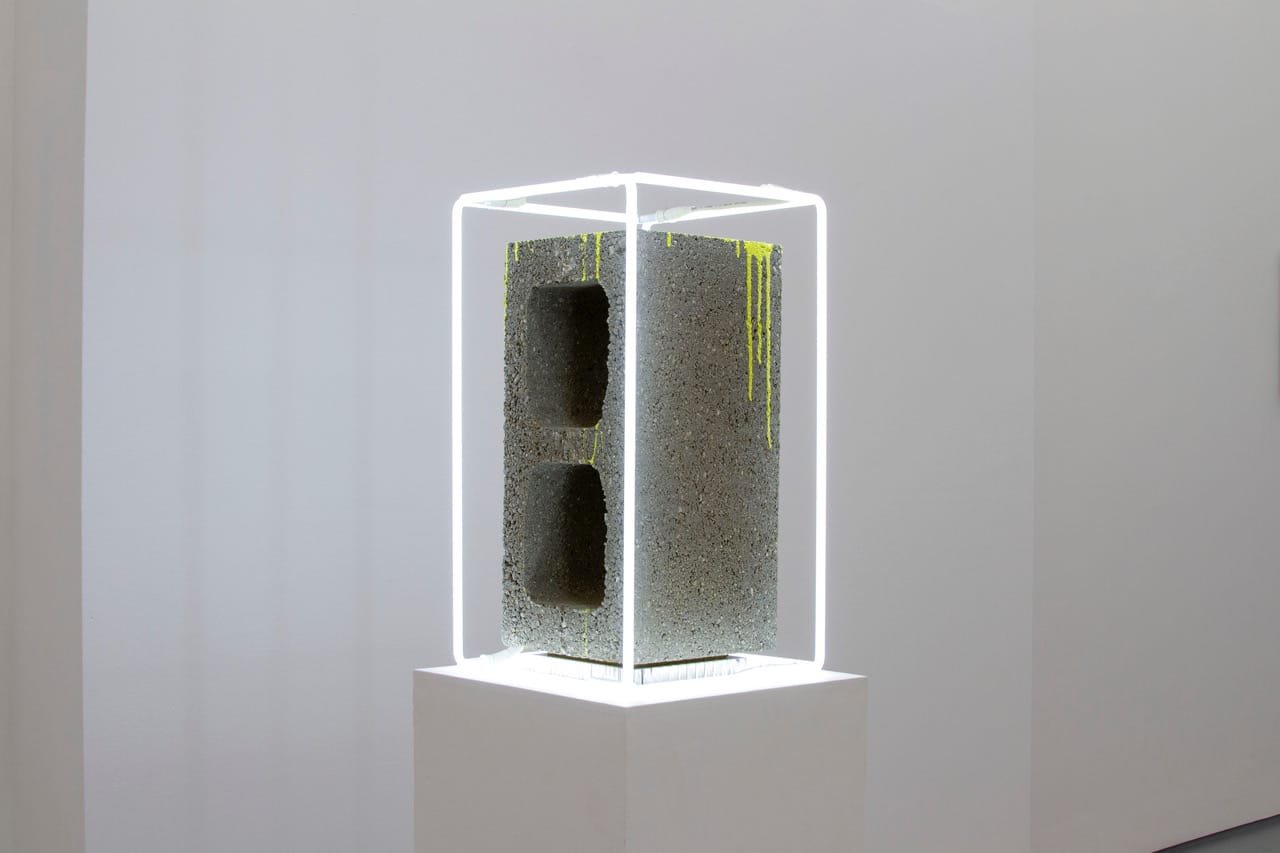
Your practice has evolved through deeply personal and global moments, including your cancer diagnosis and recovery. How has this experience influenced your understanding of fragility, resilience, and light?
The experience was, as you can imagine, totally indelible, and had an incredibly deep effect on all aspects of my life, including my art; how I relate to my own art practice, and what I want to communicate. One clear shift was an increased focus on the intersection of the natural and built, and this grew from a need to connect with nature, but within a small radius of my London home, caused by both lockdown and my health. The wall pieces that followed when i was able to spend time in my studio again, resembled abstracted landscapes, works such as PT10, with its distinct horizon line, and colour shifting “sky”.
As Asphaltos Phos opens at Varvara Roza Galleries — alongside your outdoor installation at the Southbank Centre’s Winter Light — how do you see your relationship with public and gallery spaces evolving in the future?
One of the aspects I love the most about my art practice is the ability to work across scale, encompassing a variety of spaces, to move from painting to installation to performance and dance. Each one allows me to engage with the viewer, with the public, in unique ways. I’d like to continue to evolve to maximise each sphere! Ultimately it is about how the artwork can engage the viewer, the hope being to encourage a deeper understanding of our own physical and emotional relationship with the spaces we pass through every day.
xxx
His work is also on display as part of Southbank Centre’s Winter Light exhibition from November 4th – January 18th 2026.