





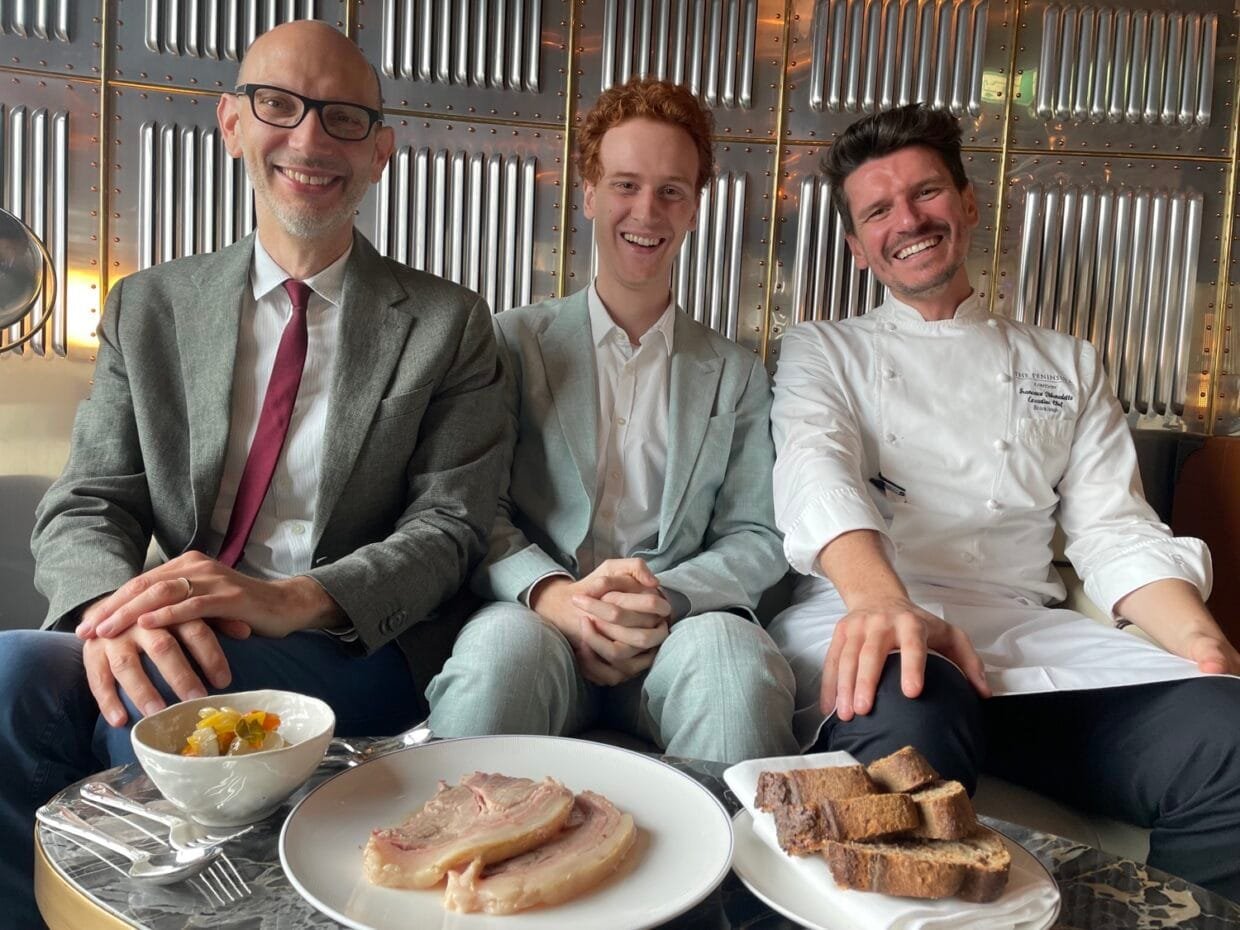
Few storytellers bring culture to life quite like Walter Iuzzolino. Known for his infectious passion and curatorial eye, Iuzzolino’s latest project, Opera on a Plate for BBC Radio 3, fuses two of Italy’s greatest loves — food and opera — into one sensory journey. Featuring Giorgio Locatelli, Renato Balsadonna and Nicolo Foron, the series explores how taste, sound, and storytelling intertwine to shape Italy’s creative soul. To find out more about his inspirations and creative process, we caught up with Walter Iuzzolino for an interview.
Opera on a Plate beautifully fuses two of Italy’s greatest passions — food and opera. What first inspired you to explore the connection between music and the culinary arts in this series?
I fell in love with opera when I was very young, and my older brother – who was studying to become a conductor – introduced me to the high octane plots, the dramatic twists and turns, and the beautiful music of Puccini. Listening to operas with my brother was like playing a wonderful exotic game. Trying to explain to me what the work of a conductor entailed, he would place a wooden crate he had taken from the local green grocer upside down in the middle of the living room, then invite me to step on it, and placing a pencil in my right hand, he would encourage me to wave my arms about as the music blasted through the loudspeakers, trying to capture the tone and feel of the notes. I had no idea what I was doing, but moving in a weird ritual dance whilst these glorious melodies filled the room seemed like a fantastic adventure for a naïve six year old, so I went along with it and loved every minute of it. After our ‘rehearsals’, we would scoff tons of delicious food my mum had prepared for our ‘merenda’ (the mid afternoon snack all Italian children religiously take)… so for me the memory of food is inextricably linked with the excitement of listening to opera. As I grew up and started studying the history of opera, I realised that the connection between the culinary and musical arts was in fact deeper than I originally thought.
→ Read more interviews with leading cultural innovators.
Italian cuisine and opera both thrive on drama, passion, and sensory experience. How do you see these two art forms mirroring each other in Italian culture?
Everything in Italy has an inherently dramatic, emotional quality. The language itself is rich, elongated, with a hint of baroque. I have lived in London for over 30 years now and, as a true anglophile, I have internalised Britishness in a way that makes me observe Italians slightly from the outside looking in. Every time I go to Italy to visit my family I am both fascinated and delighted by the intensity of every conversation, the visual drama of friends talking and cooking whilst gesticulating – as if movement and gesture were meant to accompany language and enhance its significance. This has made me realise that ‘dramatic staging’ of every aspect of life is an inherent grammar of Italians’ DNA, something Italians relish and that makes their approach to life unique. Cooking for family and friends is invariably a spectacle, as is talking, arguing, going to the theatre, and enjoying music. I think this performative aspect of Italian culture creates a very strong link between the world of food, music and the visual arts more broadly.
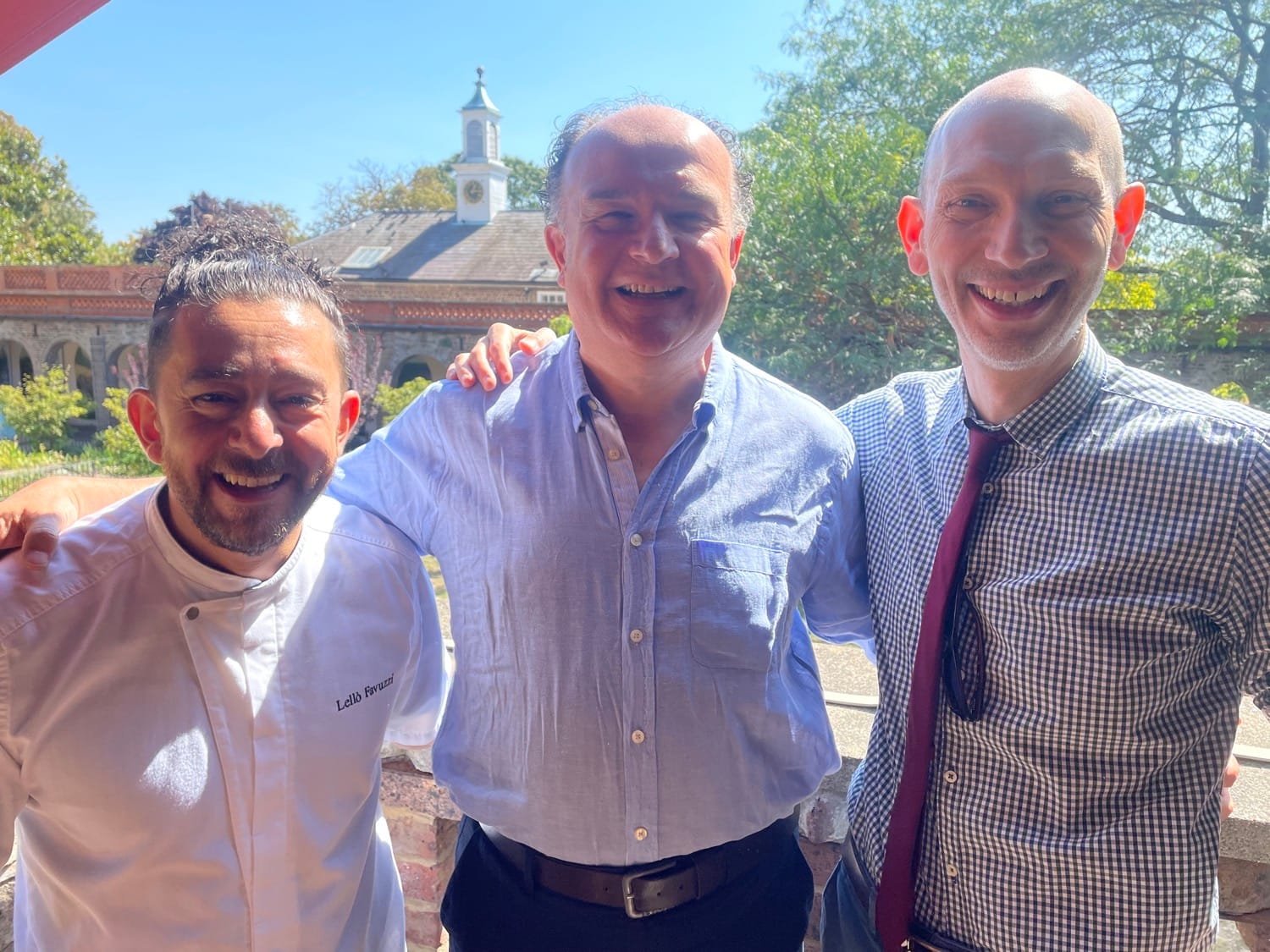
The series travels from London to Rome and Sicily, with chefs like Giorgio Locatelli and conductors like Renato Balsadonna and Nicolo Foron. How did you approach curating such a rich mix of voices and locations?
Every opera, like every recipe, is different and unique in its own way – so the producers and I felt that the series offered us a fantastic opportunity to cast our net wide and capture a variety of voices, places and viewpoints to reflect the richness and variety of Italian music and cuisine. Some of the interviews were recorded in London where both great Italian chefs and iconic conductors happen to be working, others were done in Rome and Sicily, and this turned our production into a truly exciting and memorable journey both for the ears and the taste buds.
Rossini, Verdi, and Puccini were as famous for their appetites as for their arias. Was there a particular story or recipe from the series that surprised you about their personalities?
There are countless fantastic and entertaining stories about food and the composers we focussed on in the series, but I would say the one that struck me was about Giacomo Puccini, whose taste and passion for food is inextricably linked to his upbringing in a really poor household with no means, a family who lived on the cheapest peasant food available. As a young, penniless student in Milan, he had to live off beans – which remained one of his favourite foods throughout his life. This was very much part of his diet at home in Tuscany, where the family had to survive on very little. But what the young man could not be reconciled with, was the lack of good olive oil in Milan. When your meals are literally stewed beans and oil, the quality of the ingredients can make a big difference! So the young man wrote to his mother, asking her whether she could send him some olive oil from Tuscany… he knew this would be a big sacrifice for her, and kept apologising for asking – but he truly couldn’t stomach the bad quality oil he could find in Milan. I felt this was both a touching story about a young man from the country trying to survive life in a big city with no money, and a telling anecdote about Puccini’s love of his roots, and his quest for quality even in the tightest circumstances. The letter writing scene could easily have been a touching aria in La Boheme.
In an age where fast culture dominates, Opera on a Plate celebrates slowness — cooking, listening, feeling. Why do you think that kind of immersive experience still resonates today?
Fast culture is the antithesis of opera – its emphasis on quick, disposable clickbait which is the equivalent of a sensory sugar rush is a million miles away from the slow, gradual emotional build up of opera. Listening to an opera, like preparing a delicious home made meal, will take at least a couple of hours of your life, it will involve care and attention, and you can not be distracted by anything else (or you will literally lose the opera’s plot at the theatre, or cut your fingers whilst chopping onions and carrots in the kitchen!). But the rewards are immense. As the plot unfolds and the music gradually gets hold of your emotions, you are transported into another world, a journey through powerful joys and sorrows, which will transform your life and create lasting memories. The same can be said for a memorable meal. It is harder work than ordering an uber eats? For sure. But when your friends are gathered around the table and you take the dish out of the oven, the pleasure and satisfaction that comes from cooking and sharing food is absolutely unique.
You’re known for your deep love of storytelling across film, TV, and now radio. How does hosting this series differ creatively from your work in television?
Curating is my main passion, and I am lucky and privileged to have a job that allows me to immerse myself in the things I love most in life, and become a spokesperson for books, tv series, art exhibitions and operas which I think the audience will fall in love with. So in a sense curating cultural experiences for an audience is similar across the world of tv, literature and theatre. I often compare it to truffle hunting – it is a relentless quest for quality experiences, driven by a desire to look beyond what we already know to discover books, TV shows, and operas we never knew existed and which could become our next obsession.
Food often evokes memory in a way that’s almost musical. Were there moments during the series when taste or sound transported you back to your own Italian roots?
Absolutely, there were several moments when tasting the glorious food our chefs prepared for us brought me back to my Italian roots. This is mostly to do with the fact that the Italian composers we looked into were almost invariably linked to the great regional cuisines of the late 19th century, which are the recipes that shaped national taste until the 1950s. So most of the food I was lucky enough to taste was the food of my grandparents, from exquisite home made meat and truffle cannelloni to magnificent sausages and unforgettable desserts. It has to be said, most of those recipes are very rich – so eating like that on a regular basis would send everyone’s cholesterol levels sky high, but as a bespoke culinary adventure, it was absolutely unforgettable… it was like being a child around grandmother’s table again.
Finally, what do you hope listeners will take away from Opera on a Plate — beyond recipes and opera trivia? Do you think it might change how people listen, eat, or even feel about Italy itself?
I hope is that listeners will be inspired to re-evaluate these magnificent operas through a new perspective – opera in Italy was first and foremost a popular, populist mainstream entertainment. It was never a niche or elitist experience, but something for big audiences to share, enjoy and feel passionate about. Very much like food. I think opera lovers will find interesting and surprising stories in the series. But my greatest wish is that curious foodie audiences who might not be too familiar with opera will be tempted to discover the world of opera and that they will fall in love with it as much as I did when my brother first perched me on to that wooden crate at the age of six.