





In London’s evolving art landscape, few voices feel as bold and imaginative as Wenqi Zhang, the curator and founder behind Which Witch Collective. Her work reclaims the figure of the “witch” as a space of autonomy, creativity, and feminist resistance, bringing together film, performance, installation, and ritual. With the new exhibition They Call Me WITCH, she continues to expand the collective’s mission to empower women and non-binary artists through cross-disciplinary collaboration. To explore her approach, vision, and the ideas shaping her work, we caught up with Wenqi Zhang for a conversation about art, identity, and reclaiming power.
Which Witch Collective began as a film festival in Glasgow and has since evolved into a cross-disciplinary curatorial platform. What was the original spark behind creating the collective, and how has its mission grown since those early days?
Which Witch Collective actually started from my personal fascination with the idea of the “witch.” Historically, it’s a word that’s been heavily stigmatized, but sometimes in films and pop culture it suddenly feels alluring. I was asking myself, who really gets to define what it means? Mostly it’s politics, religion, society… rarely the witches themselves. I was curious about how artists could reclaim that word and give it new power.
When we kicked off in 2023, it was a film festival, which made sense since our team came from a film and moving image background. Over time, as I reflected on my own interests and collaborated across different art forms, I started thinking about what Which Witch could become. That’s how it evolved into a cross-disciplinary curatorial platform: for me, all mediums are vessels for expression, each gives people a different way to experience ideas, feelings, and connection. I wanted Which Witch to embrace all of that, and also provide a space where people from different artistic backgrounds could come together.
Community and collaboration are central to Which Witch Collective’s identity. How do you foster an environment where women and non-binary artists feel supported, seen, and empowered to experiment freely?
If a “witch” represents a kind of power, then a collective of witches is an unstoppable force. I really believe in the power of connection, which is why our exhibitions are often built around a theme, so that works with similar ideas can meet in the same space and spark dialogue.
I should also clarify: our idea of a “witch” isn’t just about mysticism or the occult. It’s about artists using this idea to express themselves, and more broadly, I see any woman conveying power through art as a kind of witch. We also collaborate with individual artists on projects that match their vision, like workshops, and we try to embrace as many voices and backgrounds as possible. That’s why we focus on supporting women and non-binary artists and make space in each exhibition for emerging artists who might not have many chances to show their work. This way, we create an ecosystem of support and inspiration, rather than just a space to show work.
→ Explore more conversations with London creatives redefining identity and community through experimental art practices.
Your collective’s name, Which Witch, feels both playful and political — turning a term of accusation into one of strength. What does “witch” represent to you personally, and how has that idea guided your curatorial philosophy?
As I mentioned before, to me, a “witch” represents a kind of power, autonomy, and the courage to define oneself. It’s about embracing individuality and using that force to create, resist, or transform, whether through art, ideas, or practice. That idea has really guided my curatorial philosophy: I’m drawn to works and artists who reclaim language, identity, or space in their own way. My aim is to create platforms where experimentation is encouraged, voices are diverse, and artists feel empowered to explore and challenge conventions. In that sense, Which Witch isn’t just a name, it’s also a lens through which we approach collaboration, curation, and the communities we build.
Working between mediums — from film and performance to sculpture and installation — requires balancing many creative voices. How do you and your co-curators build cohesion while allowing each artist’s individuality to shine?
Yes, working across different mediums does mean there’s a lot of juggling to do, but it also allows for richer ways of expressing and presenting ideas, so for us, it’s essential. As I mentioned, our curatorial approach starts with theme and concept, so the first step is to always select works under the theme to give the exhibition cohesion.
When it comes to each specific exhibition, balancing often depends on the character and layout of the space. We consider the spatial flow and available areas, then organize works into sections based on their core ideas. After that, we work individually with each artist to determine how their pieces can be presented in a way that both aligns with the exhibition’s theme, the vibe of the space and respects their personal expression.
This way, everyone’s unique voice can shine, while the exhibition still feels connected as a whole. For me, it’s really about creating a conversation, between the works, the mediums, the space, and the artists, so that different perspectives can meet, interact, and inspire each other.
“They Call Me WITCH” exhibition reclaims the figure of the witch as a site of power, resistance, and imagination. What drew you to this concept as the foundation for your latest exhibition?
For me, this exhibition is a kind of thematic show of Which Witch Collective, because the core theme actually emerges from the vision of the collective itself. We’ve always worked on projects guided by our central idea, exploring how women use art to redefine the term “witch” and give it new power, but I’ve long wanted to present this concept directly to the audience through a dedicated exhibition.
They Call Me WITCH felt like the perfect way to do that. I wanted to create a space where this idea could be experienced in a tangible, multi-sensory way. The works bring together different voices, mediums, and perspectives, each reflecting a personal take on power, resistance, or imagination. At the same time, for the collective, this exhibition is a platform to show what we do and share our vision with a wider audience.
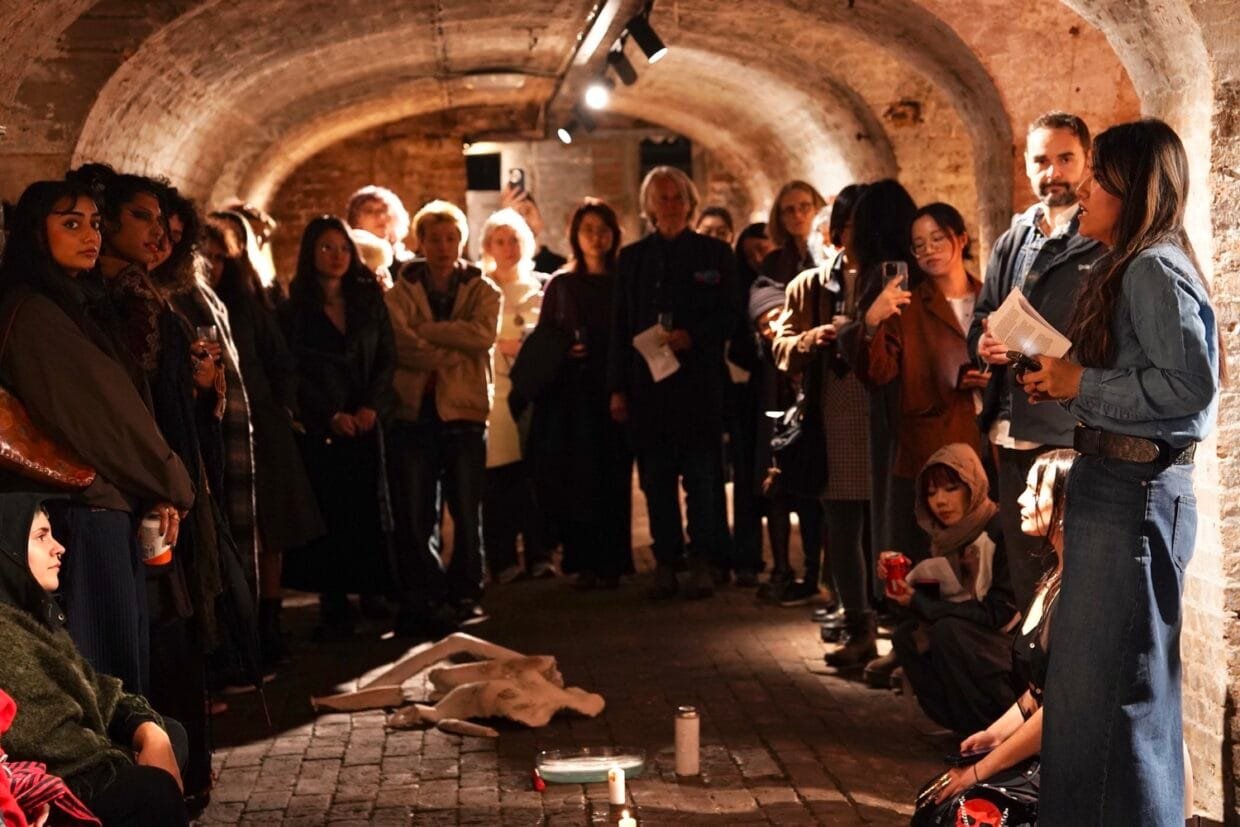
The Crypt Gallery is such an evocative space, steeped in both history and atmosphere. How did its architecture and energy influence the way the works were selected and installed?
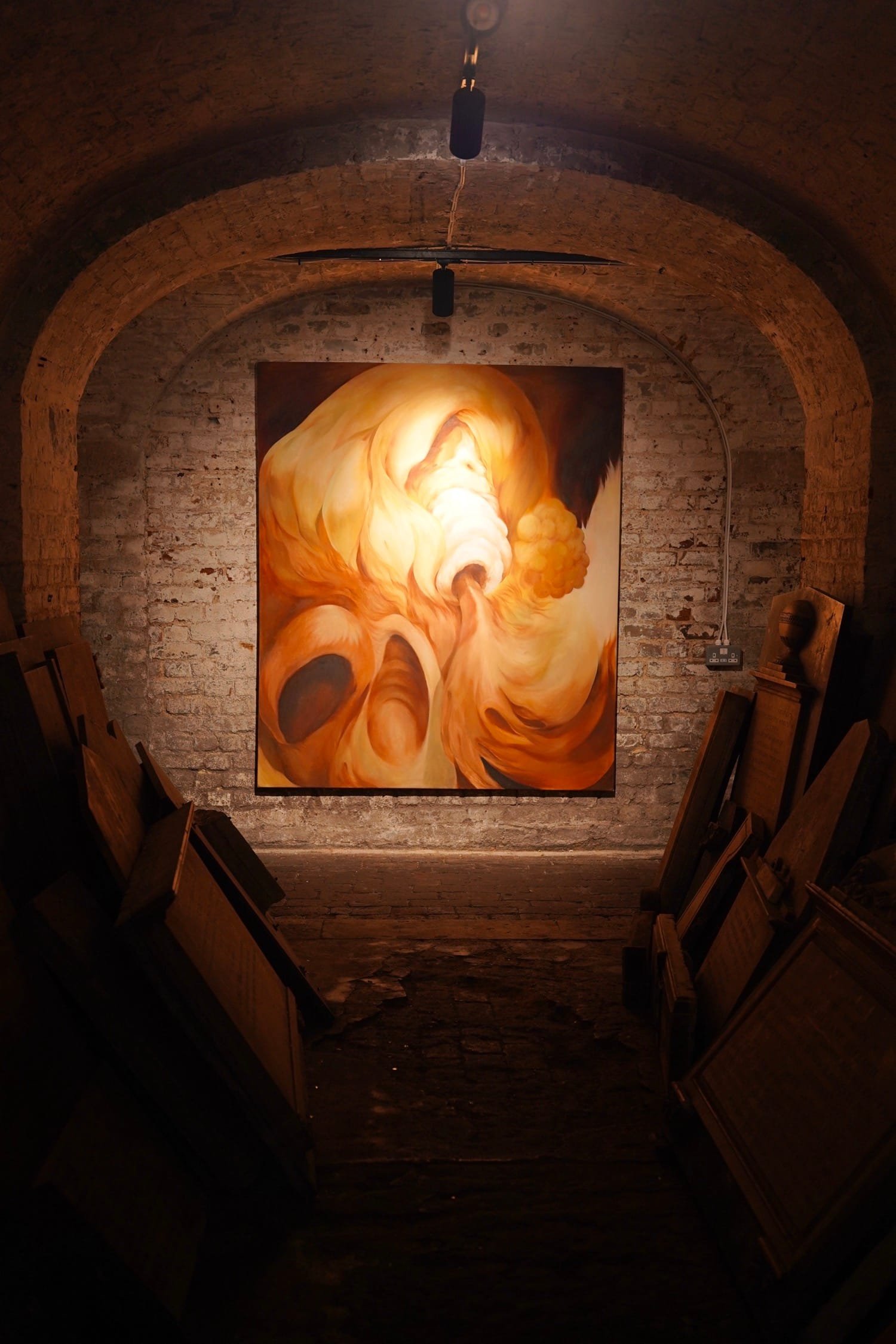
The Crypt Gallery was my first choice for this exhibition, and I feel very honored that we finally had the opportunity to present the works here. It’s a really large space, and one of the most interesting things is that it’s not just traditional flat walls for display, there are also small vaults and passageways, creating a kind of labyrinthine experience for the audience, and also allows the artists’ works to be both connected and independent at the same time.
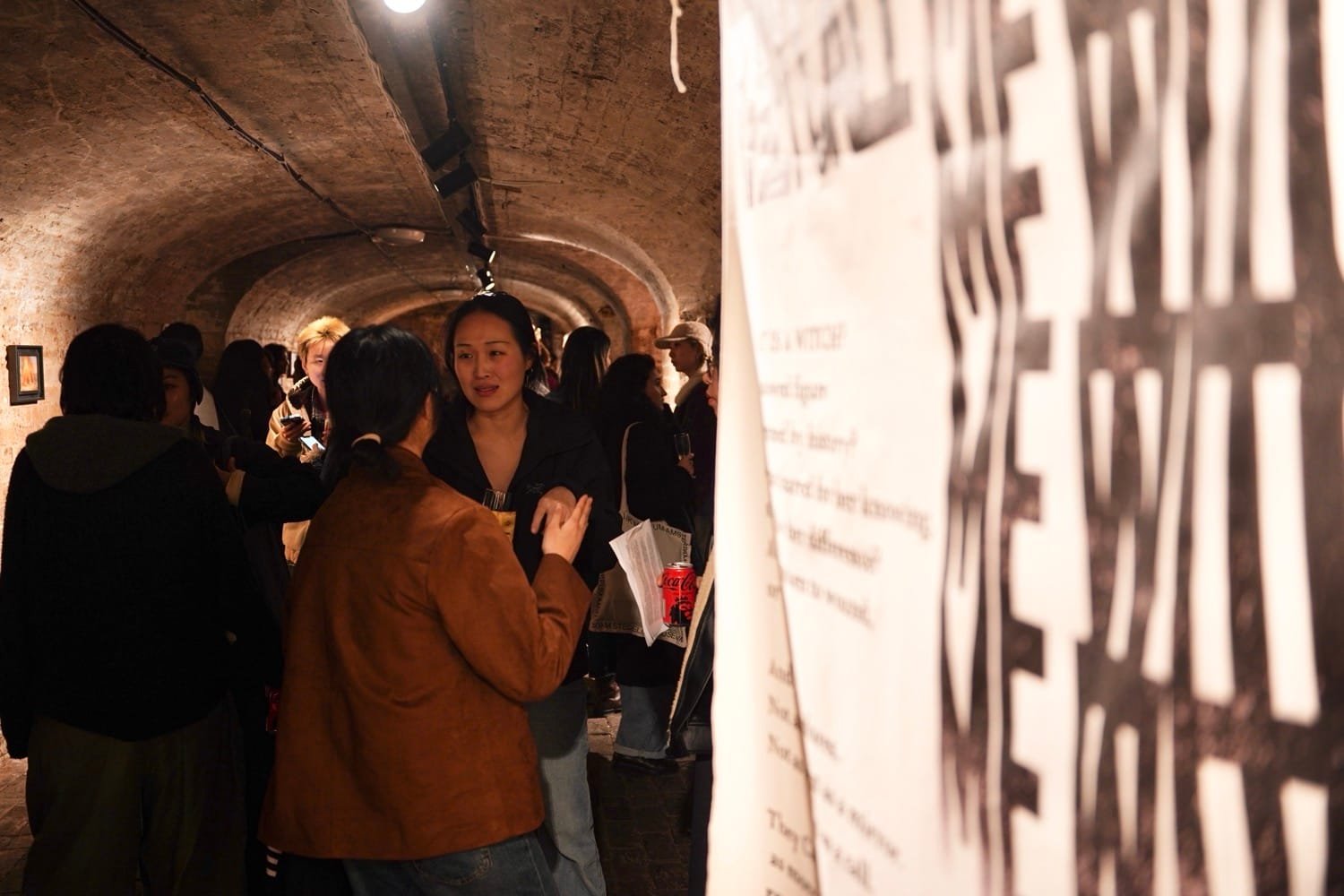
For example, we assigned each artist to a “cave” within the space, and they “decorated” their own area with their works. During installation, we jokingly referred to them as each other’s “neighbors.” These caves aren’t isolated though,the architecture creates many opportunities for works to interact from a distance, to face or echo each other, which helped us balance the exhibition’s theme with the individuality of each artist.
Of course, the space also brought some challenges. For example, the historic brick walls are not ideal for sticking works, and for preservation reasons we could only use the existing holes on the walls. As a result, most of the pieces were displayed by hanging, which led to some unexpected and exciting effects. For instance, because of the depth of the vaults, we were able to suspend an artist’s double-sided piece and light it from behind, creating a dialogue between the two sides of the work.
The exhibition also integrates performance, workshops, and audience participation. Why was it important for you to blur the boundaries between exhibition, ritual, and collective experience?
Like I mentioned, the medium is always just a vessel for expression, so whether it’s an exhibition, a performance, or a workshop, each is a natural way to carry the theme, and not a deliberate choice. I believe, just like artists’ creations are diverse, an exhibition, as a curator’s work, can also offer a multi-dimensional experience.
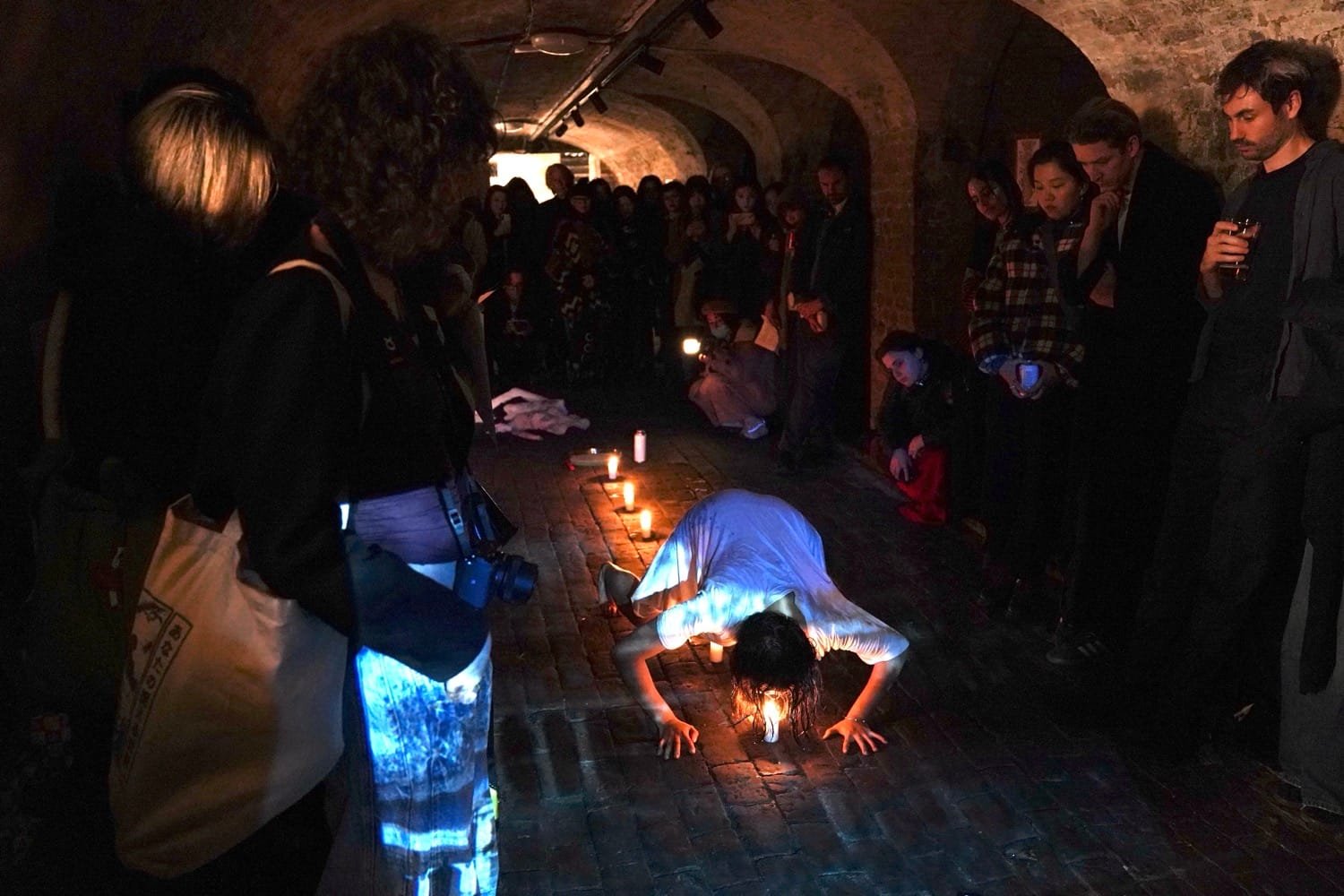
At the same time, this approach helps foster connection. By combining different forms, we blur the boundaries between exhibition, ritual, and collective experience, so that visitors aren’t just spectators, they become participants and part of the exhibition itself. For example, some parts of the opening performances were interactive, visitors didn’t just watch, they could participate in the performance and the ritual. At the same time, audiences could join workshops led by the artists that were deeply connected to the exhibition’s themes, with opportunities to explore the exhibition before and after the workshop. I believe that combining the workshop experience with visiting the exhibition creates a more direct and meaningful impact for participants.
It’s also a way for me to expand my own curatorial practice. I don’t want to limit myself to a single form; I see myself as a cross-disciplinary curator. I’ve always been deeply interested in different media and disciplines, and collaborating with a variety of artists gives me fresh ideas and inspiration. This approach not only broadens how I curate, but also opens new ways for audiences to connect with the exhibition’s ideas.
As the art director and one of the curators of Which Witch Collective, what do you hope audiences carry with them after experiencing They Call Me WITCH — not only about the show, but about what it means to create and reclaim power through art today?
What I hope audiences take away is a sense of power in a few layers. One is the power and imagination that comes directly from the artists’ works, seeing how they express their ideas and visions. Another is the personal power to believe that you can be your own “witch,” to embrace your creative voice and agency. And finally, a sense of connection and reassurance, that you’re not alone.
Historically, witches or people labeled as “witches” were often isolated and unwelcome, and in some ways that still reflects what it feels like to be considered “different” today. I hope audiences feel that if they’ve ever been that “different person,” they are not alone. As I wrote in the curatorial text, and as our slogan says: only you can define which witch you are.