






Ye Tian is a UX designer whose work sits at the intersection of healthcare, technology and human-centred problem-solving. Her award-winning projects focus on bringing clarity to complex systems, while her exploration of AI tools reflects the changing landscape of digital design. Thoughtful, precise and grounded in real user needs, her approach continues to evolve as the industry shifts. We caught up with Ye Tian to talk about her process, her influences, and what she sees coming next.
You’ve won major awards like the MUSE, UX Design Awards and German Design Awards — all before turning 30. Looking back, what personal qualities or early decisions do you feel most contributed to building such a recognised design career?
Looking back, I think the biggest factor was simply following my passion. A lot of the projects that later won awards were things I worked on late at night or on weekends, purely because I cared about them. If I didn’t genuinely enjoy design, there’s no way I could have put in that extra effort outside of work.
I was also lucky to discover UX early. Back in high school, UX was just becoming a “thing,” and I joined a small design club and enrolled in a program that introduced me to the basics of UX/UI. For the final project, a friend and I built a student app to help people pick elective courses. If I look at it now, the layout and visuals make me cringe, but it taught me something huge: design can actually make people’s lives easier.
That realization is what pushed me toward UX as a career. I’m still grateful for the opportunities and guidance I had at that age. They helped me find something I love and something I’m good at, and that combination keeps me going today.
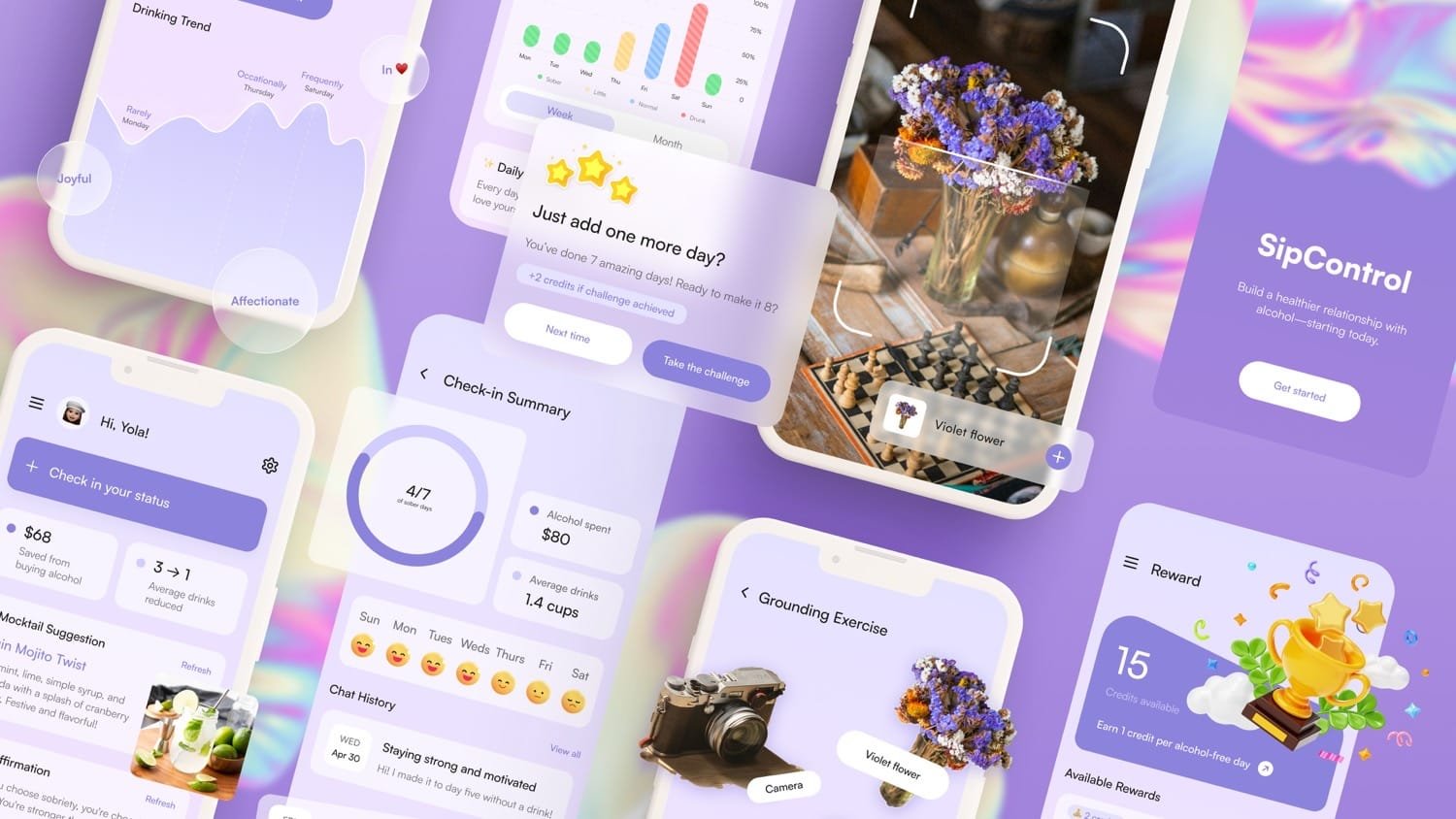
You’ve become known for designing clarity into deeply complex healthcare systems. When you’re working with high-stakes problems like medication access or clinical workflows, how do you decide what “simplicity” should actually look like?
In healthcare, “simple” doesn’t mean minimal. It means usable under pressure. Doctors, nurses, or members aren’t casually browsing; they’re dealing with dense information and need clarity fast.
So my process always starts by understanding two things:
- What is the user trying to achieve?
- What steps do they usually take to get there?
From there, I prioritize. Maybe certain data needs to be front and center, while other actions can be tucked behind progressive disclosure. It’s not the same as consumer apps, where you guide users one tiny step at a time. Clinical workflows just don’t work that way.
Another big rule: different users have different mental models. A screen that makes perfect sense to a physician might be confusing to a nurse or care coordinator. That’s why I don’t let my personal aesthetic preferences dominate. Ultimately, the job is to improve navigation, speed, and confidence. If that means redefining my own sense of “simplicity,” so be it.
→ Explore more interviews with creatives pushing new boundaries across art and digital culture.
AI is reshaping everything from prototyping to decision-making. How has AI changed your process as a Senior Product/UX Designer — and what limitations do you still see designers needing to solve?
AI has really changed the early phase of design. Before, if I wanted to prototype something like a drag-and-drop upload flow in Figma, it could take hours. Now I can describe it in Figma Make or Lovable and have something clickable in seconds. That speed is incredibly valuable in startups, where getting concepts in front of stakeholders quickly can make or break timelines.
But I don’t think AI is anywhere close to producing production-ready designs. No matter what tool you use, the outputs feel similar because the system can’t understand your product context, brand personality, business constraints, or user reality at a deep level.
That’s where craftsmanship becomes even more important. Designers still need to refine, shape, and make something feel trustworthy and unique. AI accelerates the process, but it doesn’t replace the thinking.
Many designers today feel pressure to master AI tools quickly. What advice would you give emerging designers on adopting AI meaningfully without losing their own creative intuition or ethical grounding?
I think designers should absolutely use AI, but not surrender decision-making to it. Let AI help you generate ideas, drafts, or quick prototypes, and then ask yourself: “Is this the best solution? What else could exist?”
So my main advice is:
- Don’t be passive. Use AI as a starting point, not the final answer.
- Stay curious. Read, follow industry news, join communities, talk to other designers.
- Don’t underestimate human skills. In the AI era, communication, empathy, collaboration, and ethical judgment matter even more, because those are the things AI can’t do for you.
AI is powerful, but your creative intuition and integrity are what make you valuable.
Being selected as a CES Innovation Awards jury member gives you a unique vantage point. What trends — especially in digital health and AI-driven products — stood out to you as the future of how we’ll manage our wellbeing?
I’m optimistic about AI and digital health. Healthcare is difficult almost everywhere—too expensive, too slow, and too inaccessible. AI has the potential to close some of those gaps through scalable digital support. We’re already seeing people use tools like ChatGPT for therapy-like conversations because it’s more affordable, more available, and sometimes less intimidating.
Of course, AI today still has limitations such as tone issues, false positives, inaccuracies, etc. And that’s exactly why I believe human-in-the-loop should always stay. No matter how “human” AI feels, mental health is a social problem at its core, and real improvement requires real relationships.
AI can support, accelerate, and democratize healthcare, but it shouldn’t replace human care.
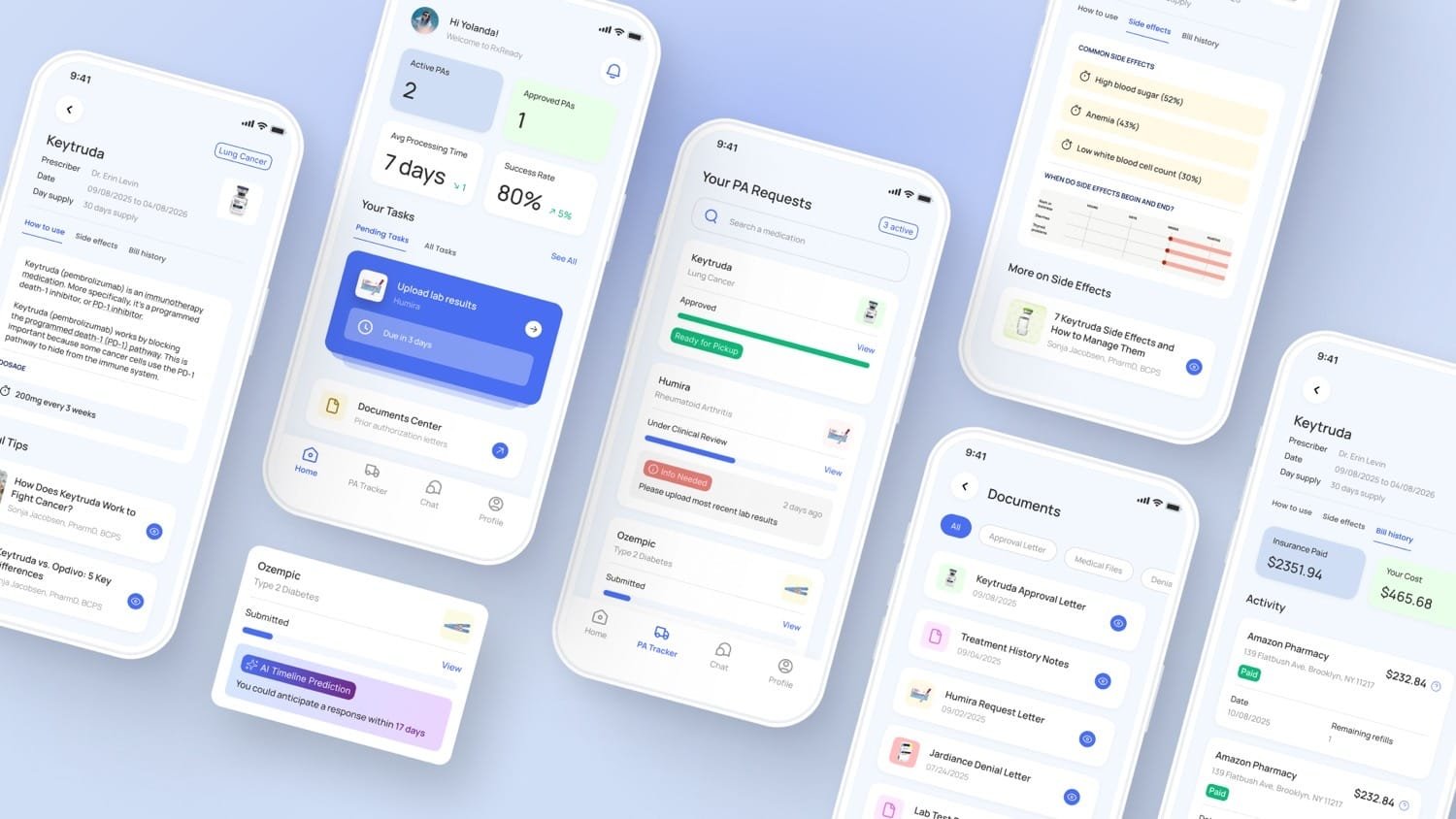
You’ve led celebrated projects like medication cost transparency tools and at-home care concepts. When you reflect on your portfolio, what project feels like a turning point in proving the impact design can have at scale?
For me, the turning point wasn’t a specific award, it was talking to real users who were helped by something I designed. Hearing someone say, “This made finding a doctor easier,” or “This helped me save money on my prescriptions,” hits differently. That’s when it stopped being pixels on a screen and became something changing someone’s day, maybe even their health.
Of course, as a product team we have metrics like DAU, retention, or feature adoption. Those are valuable for guiding decisions, but nothing compares to interviewing someone face-to-face (or on Zoom) and seeing the genuine relief or excitement in their expression.
Those moments remind me why I design in the first place: to make the healthcare system just a little more humane for the people living in it.
You’ve worked across New York, London and China — three very different tech cultures. How have these environments shaped the way you balance creative experimentation with the rigorous demands of data, compliance and AI integration?
I was born in China, studied in Scotland, UK, but I only worked in New York.
As you move into the next chapter of your career, what excites you most: advancing AI within complex B2B systems, reimagining healthcare experiences, or pursuing your award-winning conceptual design work on the side?
Honestly, what excites me most is being able to do both. One of the best things about being a designer is that you get to live in two worlds at the same time. On one side, you’re building real products that millions of people might use in their day-to-day lives. That’s incredibly meaningful, solving real problems, easing real frustrations, and hearing directly from users that something you designed made their experience better.
But on the other side, you also get to explore ideas without constraints. Sometimes I’ll have a spark of inspiration and just sketch something out for the joy of imagining what could exist in the future. That creative freedom also gives me energy.
Working across complex B2B systems and consumer-facing concepts challenges me in different ways. I have to shift my process, mindset, and priorities depending on the environment, and I actually love that. The more I grow in both spaces, the more I feel I’m becoming a well-rounded designer.
So I’m excited about continuing to build things that help others, while also pushing myself creatively. That balance is what keeps me motivated moving into the next chapter.