





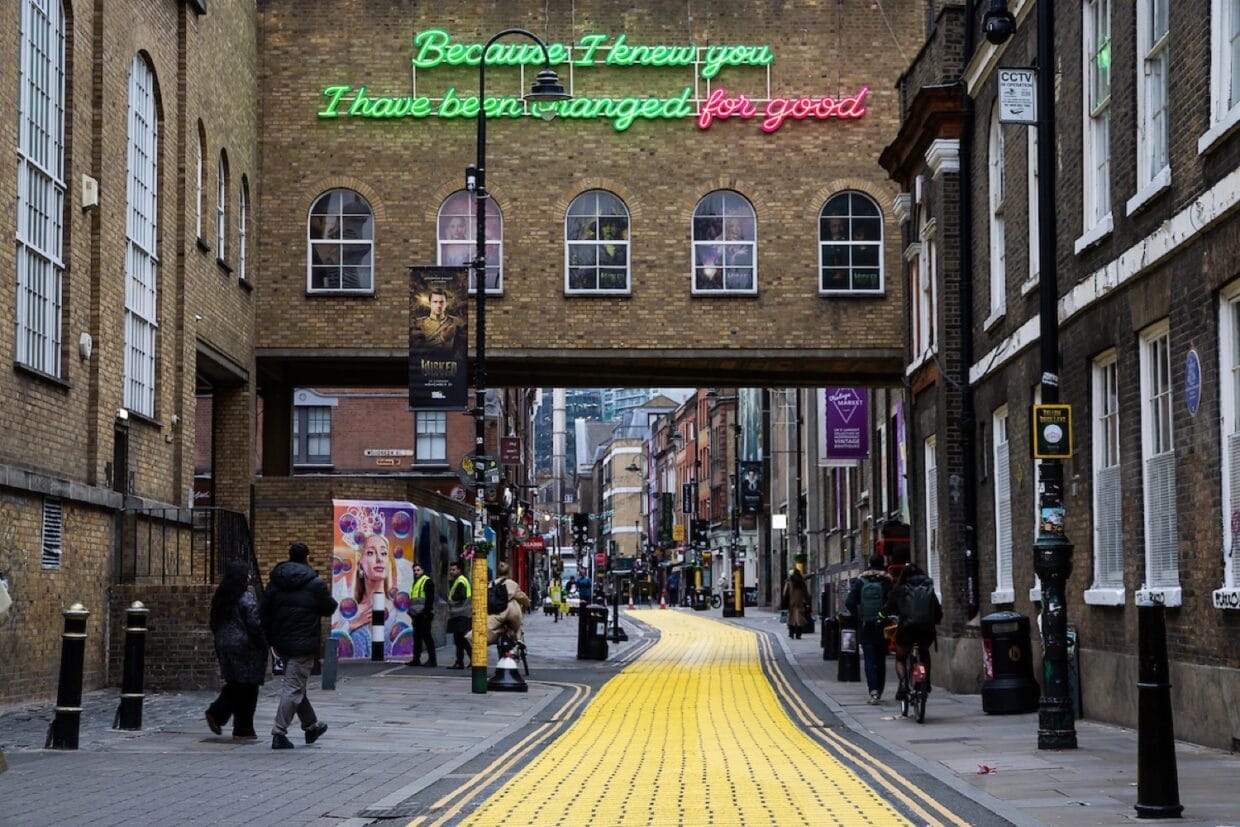
Shoreditch knows how to reinvent a street, a wall or an idea. But the arrival of Wicked Yellow Brick Lane takes that creative instinct to an entirely new plane. From now until 2 December, Brick Lane becomes an immersive celebration of Wicked: For Good, marking the cinematic conclusion of Universal Pictures’ legendary story, landing in UK cinemas on 21 November 2025.
This transformation stretches from the Banglatown Arch to the stretch between Hanbury and Buxton Street, turning one of London’s most iconic cultural corridors into a luminous trail of murals, installations and reimagined landmarks. The project brings together six artists whose styles reflect the diversity of East London’s visual language — from portraiture to abstraction, botanical expressionism to street art futurism.
The initiative pays homage to the film’s enduring themes of transformation, duality and friendship — themes that echo across East London’s creative scene. For local creatives, technologists and cultural producers, Wicked Yellow Brick Lane offers a rare moment when cinema, community and public art converge with real purpose.
Magic Meets Murals: A Street-Level Celebration of Creativity
The transformation of Brick Lane is more than a promotional moment — it is a creative intervention shaped by artists who know the neighbourhood’s pulse. Each mural and installation interprets a facet of Wicked’s world, blending character, memory and colour into the fabric of East London’s streets.
Artist Taya De La Cruz invites visitors into Enchanted Doors: Two Sides of Good, an installation exploring duality and self-reflection. Her work encourages passersby to pause, slow down and consider what “good” means in a world that rarely offers simple answers.
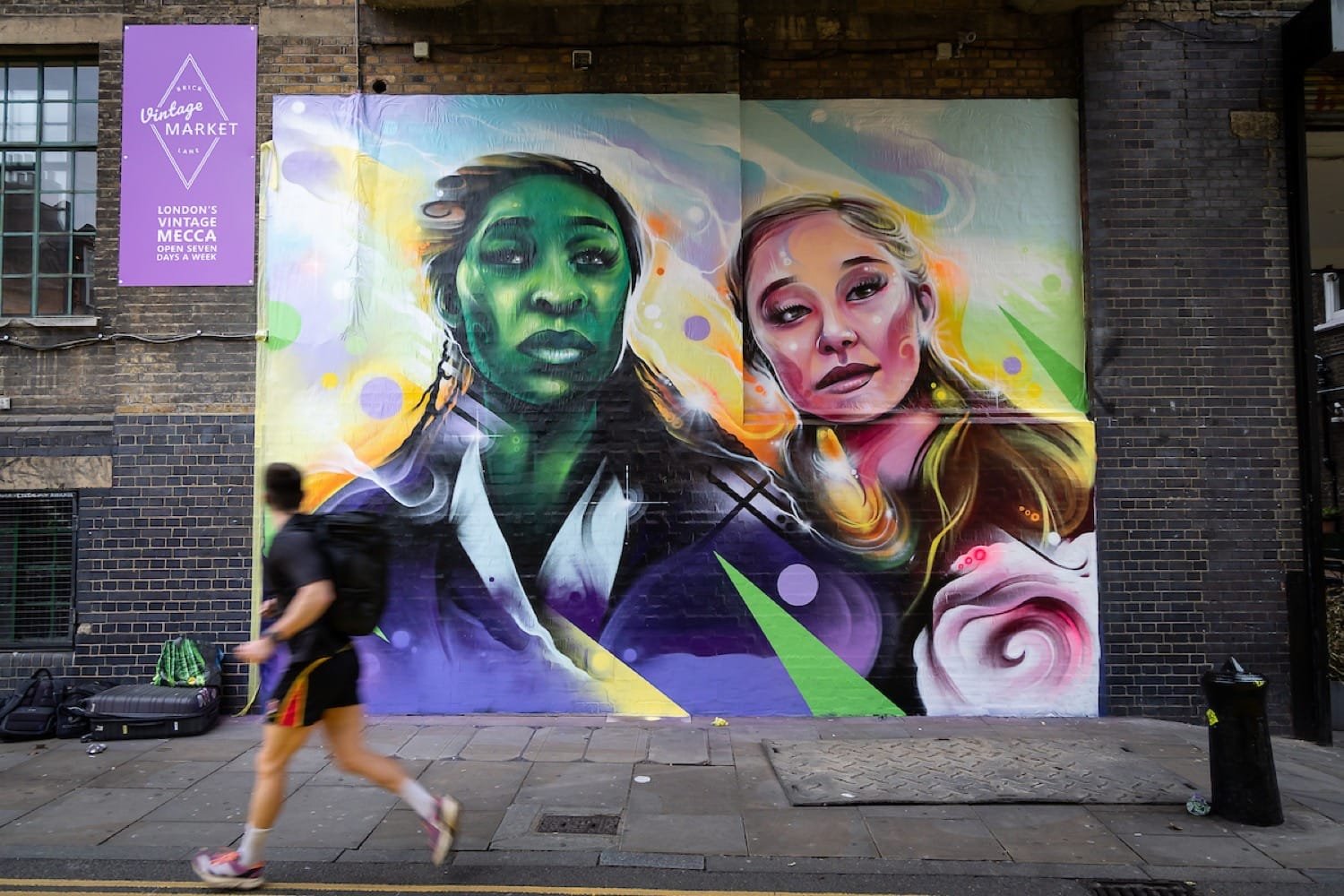
Nearby, Jimmy C brings Glinda and Elphaba to life through his signature pointillist layering. His portraits capture the intensity of friendship and the tension between power and vulnerability — an emotional thread that resonates with many London creatives navigating collaboration and ambition.
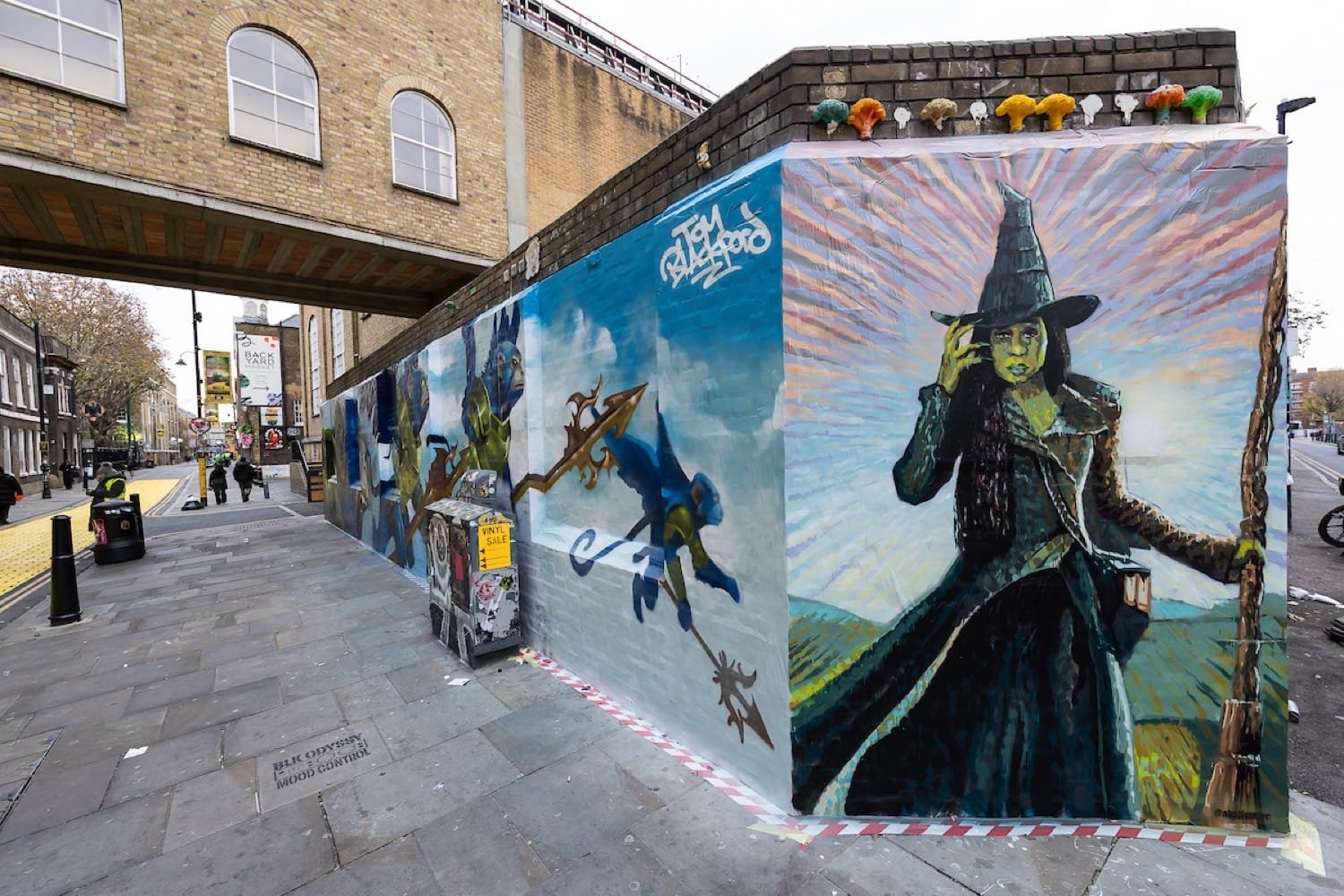
Street artist Tom Blackford channels childhood imagination in Fly!, creating a large-scale mural that honours the wonder that first introduced many viewers to the world of Oz. Mr Cenz, known for futuristic portraits, blends his distinctive style with Wicked’s characters, creating a dreamlike mural that remains unmistakably rooted in Brick Lane’s creative real estate.
Botanical muralist Sophie Mess contributes a vibrant artwork inspired by the film’s “For Good” theme. Her patterns bloom across the wall, weaving hope, colour and motion into the street’s shifting landscape. Rounding out the lineup, Nicolas Dixon infuses his signature sense of magic into a piece that bridges worlds — always returning to the theme of choosing good.
This dynamic mix mirrors the creative diversity we often encounter in local interviews, such as our conversation with artist Bradley Theodore, whose expressive public art explores colour, identity and emotion across city streets.
Exploring the Wicked Yellow Brick Lane Art Trail
Visitors walking the Wicked Yellow Brick Lane trail encounter more than murals. Neon lyrics span the Truman Brewery Bridge, bringing the musical’s iconic lines into public space. Funko character installations hide along the route, rewarding curious explorers. Street name changes, themed stickers, banners and posters appear at every turn, creating an environment that feels alive — immersive, playful and open to discovery.
For East London’s creative community, this kind of real-world activation demonstrates how storytelling can expand beyond the screen. It adds to the district’s evolving creative landscape, explored in features like our guide to the best art galleries in Shoreditch, where local spaces continue pushing visual culture forward.
Brick Lane — already celebrated for its street art, fashion and food culture — becomes a stage for cinematic imagination. And in a neighbourhood where artists and designers treat walls as canvases, this collaboration feels natural.
The project’s energy aligns with the innovative spirit highlighted in our exploration of the future of digital art in Shoreditch, where public space becomes a site for experimentation and new visual languages.
Community Voices: Why Brick Lane Was the Perfect Choice
The transformation comes to life through collaboration with the London Borough of Tower Hamlets, The Truman Brewery, local organisations and cultural venues like 93 Feet East.
India Young, Events Operations Manager at The Truman Brewery, reflected on the partnership, noting that imagination and individuality have always defined the site. Their support demonstrates what happens when heritage locations embrace bold, collaborative creativity.
Jeremy André of 93 Feet East, a Shoreditch landmark in its own right, highlighted how natural it feels to merge art, film and music in this area. Shoreditch’s identity — built on experimentation and creative purpose — aligns beautifully with the spirit of the Wicked: For Good project.
These sentiments connect with the design ethos shared in our interview with designer Lee Broom, where he explores how storytelling, lighting and spatial design can shape emotional experiences for audiences.
Even the Bangla Town Business Association embraced the celebration, positioning the Banglatown Arch as the “pink and green gateway” to the experience. It reinforces the idea that Brick Lane’s cultural richness is never static — it evolves with the energy of its communities.
Film Culture Takes Over East London
While the murals bring Wicked’s universe into the open, the takeover also builds anticipation for the film’s release. Universal Pictures describes the project as a celebration of storytelling and connection, inviting people to experience Wicked: For Good beyond the cinema.
This approach aligns with how London consumes culture today. Creatives want experiences that stretch across mediums — film blending with street art, music spilling into architecture, narrative spilling into everyday life. It also resonates with the sensory exploration we highlighted in our weekend guide to Shoreditch markets, where culture and community intertwine through place-based encounters.
As audiences prepare for the film’s arrival, Yellow Brick Lane acts as a bridge between the world on screen and the lived reality of East London’s creative streets. It reminds us that stories thrive not only in theatres but also in public spaces — especially when those stories champion courage, friendship and transformation.
A Creative Love Letter to East London
Wicked’s takeover of Brick Lane is more than a campaign. It is a love letter to the city that inspired the film’s emotional core — a city defined by complexity, curiosity and constant reinvention. For Shoreditch creatives, the project reinforces the belief that imagination thrives where community and culture meet.
The Wicked Yellow Brick Lane experience celebrates every shade of East London’s artistic identity — the bold, the surreal, the heartfelt and the collaborative. It’s a reminder that creativity doesn’t need permission. It simply needs a street, a wall and the courage to begin.
As East London continues to evolve, projects like this sit alongside the neighbourhood’s wider creative ecosystem, from pioneering galleries to innovative studios and cultural institutions. Together, they keep the area’s spirit alive — curious, expressive and always ready for the next transformation.