




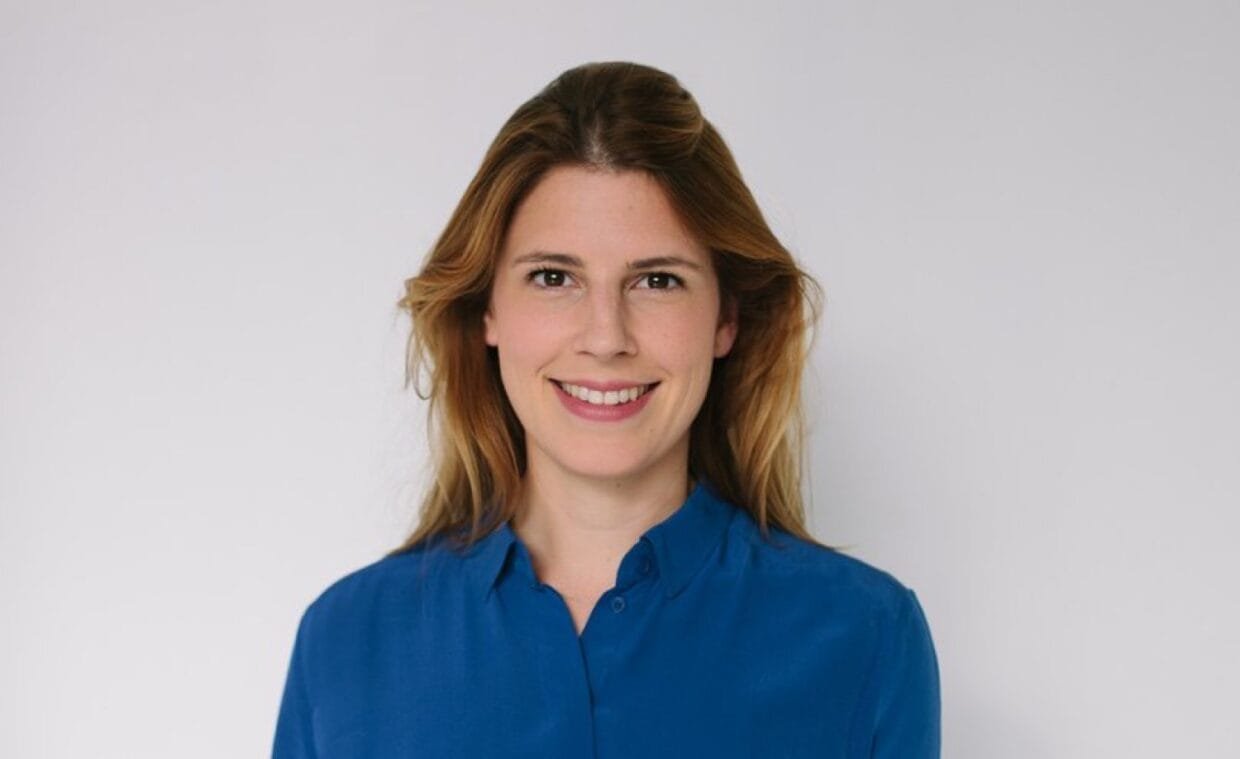
The Deutsche Börse Photography Foundation Prize has long been a compass for contemporary image-making, and curator Julia Bunnemann is guiding its 2026 edition with clarity and intent. Her work highlights how photography can shift conversations around truth, identity, and the politics of representation. This year’s shortlist reflects both urgency and experimentation, spanning long-term documentary projects to conceptual interrogations of AI and digital memory. To understand how she approaches such a diverse and ambitious show, we caught up with Julia Bunnemann for an in-depth interview.
The Deutsche Börse Photography Foundation Prize has become one of the most respected awards in contemporary photography. What continues to make this prize such an essential barometer for photographic innovation and social commentary today?
The essence of the Prize lies in collaboration, between many individuals and communities. Each year, we invite the photography community of curators, writers and thinkers to nominate the most outstanding exhibition or publication they came across in Europe in the past twelve months. So the Prize begins with what has been created and celebrated and is a reflection of what the photography community itself finds exceptional. A five-person jury then selects the shortlist. In general the Prize celebrates work which pushes the boundaries of what photography can be, this could be conceptually or technically.
The long-standing partnership between The Photographers’ Gallery and the Deutsche Börse Photography Foundation is also crucial – this sustained collaboration has built a strong foundation of trust and support for artists.
This year’s shortlist spans an extraordinary range — from Jane Evelyn Atwood’s long-term advocacy work to Weronika Gęsicka’s playful conceptualism. How do you approach curating a show that connects artists working in such diverse forms and intentions?
All four series are research-based projects which address urgent social issues – migration, identity, marginalisation or media manipulation.
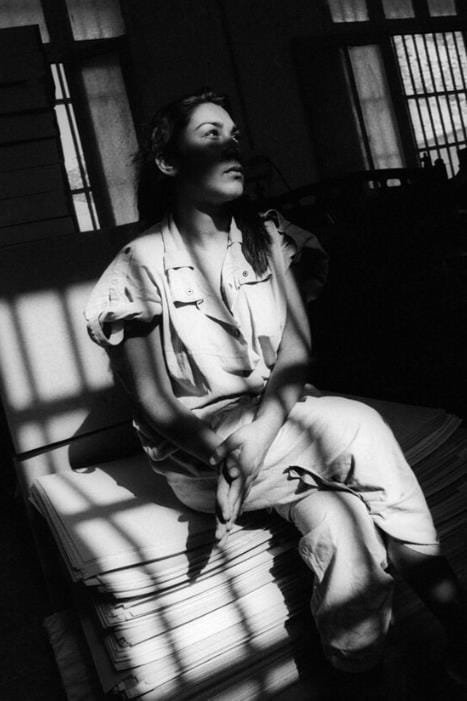
Amak Mahmoodian and Jane Evelyn Atwood both approach their practice through a deep sense of responsibility and trust for their subjects. Their collaboration is grounded in years of relationship-building, empathy and mutual respect; essential components of working with vulnerable communities.
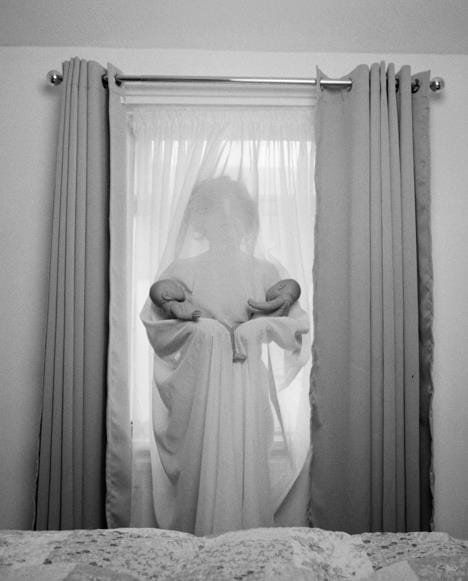
Jane Evelyn Atwood, whose long-term projects have often centred on marginalised individuals, continues to advocate for women in prison, amplifying their voices through photography and activism alike. Mahmoodian’s work similarly engages with themes of identity, exile and memory, exploring the human experience through both personal and collective lenses. Together, their practices demonstrate how sustained engagement can foster not only powerful imagery but also meaningful social change.
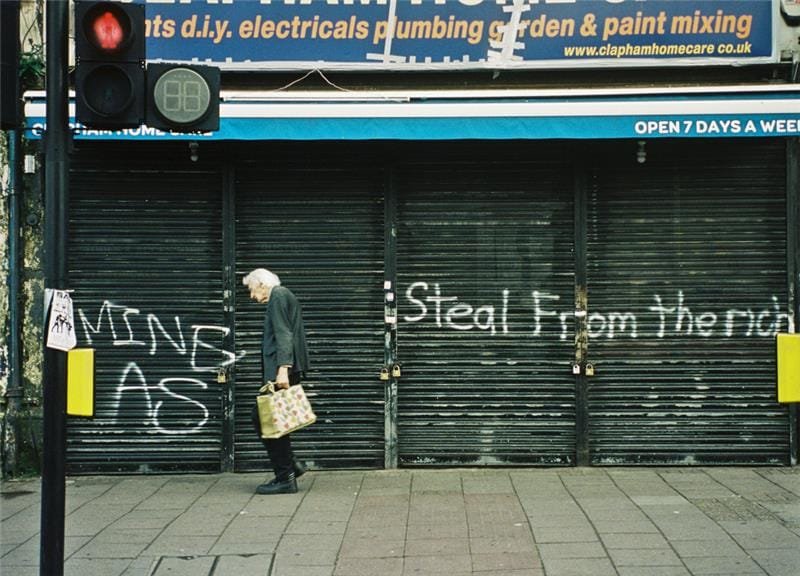
Rene Matić’s work, on the other hand, is an intimate and sustained exploration of their surroundings, developed over a decade of photographing friends, community and everyday life. Matić’s images are rooted in a delicate balance between observation and participation.
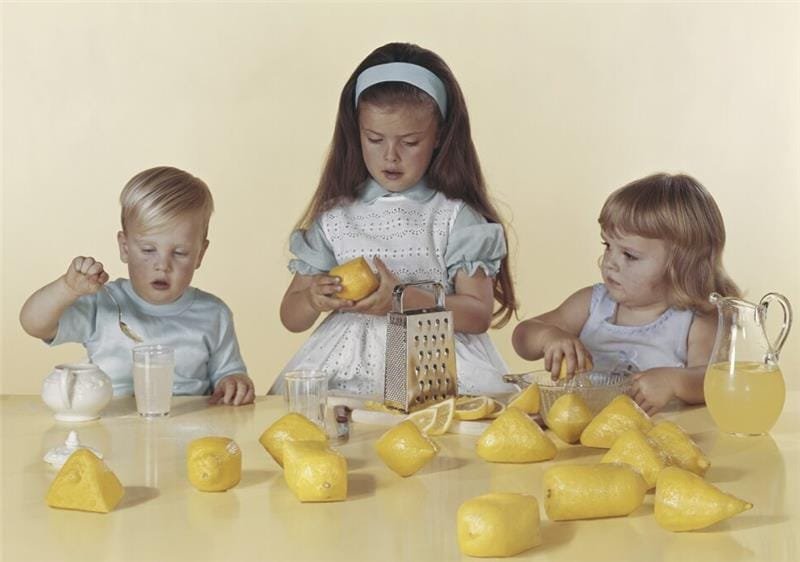
Weronika Gęsicka’s work reflects a commitment to sustained research. Her ongoing six-year investigation into collective memory and manipulation of photographic archives reveals how images shape and distort our understanding of history. Gęsicka’s practice continuously evolves as she discovers new materials and meanings.
Collectively, these four projects address urgent social and political concerns, yet each artist articulates these themes through a distinct visual and conceptual language. It is particularly compelling to observe how each body of work emerges from either lived experience or a deep-seated desire to illuminate overlooked realities.
From a curatorial perspective, I do not aim to impose a common narrative across these works. Each series was nominated for its individual merit rather than its relationship to the others. The challenge, and indeed the beauty, lies in allowing each project to stand on its own, to coexist without overshadowing or being overshadowed. My approach is to collaborate closely with each artist, ensuring their work is presented in the most authentic and resonant way. Subtle connections inevitably arise between the projects, revealing photography’s remarkable ability to visualise political and emotional realities through forms that can be poetic, humorous or introspective.
Each of the shortlisted projects engages with urgent contemporary themes — from misinformation and AI to exile, gender, and identity. How do you see these works collectively reflecting the current moment in visual culture?
If there is a common ground, all four artists celebrate a community. Through her depiction of the misconduct in women’s prisons, Jane Evelyn Atwood does not portray the women as nameless inmates, but shows them as individuals. Jane started the series nearly four decades ago, that fact that only a few things have changed today is appalling. She depicts the women with respect, something that the system had taken away from them. The same applies to Rene, who shows life in all its facets, and Amak, who reveals deep community connections. They go beyond the visual mainstream, delve deeper and invite us to pause and reflect.
Visual arts today respond to the world with an immediacy and multiplicity that reflect the complexity of our current moment. Artists are navigating a landscape shaped by social unrest, technological acceleration and questions of identity and belonging. In that sense, the visual arts function both as a mirror and as a form of resistance, a way to witness, to critique.
A good project is genuine and authentic, which we can see with all four nominated artists. They speak to collective anxieties about visibility, displacement and digital mediation, yet
also affirm photography’s power to reimagine connection, justice and the self in a fractured world.
We can see this, for example, with artists like Amak Mahmoodian, who uses photography to explore displacement and memory; Rene Matić, who documents friendship, race and queerness in a living archive of contemporary Britain; or Weronika Gęsicka, who reworks found images to question the construction of truth in a post-digital age. Their works don’t just depict the world – they interrogate how we see it, how it’s mediated and whose voices are represented.
The rise of participatory, community-based and interdisciplinary practices suggests that art’s role is no longer confined to representation but extends to dialogue and activism.
Curation at The Photographers’ Gallery has always been about framing photography as both art and document. How do you negotiate that balance between aesthetics and politics when presenting such socially engaged work?
The 2026 artists are proving that it can be both. The Prize is always an opportunity to explore the boundaries of photography and for our visitors to discover cross-disciplinary work within the same space. I’m particularly interested in using the three-dimensional space of the galleries to translate both the book and the exhibition into new spatial experiences.
Amak Mahmoodian’s One Hundred and Twenty Minutes and Rene Matić’s As Opposed to the Truth both explore deeply personal narratives through hybrid forms. Do you think the boundaries of what counts as “photography” are shifting faster than ever before?
Absolutely. Both artists use photography as their core practice but move outward from there, exploring other media and visual strategies. In Amak’s case, she’s also an exceptional photobook maker, someone used to working within a fixed format but constantly testing its limits.
The expansion of photography is something we’ve seen increasingly in recent years. Technology enables artists to move fluidly between disciplines, but it’s also a response to the visual saturation of our time. We’re surrounded by so many images that the impulse to distinguish oneself – to think beyond the traditional frame – has become essential. Photography exists in conversation with other art forms, and that’s what makes it so alive.
For example, Rene Matić’s exhibition was first shown at CCA Berlin, a space not exclusively dedicated to photography, while Amak Mahmoodian’s project, although presented as part of a photo festival, is inherently multidisciplinary.
The Deutsche Börse Photography Foundation Prize has launched the careers of some of the most influential image-makers of the last three decades. How does that legacy shape your perspective as a curator when assembling a new edition?
I have enormous respect for the legacy of the Prize and for the remarkable artists who have been shortlisted over the past 29 years. I also value the Deutsche Börse Photography Foundation’s long-term commitment to supporting photography in all forms.
However, my focus will always be on the four artists of the current edition.
Every space is different: The Photographers’ Gallery is more intimate than many of the original venues, and books require a different kind of translation again. It’s a fine balance between respecting the original presentation and reinterpreting it for our context. I like to think of it as creating a new translation – and it’s an opportunity for the artists to revisit their work, reflect on what has resonated and explore new directions.
Photography has entered a new era of image manipulation and algorithmic storytelling. With works like Gęsicka’s Encyclopaedia addressing AI and misinformation, what conversations do you hope the exhibition will spark about truth and authorship?
The question of truth in photography is as old as photography itself. From its very beginning, photography has carried the illusion of objectivity. What makes this current moment stand out is the unprecedented scale, speed and subtlety of manipulation introduced by digital technologies and algorithmic systems. We are witnessing a transformation not only in how images are made but also in how they are believed, shared and weaponised.
Weronika Gęsicka’s Encyclopaedia engages with this tension between credibility and construction. By reworking archival imagery and referencing AI-generated content, her project compels us to question the trust we place in supposedly reliable sources – encyclopaedias, archive and visual conventions that once stood for truth. The work invites us to confront the instability of meaning in an age where visual information is infinitely replicable and endlessly mutable.
In the context of AI, truth becomes an increasingly fluid concept, which I hope our visitors will consider. Under the guise of an apparently “authentic” image, scenarios can be convincingly produced and presented. Obscure authorship makes critical evaluation by the viewer increasingly difficult. At the same time, the technology enables the targeted dissemination of emotionally charged, divisive and discriminatory propaganda. We sadly live in a world where image generation can undermine our trust in visual media altogether.
What do you hope visitors take away from the 2026 exhibition — both in terms of how they see photography, and how they think about the world it reflects back at us?
It’s difficult to compare creative practices, especially at this level. But it’s vital that prizes like this continue to exist – they create a platform for experimental, risk-taking work that
might otherwise remain more hidden: A project that began in a smaller context can suddenly gain international visibility, giving renewed momentum to artists, curators and collaborators alike.
Empathy and attentiveness are central to this year’s themes. These are issues that concern us collectively, as a society, and individually, as human beings. I hope the exhibition can serve as a quiet call to action: to look more closely, think more critically, and care more deeply about the world we inhabit and the images that define it.
→ If you enjoyed this discussion, you’ll find more insightful profiles and creative stories in our Creatives & Creators section, highlighting the voices redefining contemporary culture.
xxx
The exhibition of selected work from the four artists’ shortlisted projects will be at The Photographers’ Gallery, London, from 6 March to 7 June 2026.