




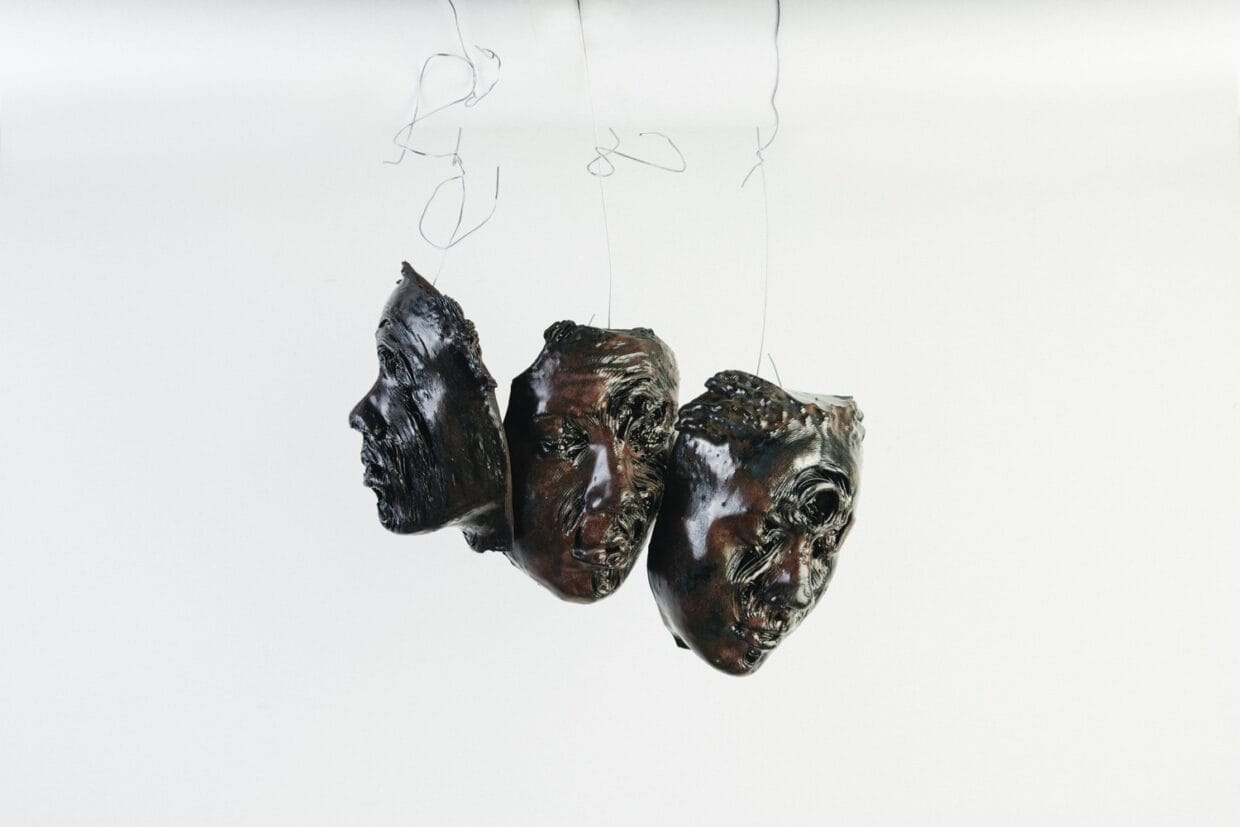
In true Shoreditch style — where tech collides with craft and art ignores boundaries — enorê’s work feels right at home. Their practice blends clay, code, and creative chaos, turning digital data into tactile sculptures that glitch beautifully. Recently selected as one of five artists for Talent 25 at Somerset House, they continue to push boundaries in both form and medium. We caught up with enorê to explore their evolving practice, the poetry of error, and what’s next in their hybrid creative world.
Your practice bridges digital data and raw clay. What first drew you to ceramics as a vessel for virtual exploration?
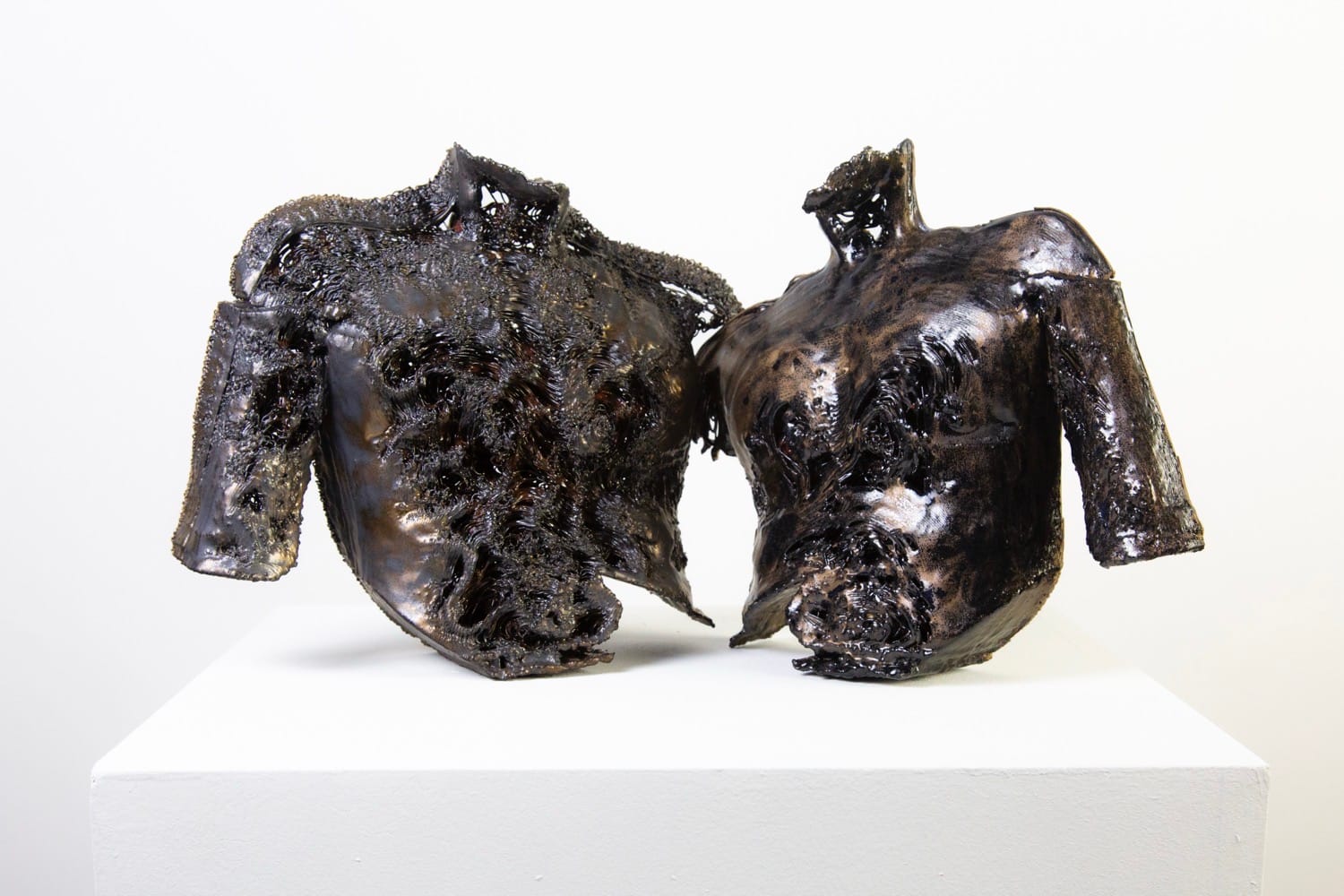
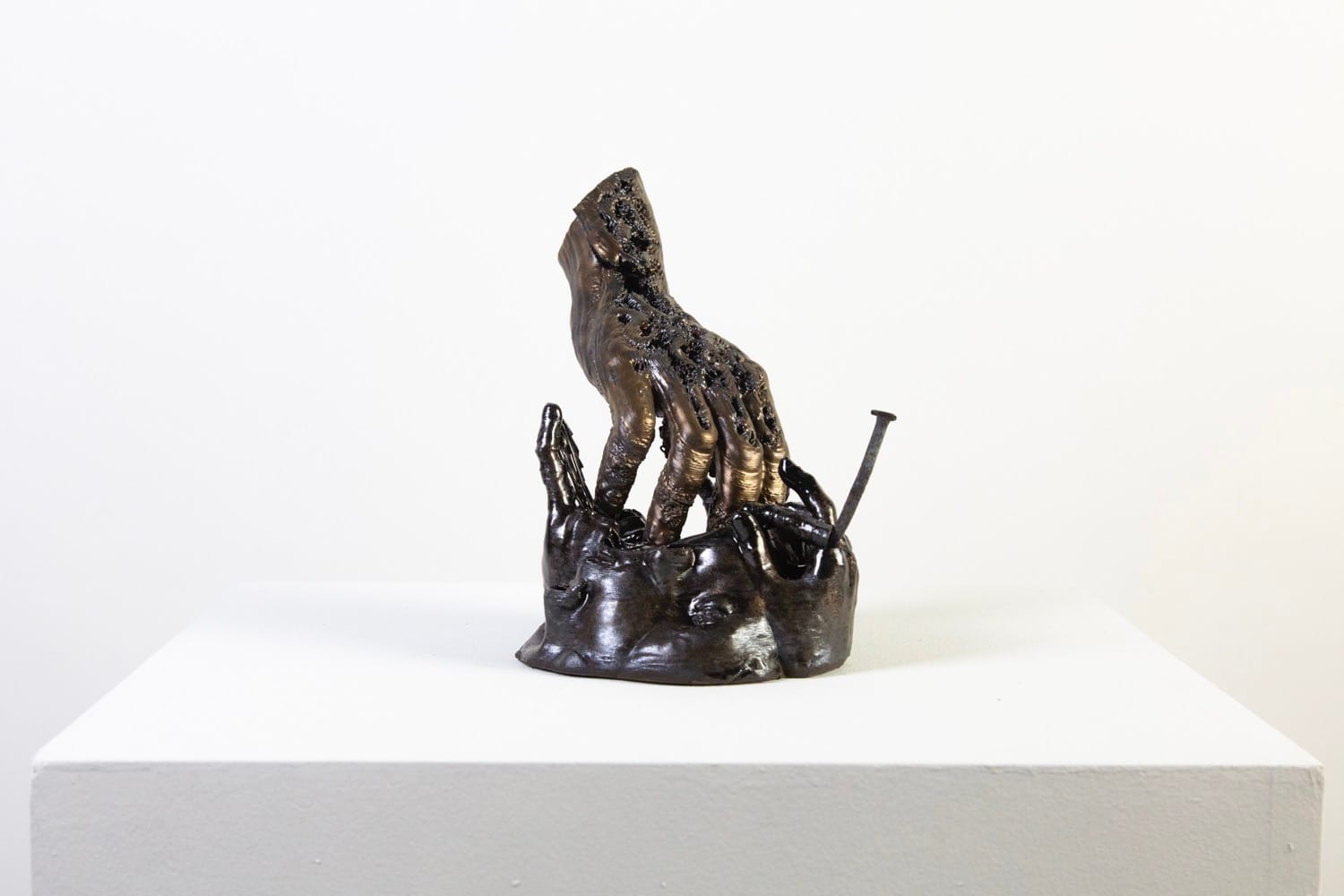
I initially began working with 3D scanning alongside other digital media, like coding and video, during my Master’s degree. I was mostly interested in its ability to convert physical matter into data, so I started exploring ways to bring those digital files back into physical space. At the time, there was a 3D clay printer available on campus at my university, so I began experimenting with translating the scans into sculptural forms, and understanding how clay and digital data can become entangled.
You’ve called clay a ‘highly temporal material’. How does time manifest in your work — digitally, physically, or somewhere in between?
Time in my work is reflected in many ways, from the way my digital files are created and worked and reworked over time; to the layering process that happens in the printer when they are being created in clay. Failure occurs and the clay is reclaimed to be used again in a future piece.
From Meta to Somerset House, your work travels vast institutional terrains. How do you adapt your practice across such different contexts?
I don’t particularly adapt my practice according to different contexts. Rather, I am mindful of inserting my work into contexts where it makes sense, without the need to change if I don’t want to.
You work between realms — physical, digital, perhaps even spiritual. What inspires the shapes and transitions in those translations?
I am inspired by my own process, especially the errors that come up during it. I enjoy seeing how the printer attempts to translate different types of data into clay, and what happens when things don’t go as expected, resulting in something like physical glitches.
You were recently selected as one of five Innovators & Pathbreakers for Talent 25 at Somerset House. What does this recognition mean for you—and what do you hope to explore during the programme?
This new Talent 25 initiative, launched as part of Somerset House’s 25th birthday celebrations, aims to support my creative journey as well as four others via professional development support and funding. It means a lot to me as someone who, like so many other artists within the UK’s currently precarious art system, struggles to continue making work and feeling supported. For my award, I am excited to research and experiment with building 3D clay printers and to think of them alongside my practice as sculptures themselves.
Looking ahead, what realm, medium, or collaboration would you love to explore next that you haven’t yet touched?
I would love to explore sound within my practice, as that is something I feel I tapped very lightly into a few years ago but never developed. I would also love to go back into painting eventually.