



Dongling Huang is an artist whose work draws on Dunhuang traditions and on art as a therapeutic practice.
Made in Shoreditch spoke to her about that background and her current work. Her answers are as given at the time of the interview.
The essentials
- Artist: Dongling Huang
- Themes: Dunhuang traditions and therapeutic art
The interview
Your practice is deeply rooted in Dunhuang art—how do you balance reverence for tradition with the freedom of contemporary expression?
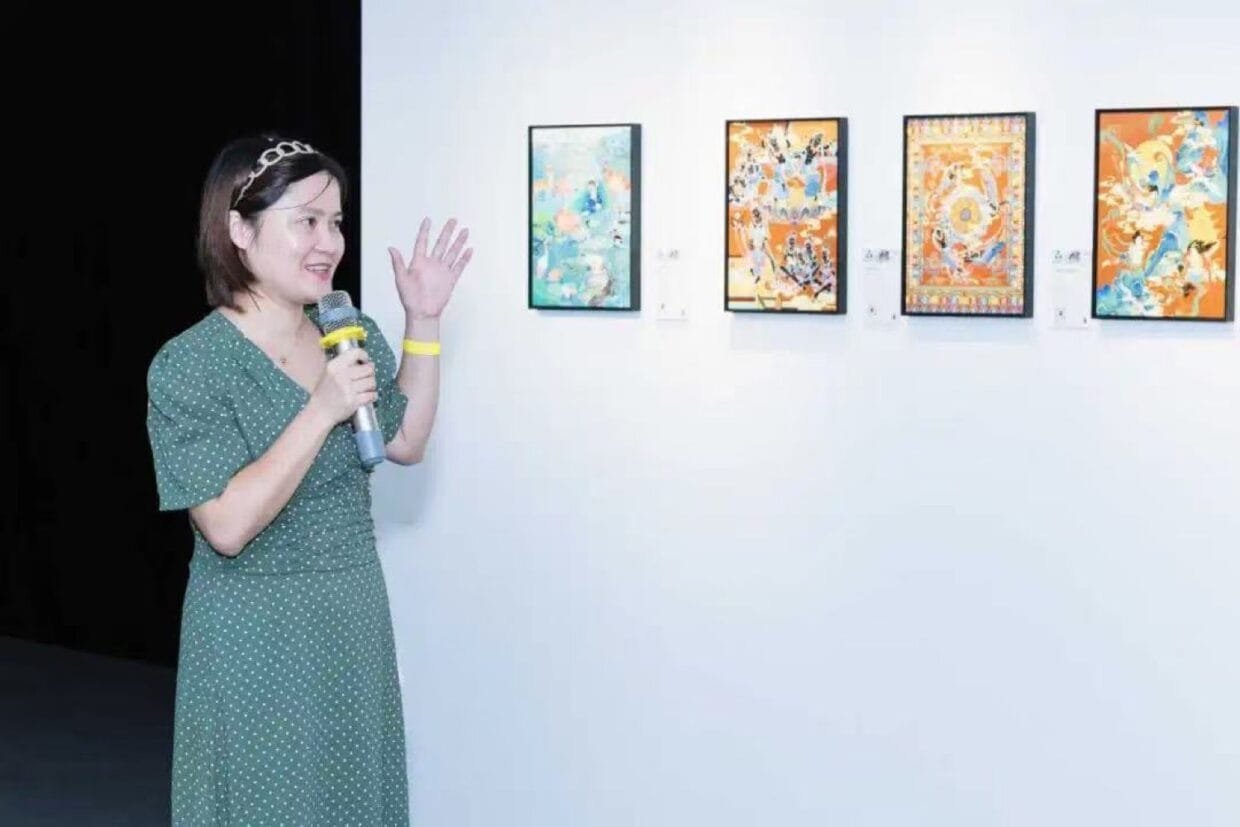
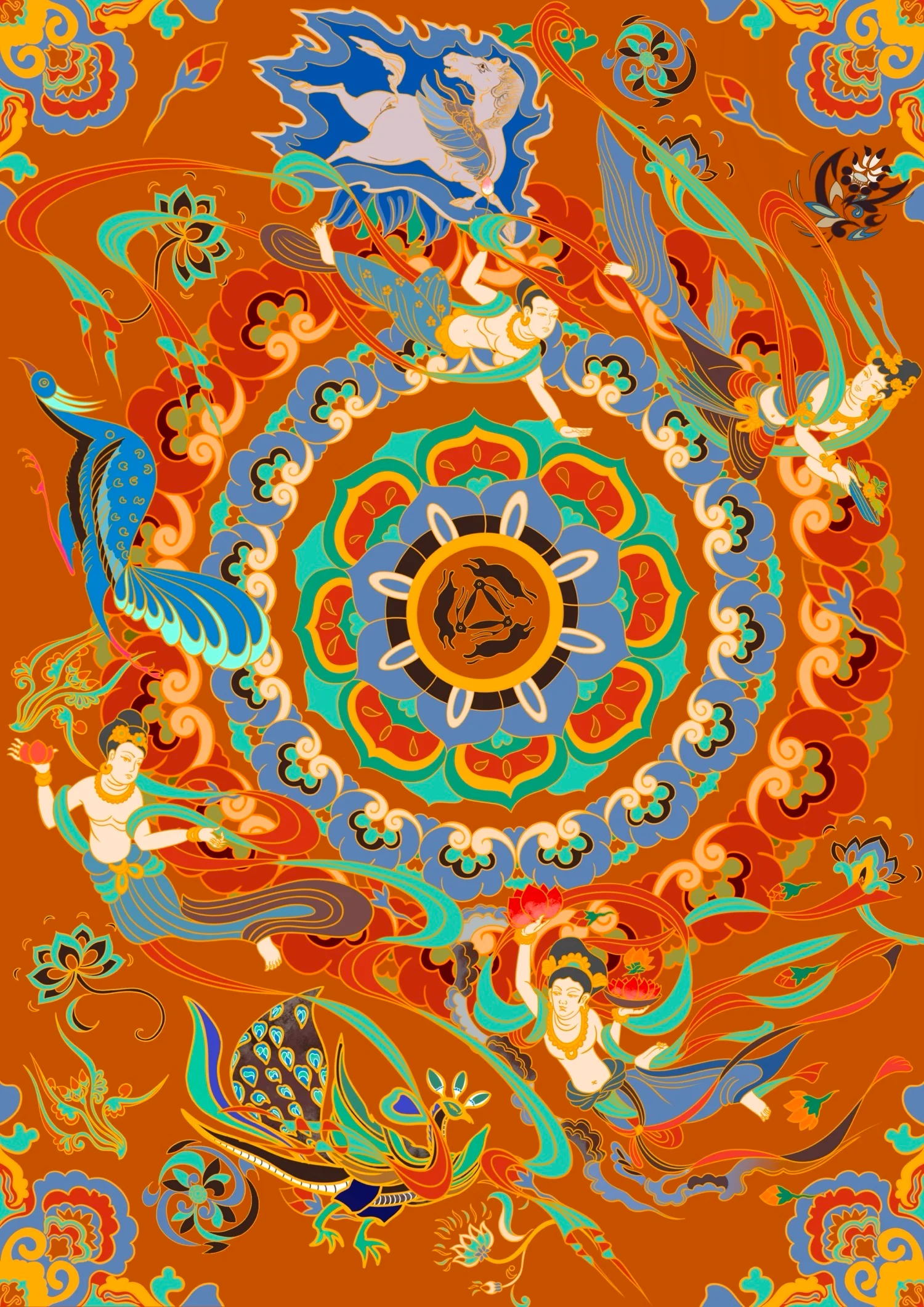
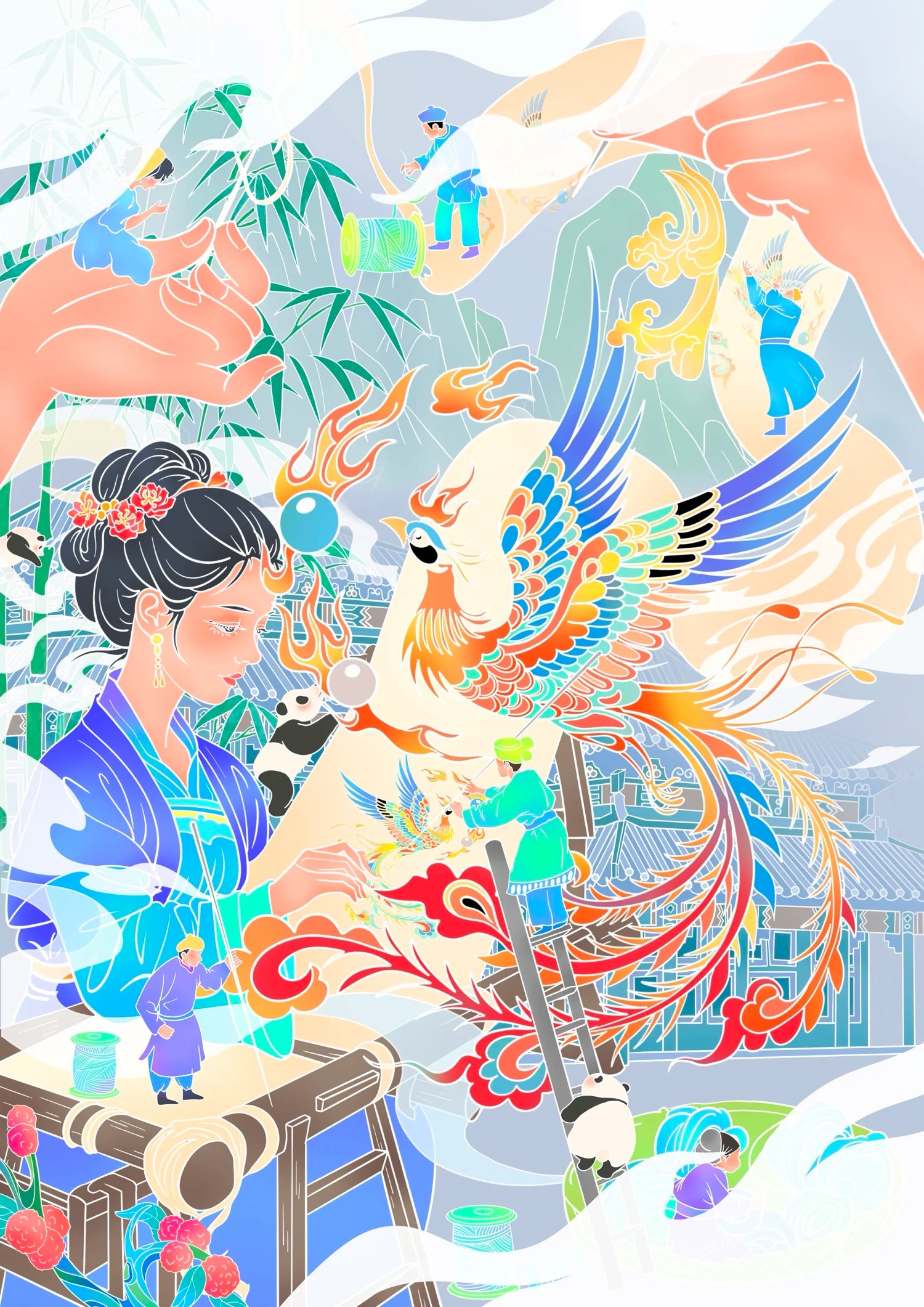
Systematically organizing and studying the patterns of Dunhuang, I designed Dunhuang motifs to achieve a perfect blend of tradition and modernity. Dunhuang, as a treasure of ancient Chinese culture, boasts rich and profound artistic achievements and cultural connotations. In the design, I ingeniously drew on the abundant elements from Dunhuang murals and integrated them into modern aesthetics. In terms of color, I adopted the classic color combinations from Dunhuang murals to create a visual effect that is both ancient and modern. In composition, I emphasized the symmetry and balance of the motifs while also incorporating fluidity and change, making them both traditional and modern in feel. The design of Dunhuang element motifs is not only an inheritance of traditional culture but also an innovation in modern design. The entire design still embodies the unique charm of Dunhuang culture and meets the aesthetic needs of modern people. Such a design is not only a continuation and promotion of Dunhuang culture but also a modern innovation and development of China’s excellent traditional culture.
The concept of “therapeutic art” runs through your work. What first inspired you to explore the healing potential of illustration?
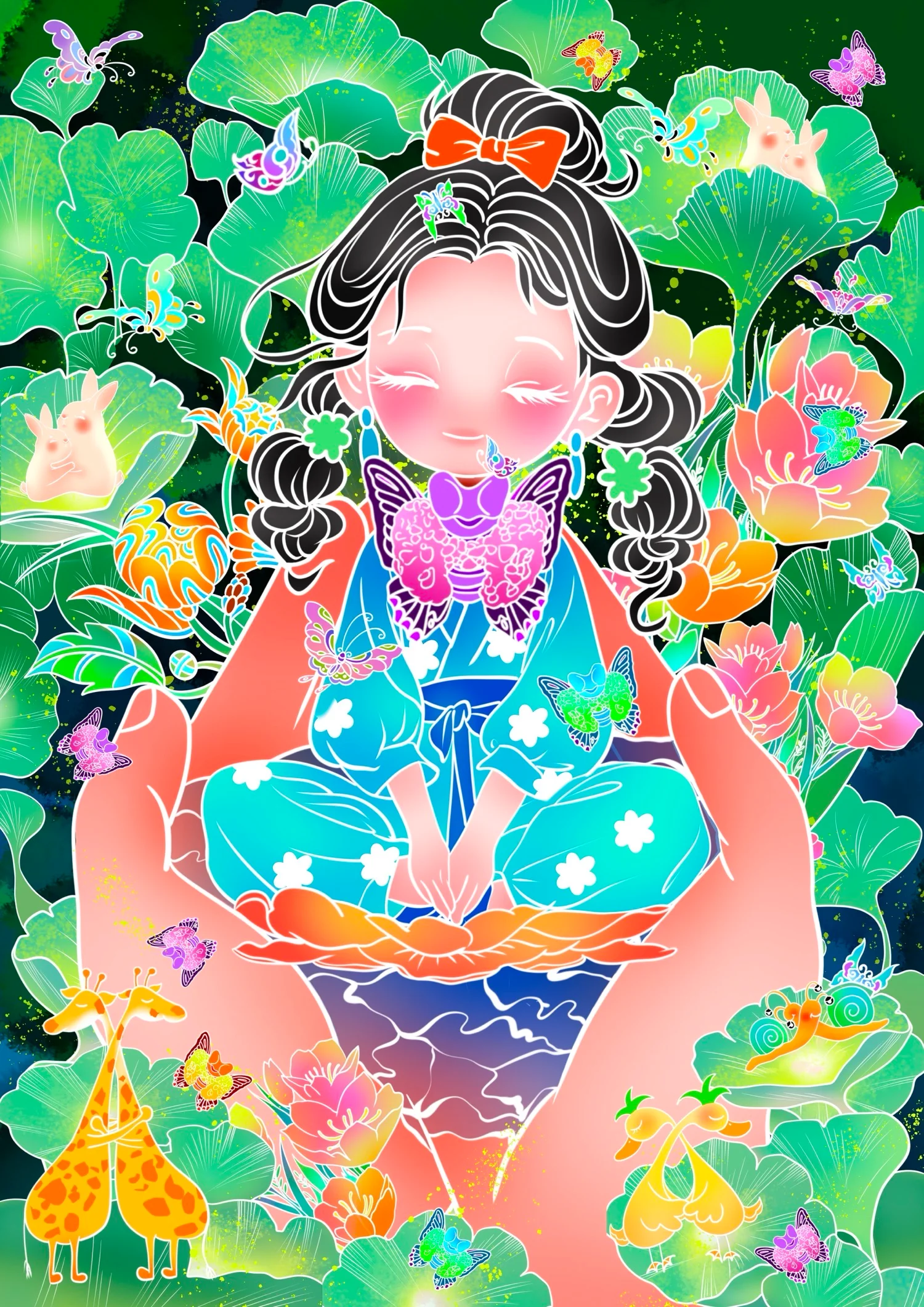
I visited a healing art exhibition in Shenzhen 4 years ago, After visiting this exhibition, I felt healed. This exhibition, which focuses on art therapy, allowed the audience on site to experience the full healing power of art. An old sofa full of the marks of time, a candlestick lampshade hidden in the corner… These are the “everyday” in the painter’s eyes, through therapeutic brushstrokes, people can feel and imagine the former owners of these objects, and can’t help but let their minds wander. At this moment, the objects are endowed with life, evoking memories and awareness in life, and also allowing the audience to sense the traces of time and the beauty and poetry of the everyday. I have come to realize that life itself is an artistic state, Laughter and play can all be incorporated into creation, Art is a source of joy and a prescription for healing the diseases of the soul. Before, I often suppressed my emotions and was often shrouded in anxiety. I started to do quick sketches, one page of emotional portraits every day, using a creative way to achieve self-healing, awakening and growth. Illustration therapy is a therapeutic tool that can help people identify their own state, past experiences and the effects they expect to achieve. By drawing emotions and feelings with a pen, one can deal with internal emotional conflicts, therefore, I start to explore the healing potential of illustration.
From Li ethnic dyeing to Shu embroidery, you draw on many strands of China’s intangible cultural heritage. How do you decide which traditions to reimagine?
Decide which traditions to reimagine. Sometimes, it is from the invitation of institutions and curators, such as the invitation to the Li Ethnic Plant Dyeing & Rattan Weaving Art Exhibition in Maodao Township Wuzhishan, to engage in artistic co-creation of Li ethnic plant dyeing.
Also the universal core value and emotional connection: First to explore the cultural core and emotional value carried by intangible cultural heritage. Does it tell a universal human story? Can it evoke an emotional resonance with modern people? For example, Shu embroidery: its core lies in the ultimate craftsmanship, patience, and delicate expression of the beauty of life. Behind every stitch lies the warmth of time. This kind of “slow work yields fine results” focus is particularly precious in today’s fast-paced society, evoking people’s respect and yearning for craftsmanship and concentration.
I also Consider the extensibility and aesthetic adaptability. Does its visual language (patterns, colors, materials) and craftsmanship have sufficient plasticity to integrate into the contemporary design context without seeming out of place? For example, for the Li ethnic plant dyeing in Maodao Township Wuzhishan, we engaged in co-creation and held the “Natural Gowns – Maodao Township Wuzhishan Plant Dyeing & Rattan Weaving Clothing Art Show”. Models wearing clothing that integrated Li ethnic plant dyeing and rattan weaving elements made a stunning appearance. These highly internationalized clothes are the crystallization of the skills and efforts of rural workers, artisans, and artists, carrying the rural workers’ aspirations for rural revitalization, the artisans’ dedication to traditional techniques and pursuit of beauty, and demonstrating the collision of tradition and modernity, as well as the harmonious coexistence of nature and humanity. Female models wore the co-created clothing in a performance at the Hainan Provincial Cultural Center, allowing more people to experience the charm of intangible cultural heritage. Accompanying the intangible cultural heritage inheritor to debut, 15 Li ethnic intangible cultural heritage artisans “flew” out of Wuzhishan.
Seek out those intangible cultural heritage projects with profound and touching cores, strong visual language plasticity, capable of evoking emotional resonance with modern people, and able to grow together with the artisans who protect them.
Your “New Apsaras” series brings ancient celestial figures into the modern world. What do these beings mean to you personally, and to today’s audiences?
The Dunhuang Flying Apsaras, or the “New Apsaras” series, for me personally and for today’s audience, are far more than a simple revival of ancient images. To me, the Apsaras are the embodiment of freedom. They are light and graceful, with countless postures. Without wings, they soar freely in the sky, relying only on their flowing robes, relaxed postures, and the flowing clouds around them. This represents an ultimate romanticism filled with Eastern philosophical meaning. This ultimate elegance and agility is the state of “absolute freedom” that I yearn for in my heart – unrestrained and a dance of creativity. It makes me realize that the essence of creation is the free flight of the soul.
For today’s audience, the Apsaras represent a cultural confidence that resonates deeply. With the rise of the “national trend”, especially among young people, traditional culture is no longer merely regarded as specimens in museums. Instead, they are eager to find an emotional connection and identity that relates to their modern lives. What the “New Apsaras” does is to reinterpret this highly recognizable cultural symbol with contemporary aesthetic language (such as trendy illustrations). It makes young people exclaim, “Our ancestors’ creations are so cool, so beautiful, and so sophisticated!” This resonance is no longer out of obligation but from a genuine love and pride in their hearts.
Many of your works touch on sustainability and environmental issues. How do you weave global concerns into such symbolically rich, heritage-inspired pieces?
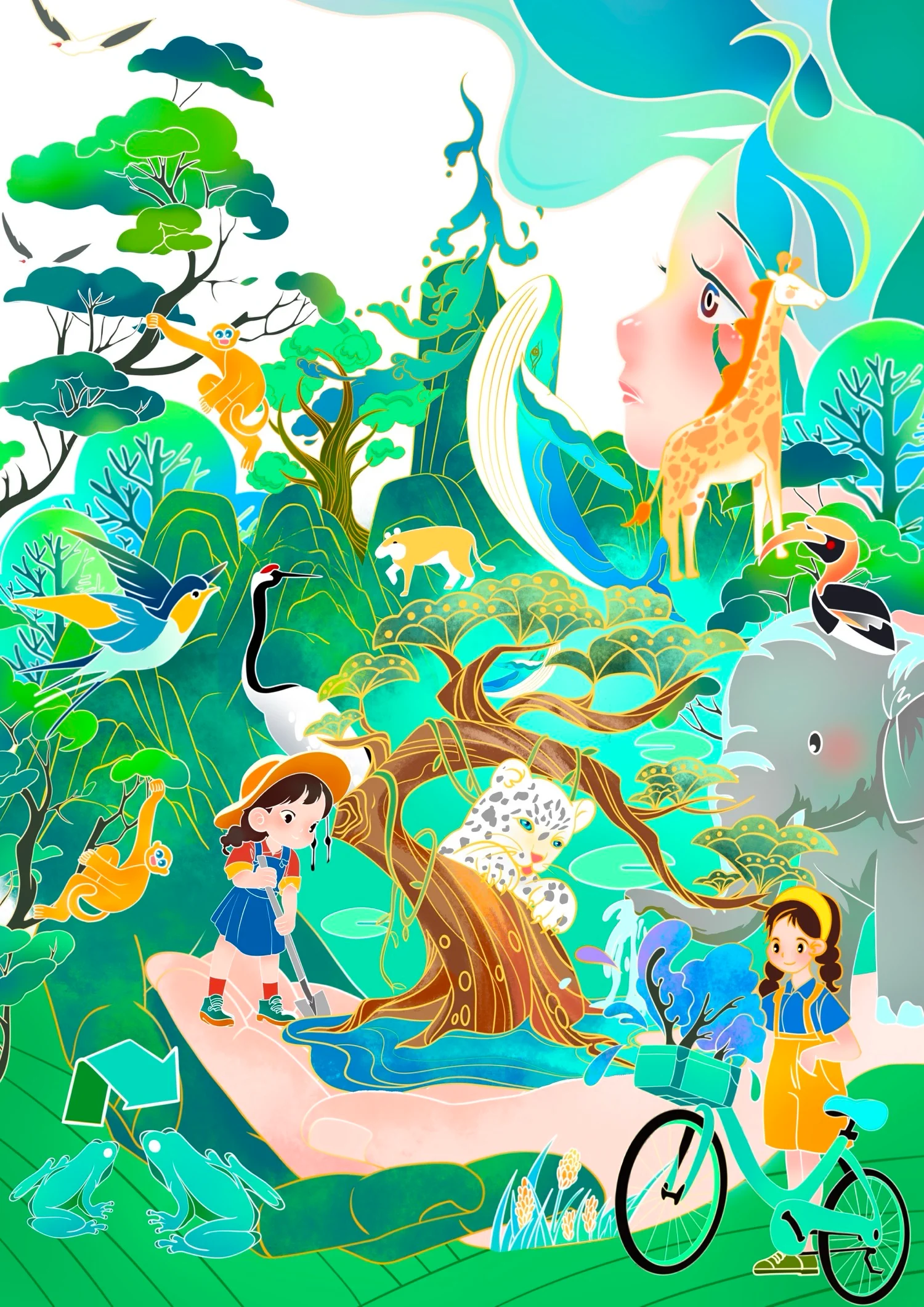
Drawing on traditional aesthetic elements for inspiration, such as the important symbols of the heron in ancient Chinese poetry and paintings, the bright moon that conveys beautiful sentiments, the rose of Sharon symbolizing prosperity and good fortune, and the pine and cypress representing resilience and indomitability, the oriental artistic conception is vividly integrated into the issues of sustainable development and environmental protection. Combining abstract lines and color blocks, the possibility of creation is sought between traditional and modern cultures.
Your exhibitions span London, South Korea, and Taiwan. How do international audiences respond differently to your art compared with those in China?
For Chinese audiences, their experience begins with a sense of “cultural familiarity”. They can instantly recognize the Dunhuang elements, Chinese intangible cultural heritage, or some familiar traditional aesthetic elements in the works. This resonance is deeply rooted in their cultural genes. Their appreciation path is “from the inside out”: first identifying with its cultural identity, and then savoring the contemporary transformation and innovation made by the artist. They will comment more delicately: “You have brought out new meanings from the traditional elements.”
For international audiences (such as those in London and South Korea), they are first attracted by a “strange beauty”. The strong Eastern imagery and non-Western narrative logic in my works constitute a “poetic strangeness” full of exotic cultural charm for them. They may not fully understand the specific allusions behind all the symbols, but precisely because of this, they tend to approach and understand the works from universal visual languages, emotional expressions, and philosophical concepts (such as ecological care, human community, and the cycle of life). This cross-cultural interpretation often generates new meanings that I myself have not anticipated.
You often collaborate with cultural institutions and even medical professionals. What role do you see art playing in wellness and social progress today?
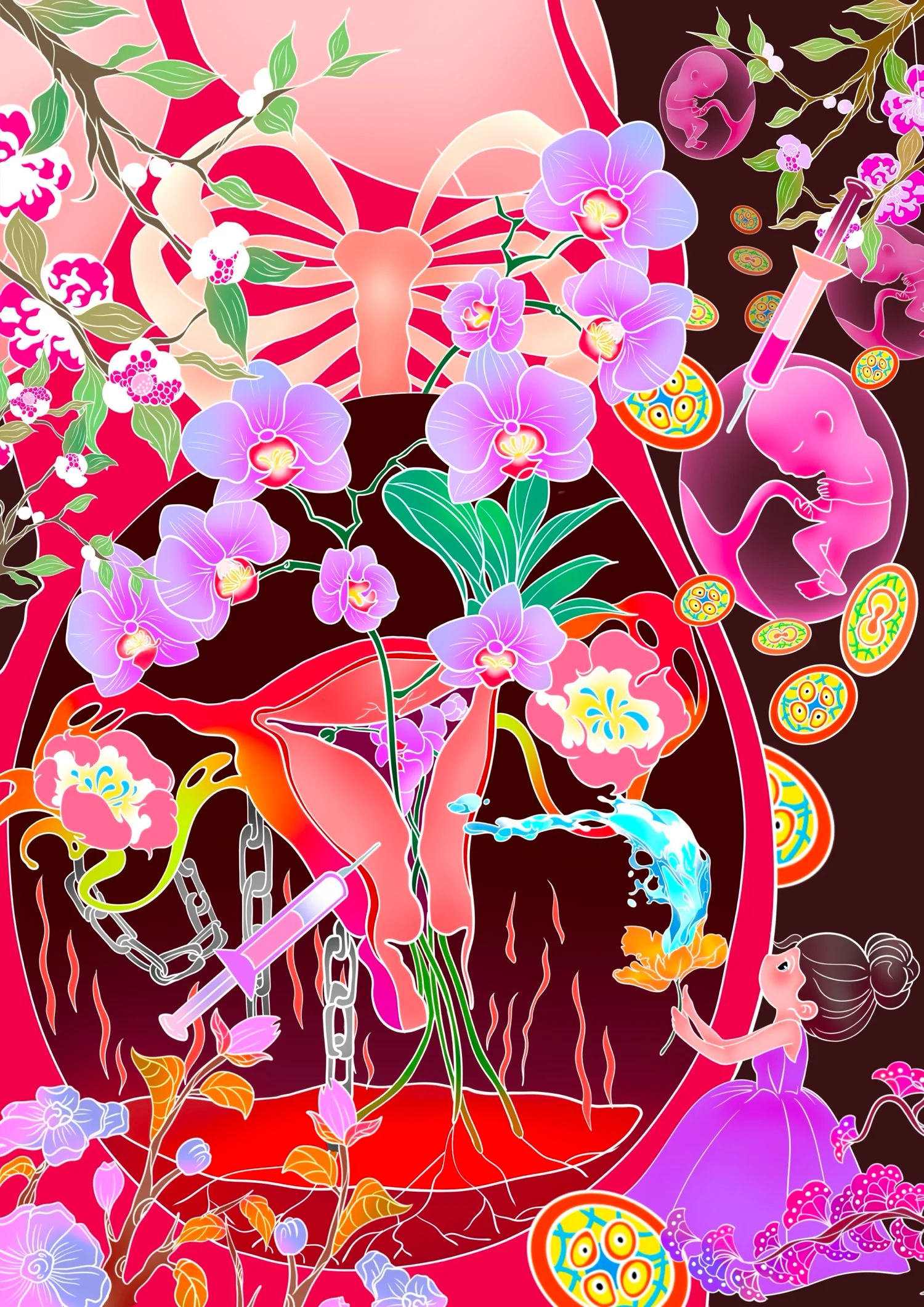
Using words to preach to the public about more diseases may make people feel uncomfortable. Verbal preaching is often not easily accepted and can easily lead to resistance. When talking about the prevention or origin of many diseases, it can make people feel frightened and panic-stricken, and they may not want to listen any longer. However, visual art provides a “non-verbal” channel for expression and communication, compensating for the limitations of language. Through color, lines, shapes, textures, symbols, and images, individuals can bypass rational defenses and directly express the origin and prevention of diseases that are difficult to put into words.
Nowadays, many hospitals collaborate with artists to hold art exhibitions in hospitals to promote more diseases and popularize more disease knowledge, teaching the public how to prevent them.
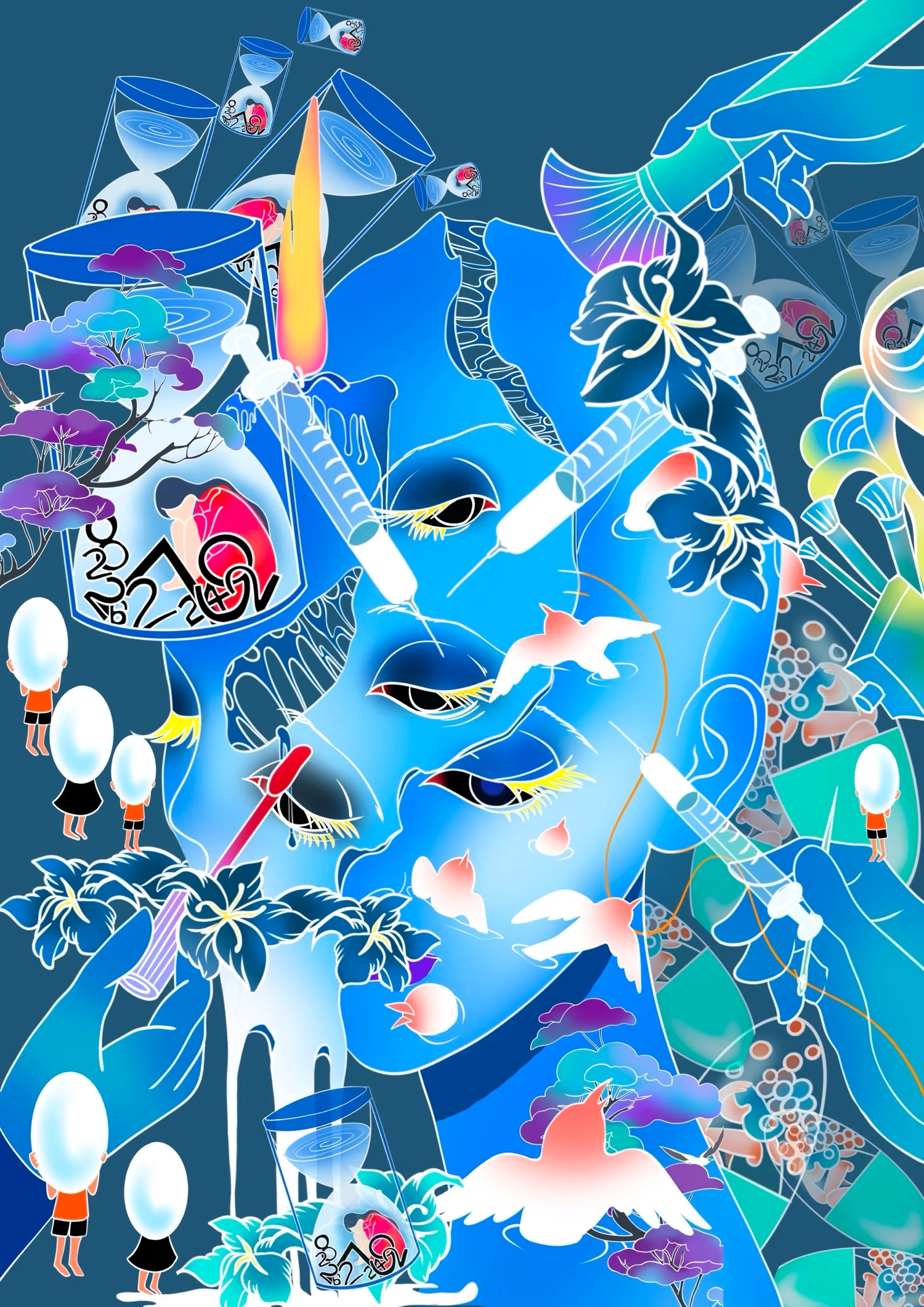
Stimulating active health awareness rather than passive acceptance of preaching, art does not provide standard answers but invites the audience to actively interpret and reflect. This sense of participation can transform the passive mindset of “being educated” into the active cognition of “I have realized it”, which is the key first step in behavioral change. For example, the thyroid disease awareness exhibition we held in collaboration with the Ruijin Hospital, Luwan Branch of Shanghai Jiao Tong University School of Medicine, used visual art to make the audience realize that emotions are closely related to thyroid health, encouraging them to proactively pay attention to their emotional issues to prevent thyroid diseases.
“Connector” role: Building an empathetic community and breaking the sense of loneliness. Art exhibitions in hospitals provide a shared emotional space for patients, their families, medical staff, and the public. Seeing others express their illness experiences through art can greatly reduce patients’ sense of loneliness and also make the public realize that health is a common issue for everyone. The promotional effect of prevention is far better than that of leaflets.
The traditional health promotion model is often “fear-driven”: “If you don’t do X, you will get Y disease.” This can easily lead to anxiety and avoidance. However, the art-led model is “meaning-driven” or “aesthetics-driven”. It attracts attention through aesthetics, safely reveals the truth through metaphor, connects experiences through empathy, and stimulates internal change through reflection. Art successfully transforms health promotion from an uncomfortable “external preaching” into an inner “self-enlightenment”. It compensates for the limitations of language, touches the common humanity deep within us, and thus more effectively spreads health, prevents diseases, and promotes overall well-being.
Awards from 3×3, IJungle, and American Illustration have recognised your work globally. Has this recognition changed your perspective as both an artist and cultural guardian?
When I was creating in the past, I couldn’t help but have a bit of a mentality of seeking validation from the outside, wondering if my works met certain expectations or standards. But after these awards from different cultural backgrounds and with credibility gave me recognition, it made my heart more peaceful instead. This recognition was like an echo, telling me: “The direction you are persisting in is worthwhile. Please continue to explore with loyalty to your inner self.” It didn’t make me become impetuous or chase after award-winning styles. Instead, it lifted a burden of needing to be defined by the outside world, allowing me to focus more intently and purely on creation itself, to delve deeper into cultural narratives and experiment with more personal artistic languages. This is a kind of “inner freedom” after being affirmed.
Looking ahead, what stories or themes do you feel most compelled to explore next—within Dunhuang art, heritage preservation, or beyond?
I am deeply compelled to explore how to bring the inheritors of intangible cultural heritage into the spotlight. Many of these inheritors in China are not in big cities but in economically underdeveloped areas. Many of them are artisans who have poor economic conditions but have passed on their intangible cultural heritage out of their love. How can we help these inheritors of intangible cultural heritage to gain recognition and let more people know about them? For instance, the batik of the Miao ethnic group, the folk brocade of the Li ethnic group and the embroidery of the Dong ethnic group. What I am deeply compelled to explore next is how to build a bridge for these inheritors of intangible cultural heritage scattered in the countryside, nourished by their passion, to reach a broader world, connecting the deep mountains with the cities, and the traditional with the modern, so that all the inheritors can proudly say: “My craftsmanship has been seen by the world. People know about this intangible cultural heritage.”