



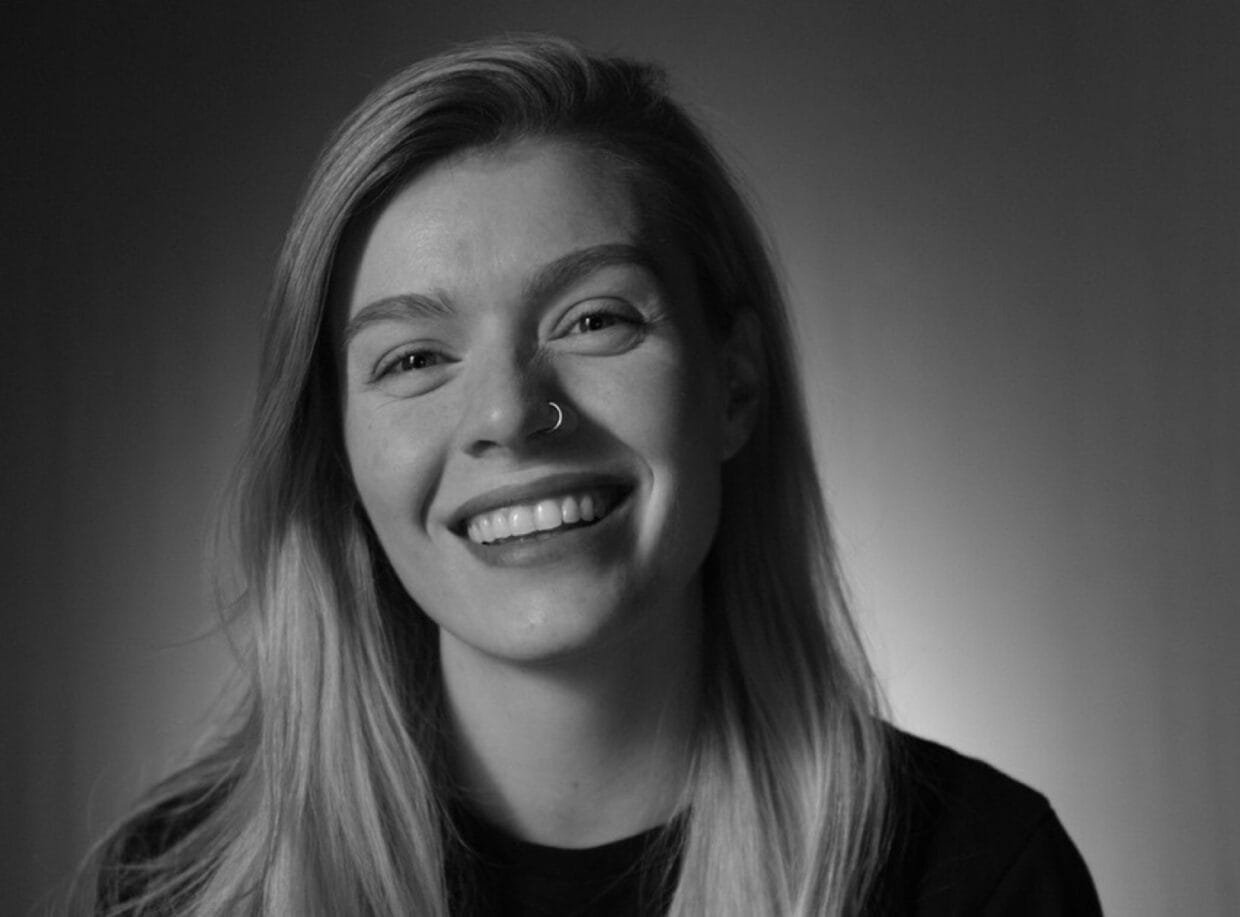
Ida Melum has built a reputation for blending humour, honesty and handcrafted detail into stories that hit far deeper than their playful surfaces suggest. Her new film Ovary-Acting continues that tradition, exploring the pressures surrounding womanhood through a stop-motion world full of wit, texture and emotional truth. From tiny puppets to huge questions about autonomy, Ida Melum’s work pushes animation into bold, intimate territory. To hear the story behind the film, we caught up with Ida Melum for an interview.
Can you tell us the inspiration behind Ovary-Acting?
As a woman approaching my late twenties, I was no stranger to the topic of children. After several awkward and confronting situations regarding when I`d finally have kids of my own, I started to wonder; did I want to have kids because I wanted it, or did I want them because it was expected of me? This and many other smaller things led me to want to make Ovary-Acting. As the topic can be tricky and very personal, I wanted to keep the film lighthearted and entertaining. However, as we were making the film, the political climate shifted dramatically. What was already a relevant conversation at the start of the project became even more urgent and significant by the time we finished it.
Why did you choose stop-motion as the medium for telling this story?
I never really have a good answer to this. Stop-motion has always been my preferred method of animation – it’s where I feel most creatively at home. Personally, I think it’s hard to beat the tactileness and the visible human touch that you see in every frame. Plus, it’s always a joy sharing the puppets with audiences after a screening!
Stop-motion is known for being an incredibly meticulous process. How long did it take you to complete the animation and what were some of the biggest challenges along the way?
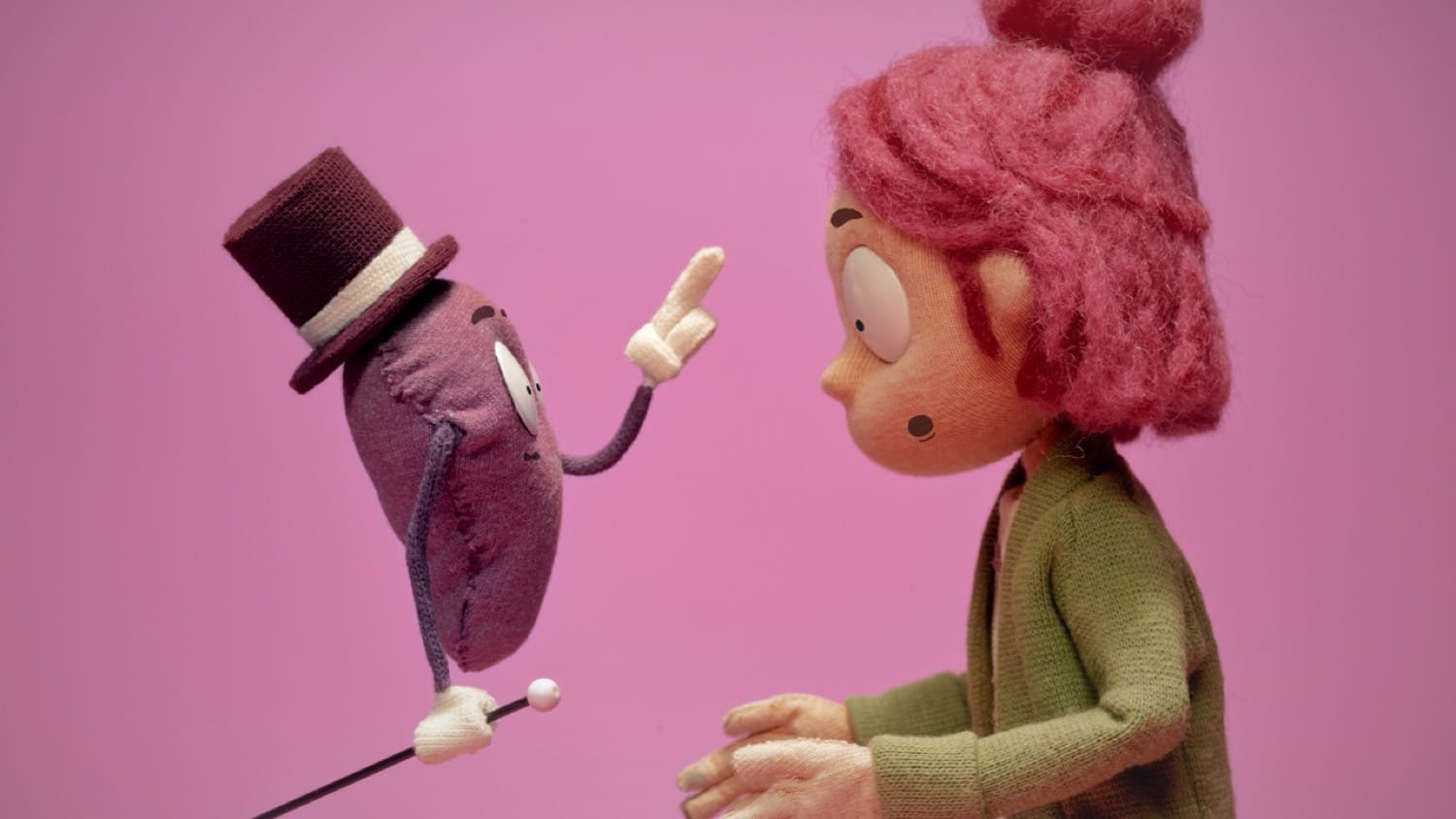
The stop-motion shoot took about 4 ½ months to complete. The entire film was animated by me and my good friend and collaborator, Rich Farris. Apart from the intensity of the workload itself, one of our biggest challenges on the shoot was the size of the puppets, sets and props. To accommodate two animation units within our shooting space, we had to stay within a certain scale. If anything became too large, we wouldn’t have been able to run both units simultaneously. This resulted in Ovy (the floating ovaries) becoming very small. I think she was only 4 ½ cm tall, which is sooo tiny! The smaller the puppet, the more difficult it is to achieve expressive, dynamic movements, and given that Ovy’s character is so over-the-top, energetic, and full of personality, bringing that performance to life in such a tiny puppet required a lot of precision, and patience.
→ Explore more bold voices shaping London’s creative scene.
The character design is beautiful. Can you share with us your creative approach when developing the look and personality of the characters?
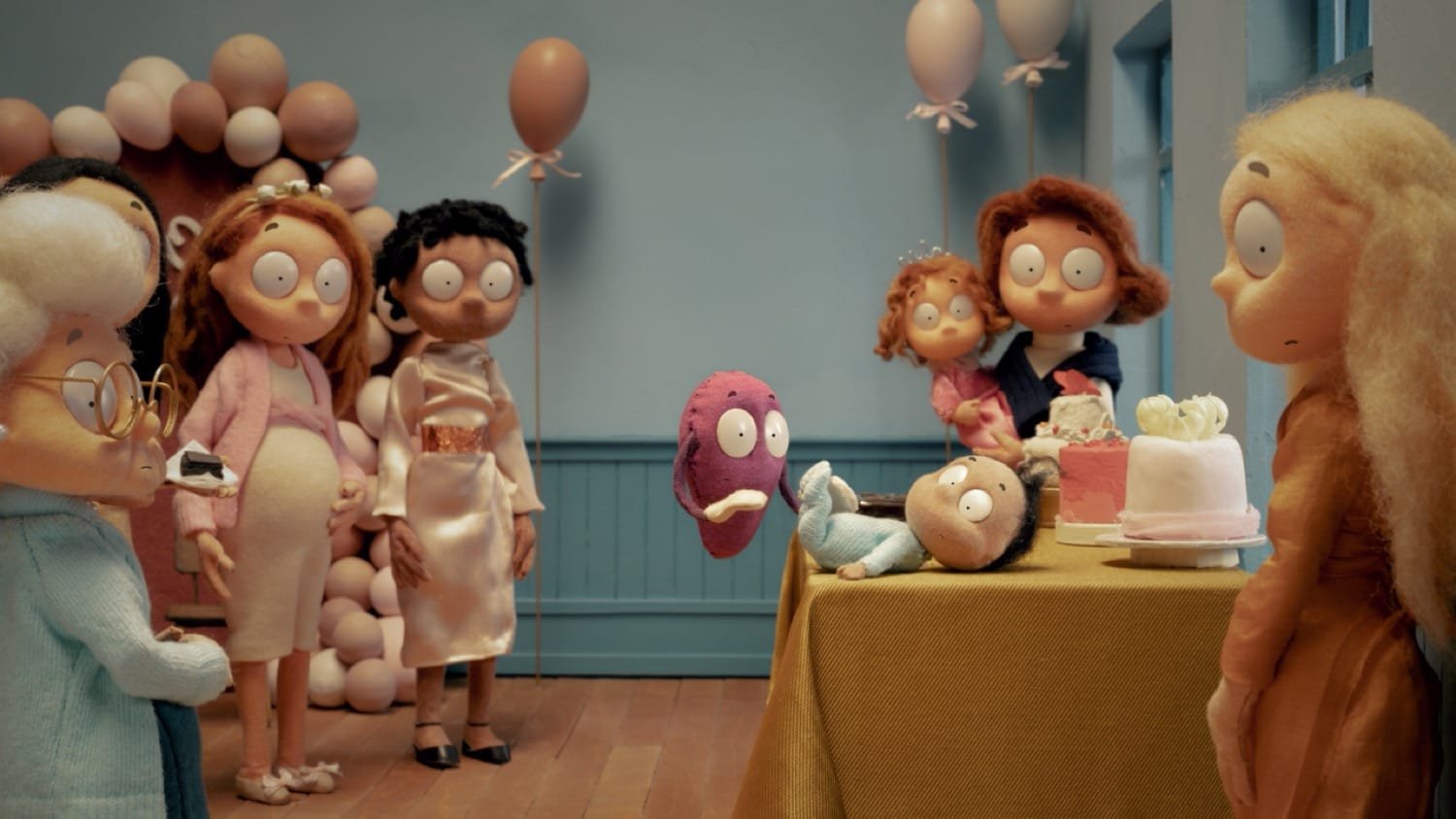
Thank you so much! The design of the puppets with big cartoony eyes, felt hair and fabric skin, is a result of many years of me experimenting with different designs and materials. I really discovered this style of character design while working on my previous short “Night of the Living Dread”, and completely fell in love with it. For “Ovary-Acting”, I wanted to push that style even further. This time, the eyes got even bigger and more expressive to really emphasise the inner turmoil of the characters.
When it comes to the personality, my characters are often based on exaggerated sides of myself. There’s definitely an Ovy in me, as well as an Eva, you know? Other times, I draw inspiration from close friends or family members. I find that grounding the characters in the world around me, brings out the authenticity needed for the performances to feel real.
Was there anything you wanted to include in the story that didn’t make the final cut?
There was a montage in the first act of the film in which Eva was gunning for the bathroom, but everywhere she turned, there was a snotty, sticky, or screaming baby blocking her path. I loved that sequence and it added a lot of pressure on Eva just using visuals, but sadly we had to cut it before we started shooting to shorten our schedule. Even though I would’ve loved to include it, it’s so important knowing when to cut something that isn’t serving the film, and in this case, the film worked just as well without it.
The Busby Berkeley-esque musical sequence is a standout moment. How did the idea for that scene come about?
First of all, calling it Busby Berkeley-esque is a massive compliment – thank you! To be honest, I’m not sure where the initial idea came from, but once the idea appeared it instantly became a non-negotiable. It had to be included! Coming from a background in theatre I`ve always had a deep love for musicals, and the back-and-forth argument between Eva and Ovy felt like the perfect opportunity for them to break into song. The real challenge in the end, was to find a visual style that made the musical number feel part of the film, without interrupting the flow of the story. Luckily I got to work closely with my brilliant writer, Laura Jayne Tunbridge, and the super talented Alastair McNamara, who composed the musical number. Together they managed to create something that wasn’t just a catchy tune, but also conveyed everything we needed narratively and thematically within the lyrics. Our production designer, Svein Erik Okstad, also played a huge part in bringing it to life, as we paid tribute to the old Hollywood razzle dazzle. In the end, the musical number became this perfect over the top moment – capturing not only what’s happening inside Eva’s head, but also the argument between Ovy and Eva.
We’d love to hear more about your journey as a filmmaker. What drew you to animation and storytelling as a career path?
Animation for me has always felt like the perfect blend of everything I loved growing up: film, theatre and art. I could never grow tired of it. Looking back, I believe I was always meant to work with stories in some shape or form; it just so happens that animation is the best medium for the stories I want to tell. My narratives are always rooted in the real world, but with something outer-worldly or unexpected happening, throwing things off balance. Animation, as we all know, is time-consuming and requires a lot of hard work, which is exactly why I believe it demands a higher level of storytelling. If we’re going to dedicate that much effort and craftsmanship to a film, the story has to be worth it.
Can you share with us any upcoming projects?
I am currently developing an idea for a feature film about a young adult woman in crisis, which seems to be my M.O these days! I also see a lot of potential in both of my latest shorts “Ovary-Acting” and “Night of the Living Dread” to be expanded into feature films or a mini series. On top of this, I also have a short documentary idea that I want to develop – so lots of ideas and too little time basically haha.