



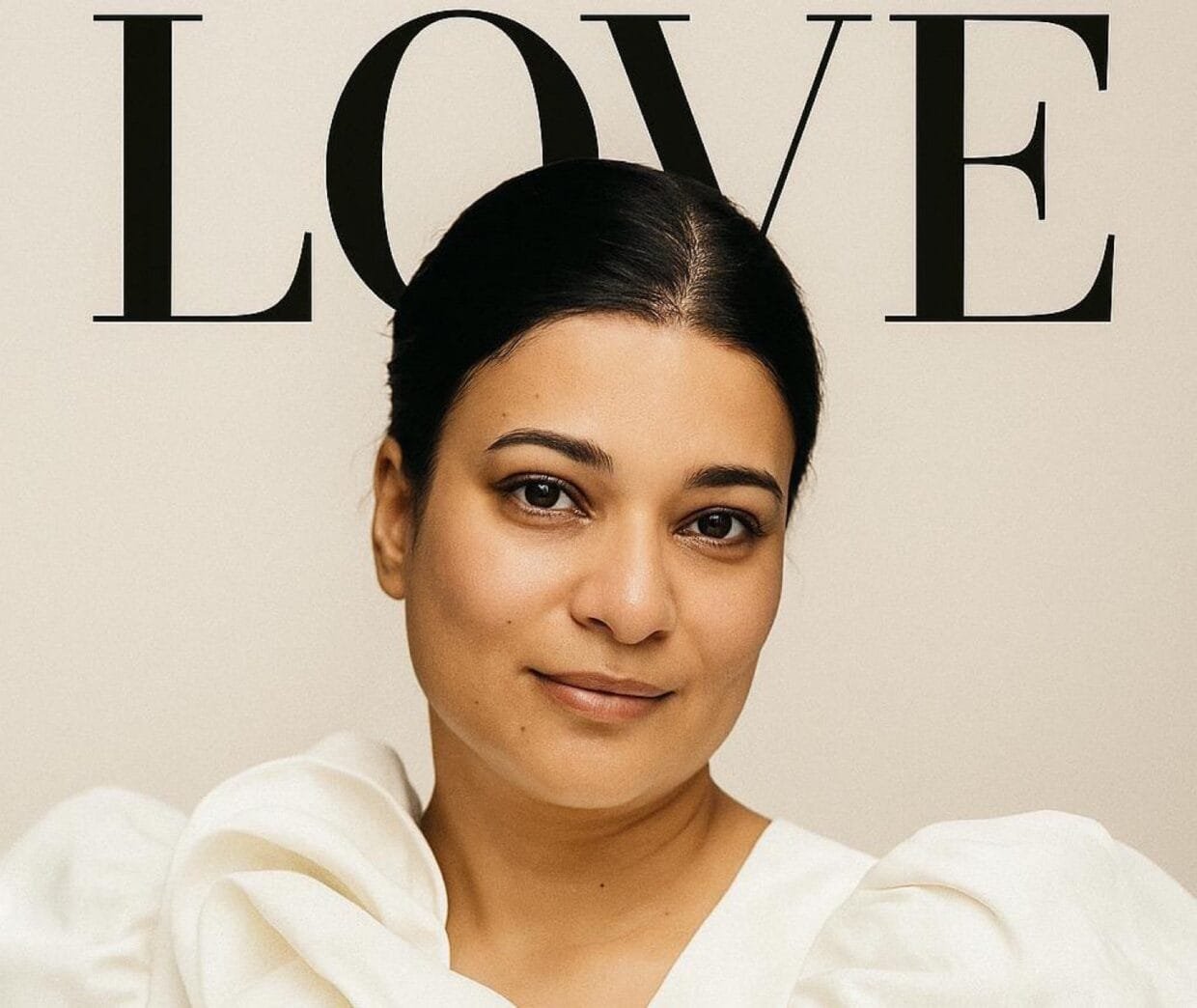
Artist Rebecca Walker has spent years capturing London not as a skyline but as a feeling — a city shaped by memory, tenderness and quiet emotional truths. Her Love London Gallery project has resonated with hundreds of thousands of people, transforming reels and drawings into a new visual language of the city. Now, with her first major public exhibition, she steps forward as both storyteller and artist, revealing the intimate lines and layered narratives behind her work. We caught up with Rebecca Walker to explore her creative journey and the emotional world behind her London.
Your Love London Gallery project has resonated with hundreds of thousands of people online. What first compelled you to turn the city into a visual essay, and when did you realise London had become both your subject and your storytelling partner?
There wasn’t a single moment that pushed me toward Love London Gallery it was more like a slow gathering of threads that finally knotted themselves into a story. I’ve always walked through London as if it were a film still in motion, a place where the light falls a certain way on a terraced house and suddenly you feel you’re witnessing something private, almost intimate.
I grew up with art in my bloodstream, but returning to it as an adult felt like trying to enter a room without the right key. The art world can be both magnetic and impenetrable; I didn’t quite know where I belonged in it. So I built my own doorway.
London became my subject because it was already my companion, a city dense with memory, brilliance, absurdity, tenderness. When I began drawing it, I realised I wasn’t simply documenting buildings; I was writing a visual essay about what it feels like to live here, to love a place that is constantly shifting beneath your feet.
At some point, perhaps after the first few thousand strangers started following along , I understood that London had stopped being a backdrop. It had become a collaborator. I was no longer just illustrating a city; I was in conversation with it.
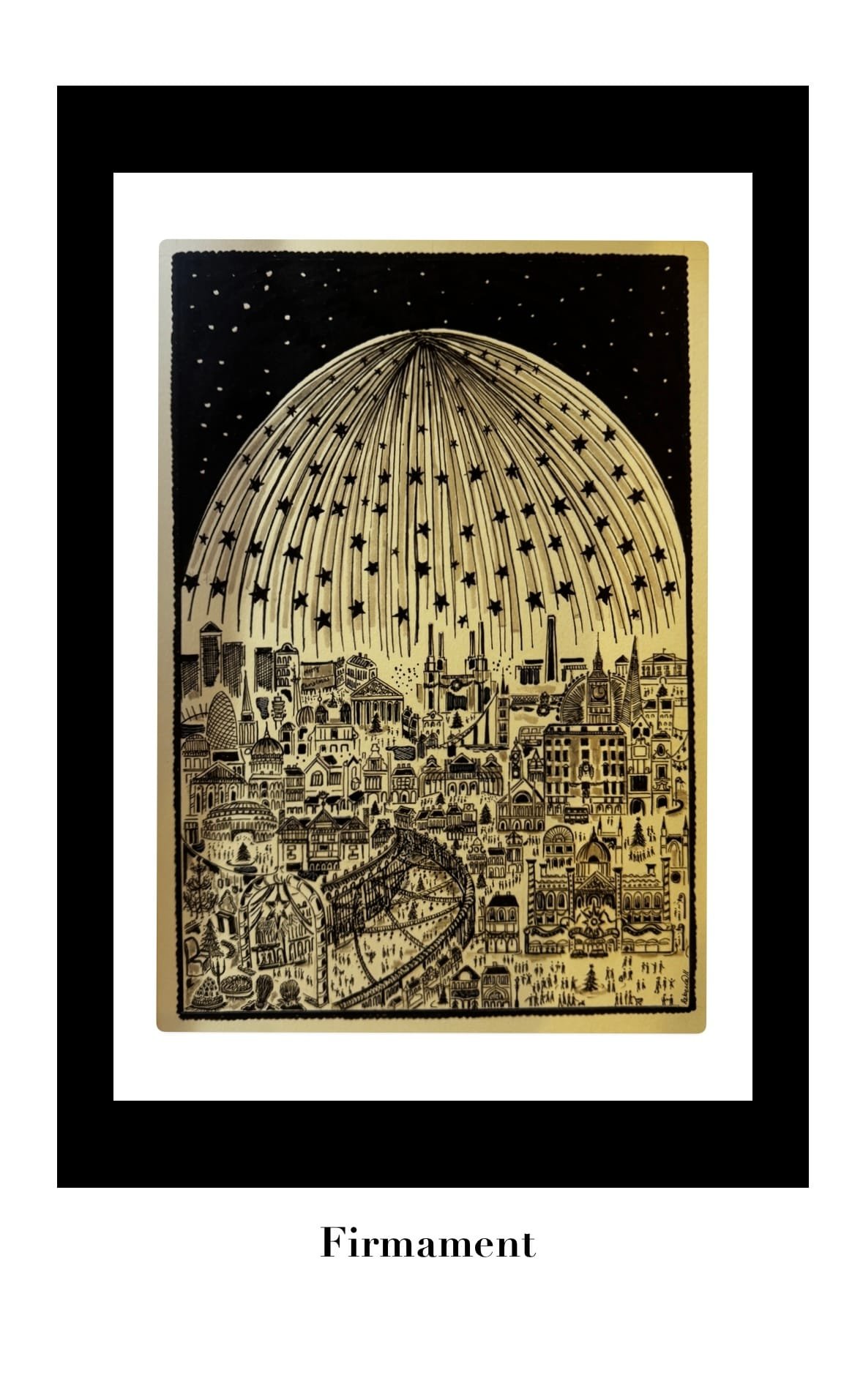
Many describe your London as emotional rather than literal — a city woven from memory and meaning. How do you translate that internal sense of place into imagery that feels both intimate and universal?
People often say my work feels like London, but I never think of myself as drawing the city in any literal sense. I’m not interested in rendering a skyline or a recognisable street. What I try to draw is the emotion that rises in me when I’m in a place, the residue a moment leaves behind.
Sometimes that emotion is sparked by London, its contradictions, its melancholy, its beauty, but the drawings aren’t about the city as an object. They’re about what the city sets off inside me. So the details become less about buildings and more about memory: tiny fragments of thought, small stories tucked into the composition, feelings translated into line.
I hope that’s why the work resonates. It isn’t restricted to London at all; it’s about the shared emotional terrain we all carry, the places that stay with us long after we’ve gone home. If someone feels warmth, or recognition, or a quiet emotion when they look at a piece, then the image has done its job. It has reached past geography and found something more human.
→ Explore more conversations with artists shaping London’s creative identity.
William John Kennedy’s rediscovered photographs reveal Warhol before “Warhol.” Your own path has also been self-built, outside traditional art-world gates. How has forging your own route shaped your confidence, voice, and relationship with your audience?
When I first started Love London Gallery, it wasn’t with the intention of creating an art platform. It was simply a way of capturing the city, its rhythm, its melancholy, its quiet poetry, through short reels and fragments of story. For a long time, that was all it was: a visual journal, a place where I held London up to the light and let people see the feeling of it rather than the geography.
Over time, it grew into something larger, a creative space where artists, galleries, and ideas could coexist. I began sharing the work of others, creating this unexpected bridge between the city’s emotional landscape and its cultural one. And through that journey, something quietly remarkable happened: an audience formed. Not because of a grand plan or art-world strategy, but because the storytelling resonated.
All the while, my own drawings remained private. They were personal, the place where I processed emotion, memory, and the kind of beauty you can’t articulate in words. These drawings have lived in notebooks, in late-night moments, in the spaces between everything else.
So for the audience who has walked with me through reels and stories to now see the work come to life, it feels significant. Vulnerable, even. But the confidence to share it has come directly from forging my own route, outside traditional gates, guided only by instinct and honesty.
I didn’t arrive with connections or a ready-made role within the art world. I built this platform from scratch, in the only way I knew how: by telling the truth about what I saw. And the fact that people connected with that truth is what finally gave me the courage to step forward as an artist, not just a storyteller.
Forging my own path has shaped my voice in a way nothing else could. It taught me that the audience who finds you through feeling , not fashion, is the audience you can trust.
Your work echoes influences from Ravilious and Bawden to Clare Leighton, yet your London feels unmistakably contemporary. How do you balance the pull of vintage aesthetics with a desire to create something completely of your time?
London is undeniably contemporary, electric, fast, restless but it’s also a city built on layers of memory. Every street is carrying a century beneath it. Every window reflects something that was once there. I think that’s why artists like Ravilious, Bawden and Clare Leighton speak to me: they understood atmosphere. They understood that a place is never just its outlines; it’s its echoes.
My work leans into that. I don’t try to recreate a vintage aesthetic for nostalgia’s sake, what I’m really doing is tracing the emotional residue a place leaves behind. London today is full of technology, glass, AI, virtual everything… and yet what people respond to most is something as simple and ancient as a line on a page. A hand-drawn mark that carries warmth.
So the balance comes naturally: the city I’m drawing is contemporary, but the feelings it evokes, tenderness, longing, danger, awe; are timeless. My lines may look like they belong to another era, but they’re shaped by standing in this one, in the noise and beauty of the present moment.
If anything, drawing in a style that nods to the past allows me to reveal something truer about the present. It slows London down just long enough for people to feel something, a memory, a connection, a breath, before the city rushes on again.
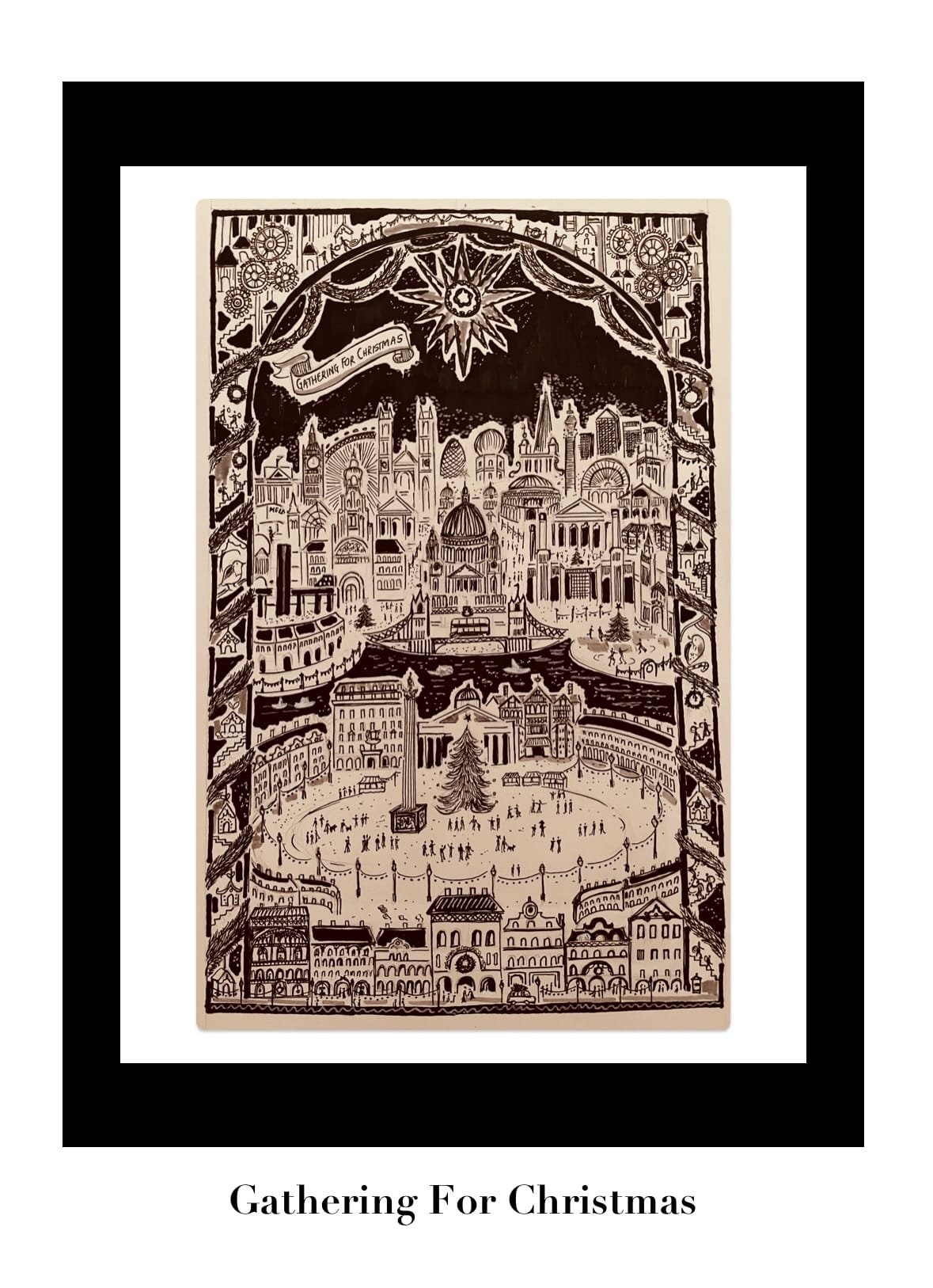
Love London Gallery grew from social media into a physical exhibition. What shifts creatively when your work moves from a screen, where people scroll, to a gallery, where they stand still and experience?
For a long time, people only knew the digital version of me, the careful framing, the rhythm of the reels, the way I held London up like a poem. You scroll past that. You catch it in seconds. It’s emotional, but it’s fleeting.
A gallery asks something different. It asks people to stop. To stand still. To look. And that can feel incredibly vulnerable when the work is no longer mediated through a screen but exists, suddenly, in the same air as the audience.
These drawings have lived in such private spaces, in sketchbooks, in silence, in the parts of myself I don’t usually show. So seeing someone encounter them in person, at their own pace, in the quiet of a room rather than the speed of a feed… it opens a new dimension.
It feels a bit like letting people into a more intimate room of the house; one they didn’t know existed.
And there’s always a moment of wondering: Will they understand what I felt when I made this? Will they see the tenderness, the ache, the memory?
But that vulnerability is also the beauty. The shift from scrolling to standing gives the work permission to breathe and it gives me permission to exist as an artist, not just an online storyteller.
This is your first major public showing. As you step into this new chapter, what do you hope audiences take away not only about London, but about what it means to see a familiar city through a completely new artistic lens?
It is an exciting turn in the journey, and, in many ways, an unexpected one. Sharing this work publicly feels like opening a door I’ve been standing behind for a long time.
What I hope, more than anything, is that it deepens the relationship between the audience and the feeling of the city, that they see London not just as a place to move through but as something that moves through them.
My drawings aren’t really about buildings or streets; they’re about the emotional residue a city leaves behind. If someone walks away seeing something familiar with new softness or new curiosity, then that means the work has done its job.
And yes, on a personal level, I hope this chapter opens more doors: collectors, gallerists, people who understand the language I’m speaking. The fact that this is already beginning to happen, that people are noticing, responding, wanting to be part of it has genuinely moved me.
But ultimately, I hope audiences feel the invitation:
to pause, to look again, and to realise that even the most familiar city still has undiscovered stories especially when you allow yourself to feel it rather than just see it.
xxx
Rebecca X Warhol exhibition
Address: 67 York Street Gallery, Marylebone, London, W1H 1QB
Public opening: 4 & 5 December 10am – 5pm.