



Could you share the story of Walud and the inspiration behind the film?
In Walud we meet two very different women. Our main character Amuna is a Syrian-Bedouin woman who lives with her husband in the eastern desert of Syria. Her husband recently joined the ISIS forces and since then she had to quit her job as an English teacher to take care of the sheep. The couple have no children even though they tried for years. Our story begins, when her husband Aziz brings home a young European woman as his second wife to “solve the problem” of not having kids – fully ignoring the possibility that he might be at the core of the problem.
The film centers the pressure on women in very conservative parts of society to be mothers to boys and explores what happens if – for whatever reason – this is not fulfilled. The inspiration for this story lies within Daoods biography: He grew up with four older sisters. All of them have kids today – but only one has given birth to girls and just recently Daood had the chance to have a full conversation with his sister about this time of her life. She shared how hard this was for her, how all the pressure was on her and she got all the blame for something that has no reason when no one to blame. So, these shared emotions stayed with Daood for a long time after they had the actual talk. When he came back from visiting her in Qatar we talked a lot about how patriarchal societies tend to use the same logic and rules, the same patterns of guilt and shame all around the world to cage in women and how the life of a son might be understood as more valuable than a girl’s. As we got the feeling that this topic is both relevant and very close to our hearts we decided to develop a short fiction film from it and placed it into the world of eastern Syria where Daood grew up and experienced the rise of the ISIS as a young adult. We thought the ISIS as an extreme group with radical patriarchal structure would be a good setting to explore female agency in a system that leaves little choice. As soon as we knew the ISIS would be part of the story we knew we had to include a European ISIS convert as a bridge into the west to highlight that these structures are intertwined worldwide as we wanted to ensure that the film would not feel like an “over there problem” when watched by a western audience.
The film delves deeply into themes of womanhood, oppression, and survival. What drew you to explore these ideas within the context of Syria?
Especially for Daood these themes are all tied closely to his life as he grew up in eastern Syria. The ISIS was partially in power in the region and later on Daood joined the student protests in Aleppo against Assad. Eventually, due to his political protest he had to flee the country and migrated to Germany. On a lighter note, his mom raised him as a girl for the first few years of his life so the context of gender and the fact that societies might treat people very differently based on their gender was introduced to him in a very special way. At the same time the general context of the oppression of the female voice and the limits that are created by patriarchal societies all over the world for women is a theme that has been close to Louise’s heart for years. So, when working together all of these influences came together as this story that you can see in Walud. Since day one working on this project, it was always clear that it had to be set in Syria – which at the same time offered the possibility to visually portray the feeling of being isolated and caged that a lot of women in strict patriarchal societies feel through the nature of the desert.
Where was the film shot and what were the challenges you faced during filming?
As we could not shoot the film in Syria – as the Assad regime was still in power at the time – we had to find a different location. As we are a student production with a very limited amount of money, our options were limited. At first, we thought Marocco could be an option but we came to the conclusion that we could not afford shooting in Marocco. Finally – through friends – we had the chance to shoot in Tunisia with the cooperation of students from a film school based in Tunis. So we had a crew that was half based in Tunis and half based in Europe – mostly students from film schools – which was a fantastic experience even though working abroad in a different cultural landscape offered some challenges – one being the fact that all our technical equipment got stuck at the Tunisian customs for a couple of days and we had to improvise the first two shooting days with back-up equipment and completely without sound. So, it feels like this film was – to some degree – was not meant to exists,but was forced to existence by a wonderful team that made it possible. Having it do so well within the festival circuit at the moment means the world to us – especially in regard to how this film was made.
Amuna is a remarkably powerful and quietly resilient presence in the film. Could you tell us more about her character and her backstory?
As we mentioned earlier already, Amuna as a character is loosely based on one of Daood’s sisters – even though none of his sisters married ISIS soldiers. We do believe Amuna is an educated women who used to work as an English teacher in a school but had to quit her job once the ISIS took rule over the region. So, she was forced to retreat into the private sphere of her home, while her husband, who struggles with his sense of self-worth due to not having children and his wife earning money through teaching, decides to join the ISIS forces, offering a job with status and the power that he was longing for. Amuna and Aziz are – as this is the case a lot in this specific region of Syria – married cousins. So, the fact that they are related on some level adds a layer of protection for Amuna. If he would cross certain lines, it would cause immense problems between the families and it would be a problem for him as well. So, it is her education in combination with this added layer of security that enables Amuna to push back against her husband to some degree.
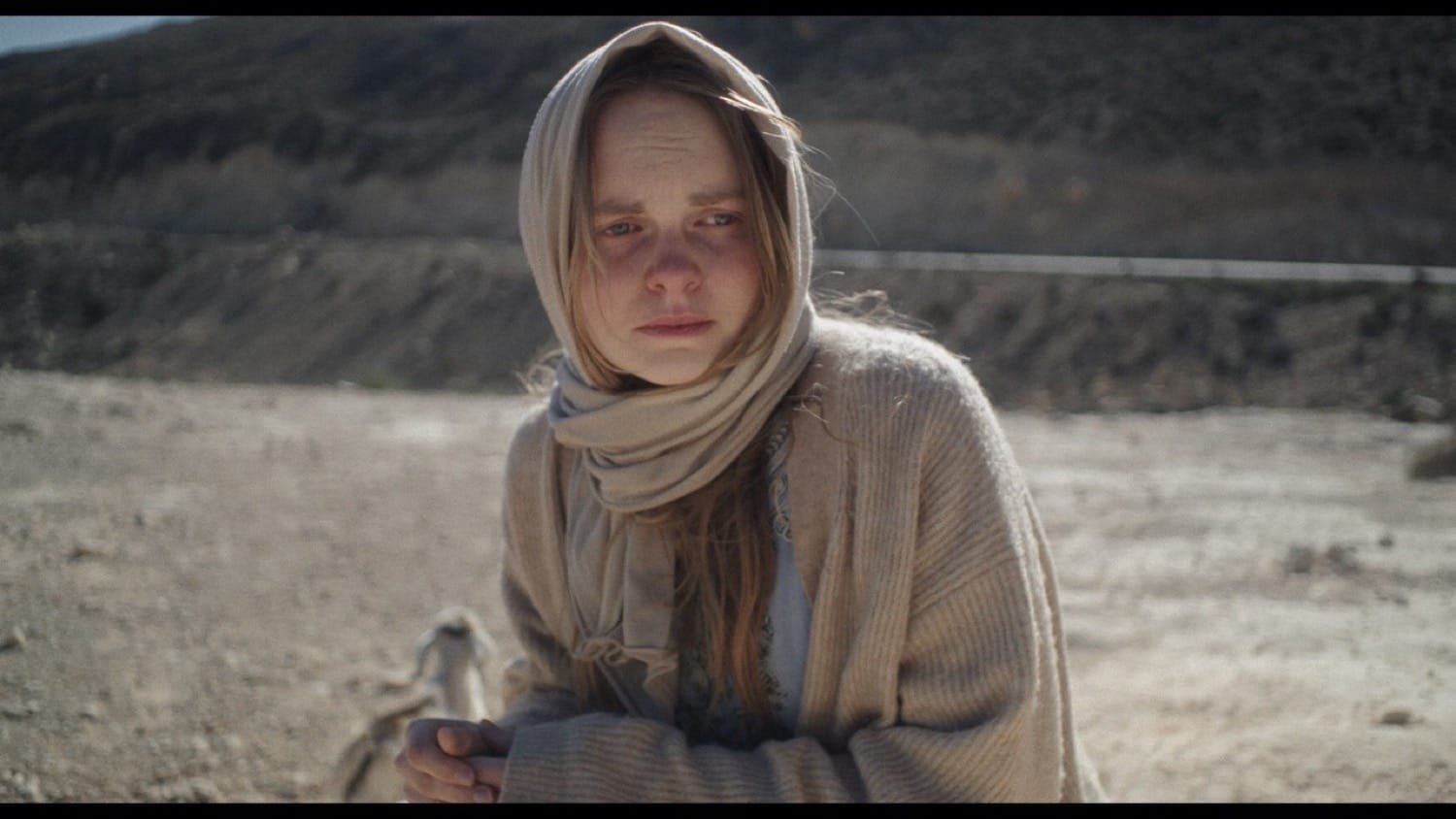
Salha Nasraoui delivers an extraordinary performance in the lead role. How did you approach the casting process, and what convinced you that she was right for the part?
To be honest – this film was in a way written with Salha Nasraoui in mind. We saw her in a different short film in which she played a smaller, supporting role and just fell in love with her presence. So, at one point we just reached out to her and Daood visited her in Tunis to talk about the project and luckily enough she agreed to play the part.
I’d love to hear how each of you found your path into filmmaking and how your creative collaboration first began.
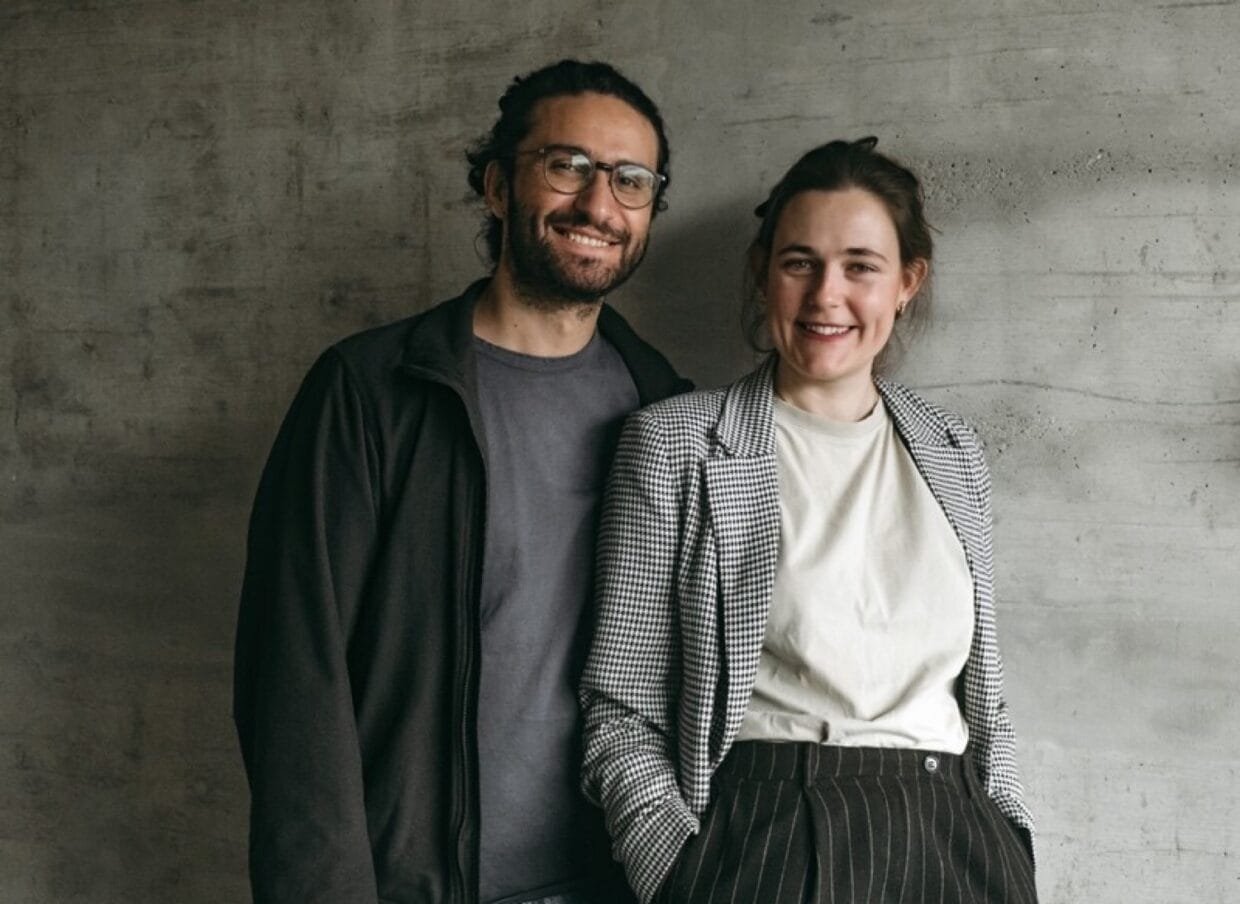
For me, Louise, it’s probably the magic of the circus. My family went to see the performances when the shows came to the city and the idea of being able to create a world that exists just within a tent, that allows people to escape real life even if its just for 90 minutes always amazed me so much. So once someone put me into a film theater it was pretty clear that this was going to be the dream. Coming from a family with no connections to the film or entertainment industry whatsoever, it felt like an impossible dream though and I got rejected on so many internships that I tried to work in the real world first, with a different degree – but with 27 I decided that I at least had to try and learn how to make films – so I ended up applying for the Munich Film School HFF and I’ve been studying there since 2021 which is an absolute dream. This is also where I met Daood.
For me, Daood, what pulled me towards storytelling were the storytellers in the cafés of Damascus. In Syria we do have a rich culture of storytelling embedded in spoken word. And the few times that my family visited Damascus – especially during the Eid al-Fitr celebrations – when I was kid we would go and see the story tellers, called Hakawati in Arabic. Being a Hakawati is real profession and seemed like a fantastic job to me. At the same time – of course we had a TV back home – even though cinemas are not very common and especially if you grow up in the desert there is no cinema. But we had the TV and sometimes my older brother and I readjusted the antenna in order to find the signal of an Iraqi channel that would show fiction films for kids and teens.
However, I started studying electronic engineering in Aleppo first to make my parents happy and at the same time film was simply not an option in Syria. During the civil war I had to leave the country at some point and came to Germany as a refugee. It took me a few years to settle into the new country and finally I couldn’t bury my dream to make films and tell stories anymore, so I applied for HFF Munich and was lucky enough to start studying there 2020.
And the short story on how we met is: through film school. We just ended up being very good friends before we accidentally made a short documentary together which Daood shot in Qatar about the migrant workers before the World Cup, and he needed to be saved at some point so Louise did that, and since then we’ve been working together on multiple projects expanding into co-directing 2023 for the first time and we really enjoy to work together.
Have you considered expanding Walud into a feature-length project?
Yes – of course we have. We’ve been thinking about it ever since shooting and we do have some cool ideas on how to expand the world of the short film – but as we both are still enrolled in film school we would love to finish this first – but we would absolutely love to come back the this story at some point – especially as all the characters are so much more complex than what you could every tell in a short film.
What can we look forward to next?
So – we’ll see. We both a have short films in postproduction currently that we’ve been directing on our own. Both of those will hopefully be released next spring depending on the festival circuit. So, we are alternating between working on our own projects and working together, but we would love return to co-directing in the near future.