




On Monday 21 August 1911, the Mona Lisa was taken from the wall of the Louvre in Paris. The museum was closed to the public, as it was every Monday. The man who took it, Vincenzo Peruggia, was an Italian who had worked at the Louvre.
The painting was missing for about 28 months. When it came back, it was the most famous painting in the world. Before the theft, it was not.
A painting known mainly to art lovers
Leonardo da Vinci’s portrait was admired long before 1911, but it was one masterpiece among many in the Louvre. Art historians including Noah Charney, who has written about the case for the BBC, argue that the theft is what turned it into a household name. It was one of the first major thefts to be covered by newspapers around the world, and the empty space on the wall became a story in itself.
The Louvre closed for a week after the theft. When it reopened, crowds came to stare at the empty wall and the four iron hooks where the painting had hung. Franz Kafka was among them.
How the Mona Lisa was found
For more than two years there was no trace of it. Then, in late 1913, Peruggia wrote to Alfredo Geri, an art dealer in Florence, offering to bring the painting back to Italy. He signed himself “Leonard V.”
On 11 December 1913, Peruggia showed the painting to Geri and Giovanni Poggi, the director of the Uffizi Gallery, in a room at the Hotel Tripoli in Florence. Poggi confirmed it was the original. Peruggia was arrested the next day, 12 December, according to the State Archive of Florence.
Peruggia said he had wanted to return the painting to Italy, where Leonardo was born. An Italian court sentenced him in June 1914 to one year and 15 days in prison, according to the US Library of Congress.
The crowds that followed
Before going home, the painting went on show at the Uffizi in Florence from 14 to 18 December 1913, and then in Rome and Milan. It was back at the Louvre on 4 January 1914, and more than 100,000 people came to see it in its first two days on the wall, Smithsonian magazine reported.
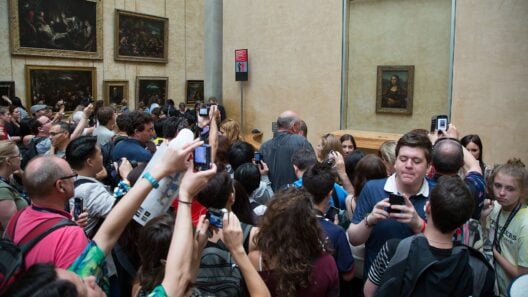
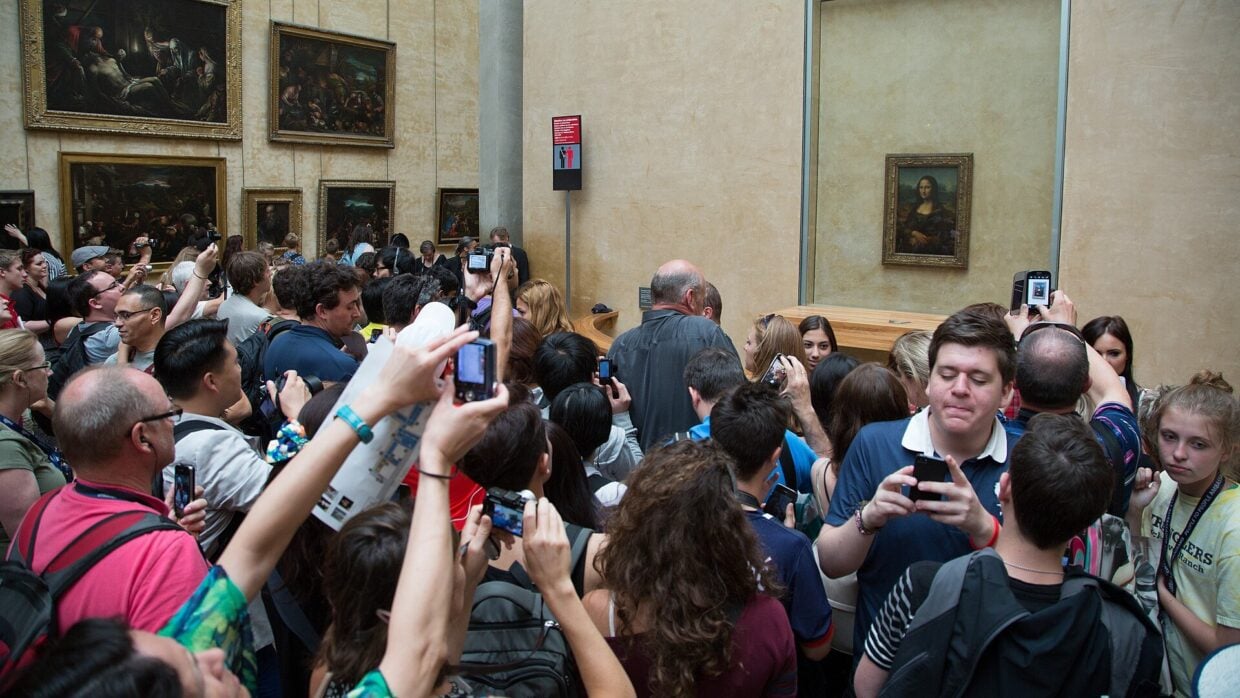
The crowds have not stopped since. The Mona Lisa now hangs behind protective glass in the Salle des États, the largest room in the Louvre.
Key dates
- 21 August 1911: the painting is taken from the Louvre on a Monday, when the museum is closed
- Late 1913: Peruggia writes to the Florence dealer Alfredo Geri as “Leonard V.”
- 11 December 1913: the painting is examined at the Hotel Tripoli in Florence
- 12 December 1913: Peruggia is arrested
- 4 January 1914: the painting is back in the Louvre
- June 1914: he is sentenced to one year and 15 days