




St Leonard’s Shoreditch, on Shoreditch High Street, is the church whose bells are the ones made famous by the nursery rhyme “Oranges and Lemons”, and the burial place of James Burbage, who built London’s first playhouse beside it in 1576.
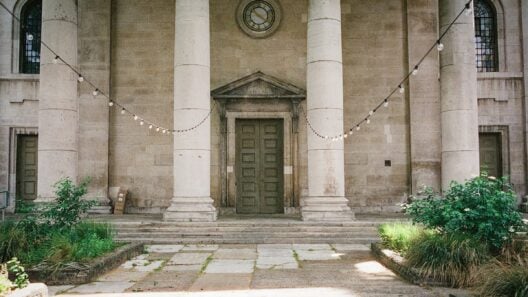
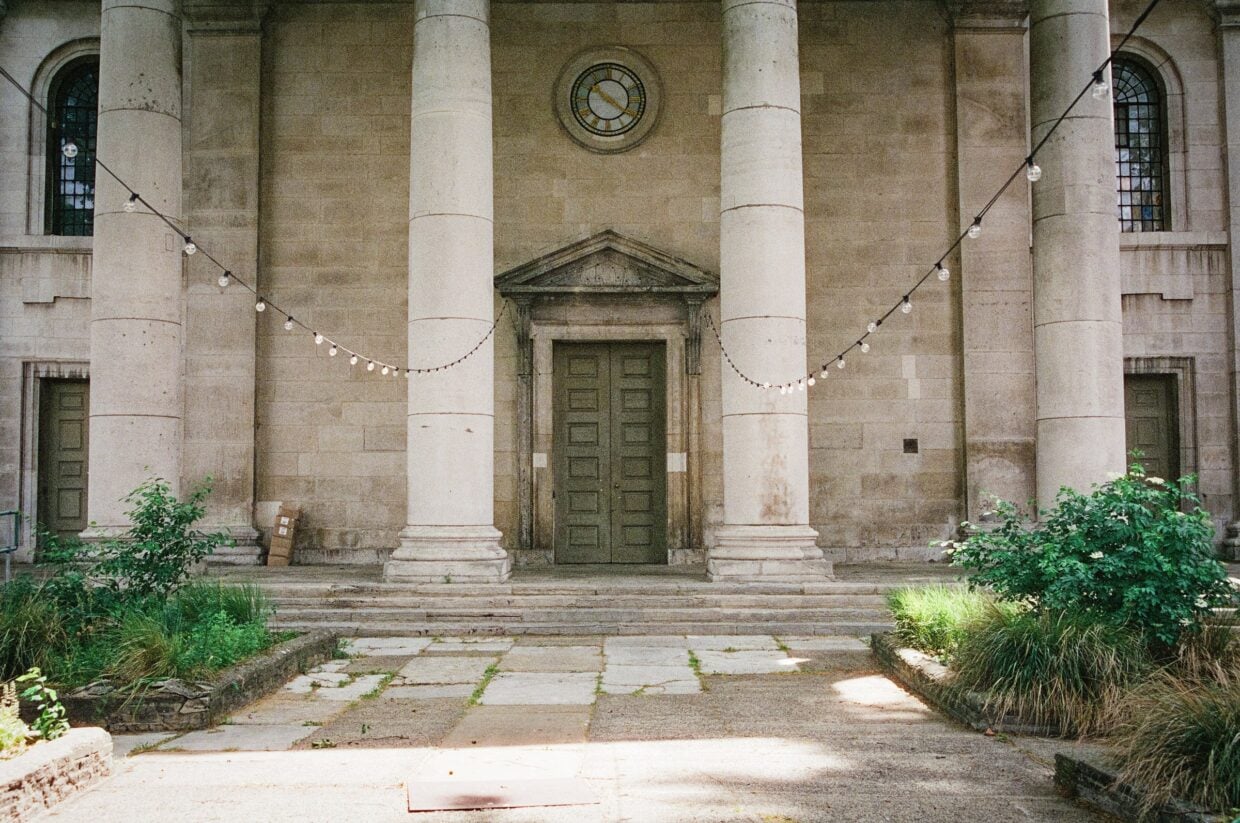
The National Churches Trust says the bells of St Leonard’s “are the ones made famous by the nursery rhyme ‘Oranges and Lemons'”. The building that houses them is Georgian. It was built in 1736 to 1740 by George Dance the Elder, Wren’s pupil and architect of the Mansion House, the Lord Mayor of London’s official residence. The Survey of London also names Dance the elder as the architect of the present church.
The Burbages belong to the medieval church that stood on the site before it, which the National Churches Trust says had been the place of worship of Shakespeare’s actors. Shakespearean London Theatres (SHALt) says those buried at St Leonard’s include “the three Burbages (the founder of the nearby Theatre playhouse, James Burbage, as well as his two sons, actor and playhouse-owner Richard Burbage and theatre-owner Cuthbert Burbage), as well as William Sly, Richard Cowley, Gabriel Spencer (killed by dramatist Ben Jonson in a duel), and the comedian Richard Tarlton”.
Spencer died after a 1598 duel with Ben Jonson in Hoxton Fields.
The bells in the rhyme
The Trust also recounts how the ringers got their name. When the Duke of Cumberland’s army returned to London after victory at the 1746 Battle of Culloden, it was greeted by a peal of bells from St Leonard’s, after which the Duke granted the ringers the name of “the Royal Cumberland Youths”, which they retain to this day.
The Society of Royal Cumberland Youths says its early ringing was carried out at St Leonard’s and that the church was its headquarters for many years. The first peal for the Society was rung there on Saturday 19 November 1748, a peal of 5040 Bob Major. That anniversary fell yesterday, 19 November.
The bells themselves have been remade more than once. Shortly before the Society was formed, the Society says, the church had been rebuilt and a peal of eight bells, cast by Thomas Lester of Whitechapel, was installed. Two more were added in 1765, and in 1807 the Cumberlands added two further trebles to make a ring of 12.
A crack appeared in the 10th bell early in the 1980s. Welding proved successful, but by 1990 another crack had appeared in a different place, and the Society says it was realised that recasting was the only solution. After much consideration a complete recasting by John Taylor and Company was decided upon, “providing the bells that we currently ring on today”, the Society’s tower page says.
Dove’s Guide for Church Bell Ringers dates that work to 1994 and records it as a ring created by John Taylor Bellfounders Ltd. The present ring is therefore a modern one, not the Tudor bells and not the 18th-century peal installed before the Society was formed.
Three Burbages in the churchyard
The burials are what gave the church its other name. The London Gardens Trust inventory record for St Leonard’s Churchyard says James Burbage leased land at 90 Curtain Road, on the corner of New Inn Yard, in 1576 and built The Theatre there. Plays could be performed on the site because it lay outside the City walls, within which the City authorities had banned dramatic performance.
The record goes on: “James (d.1597), Richard (d.1619) and Cuthbert were all buried in the churchyard. As a result St Leonard’s became known as the Actors’ Church.” Those two death years are the London Gardens Trust’s. Neither that record nor SHALt gives a death year for Cuthbert. The Survey of London lists among the church’s memorials one to “Cuthbert Burbage and Elizabeth his wife (d. 1636)”, with the date given after his wife’s name.
Richard Burbage was the leading actor of the company. SHALt describes him as an actor and playhouse-owner, and his brother Cuthbert as a theatre-owner. What became of the timbers of their father’s playhouse is told in Made in Shoreditch’s account of the dismantling and is not repeated here.
A burial ground that became a garden
Visitors looking for Burbage headstones will not find them. The churchyard was extended a number of times and, after it closed for burials, was converted into a public garden in the late 19th century, the London Gardens Trust says. It was laid out with paths, areas of lawn, shrubberies and flower beds, and most gravestones were cleared, although some remained along the back of the church.
The memorial that does survive is a later one. In 1913 the London Shakespeare League erected a tablet in the north wall of the church dedicated to those buried, according to the same record. The National Churches Trust says Shakespeare’s actors are commemorated in a memorial on the upstairs lobby wall.
The actors are not the only names in the ground. Dr James Parkinson, who lived in Hoxton Square, is buried at the church, the National Churches Trust says. The London Gardens Trust gives his death year as 1824.
The church is at Shoreditch High Street, E1 6JN. The National Churches Trust page lists it as open on Sundays, 10am to 7pm.