





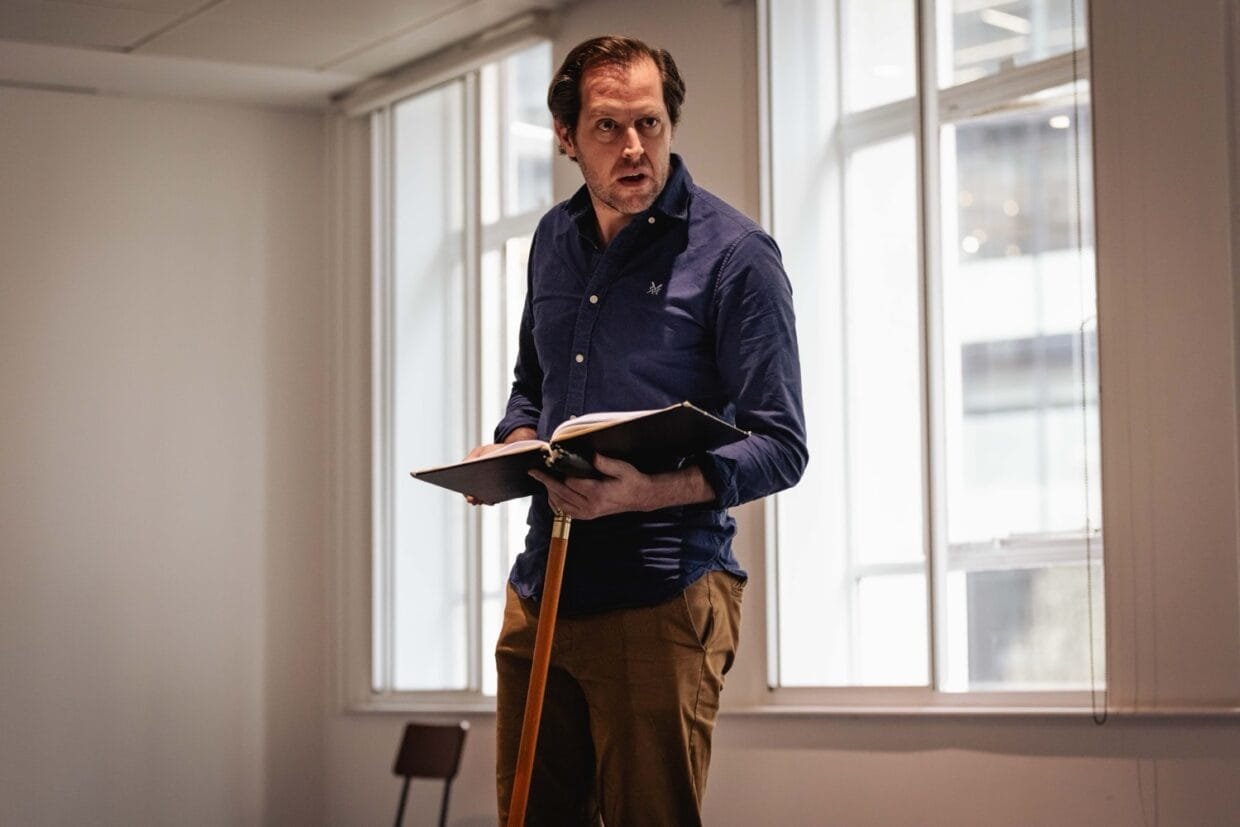
Quentin Beroud has always been drawn to the eccentric side of theatre. His latest project, The Statesman, brings an absurdist tale of a humourless village to the stage, exploring what happens when laughter itself becomes forbidden. Blending satire, politics, and sharp comedy, the play asks whether humour can ever truly be taught. To dive into the production and his creative process, we caught up with Quentin Beroud for an interview.
The Statesman is described as an absurdist comedy about a humourless village. What first drew you to directing this piece?
There’s something so immediately funny to me about a village where laughter is banned suddenly having to learn how to have a sense of humour. It’s such a good premise, and that did a lot of the heavy lifting. Then the variety and volume of the jokes was the icing, and the fact that I ended up really caring about these characters was the cherry on top.
Joel Marlin’s script blends satire, politics, and heart. How did you approach balancing those tones in your direction?
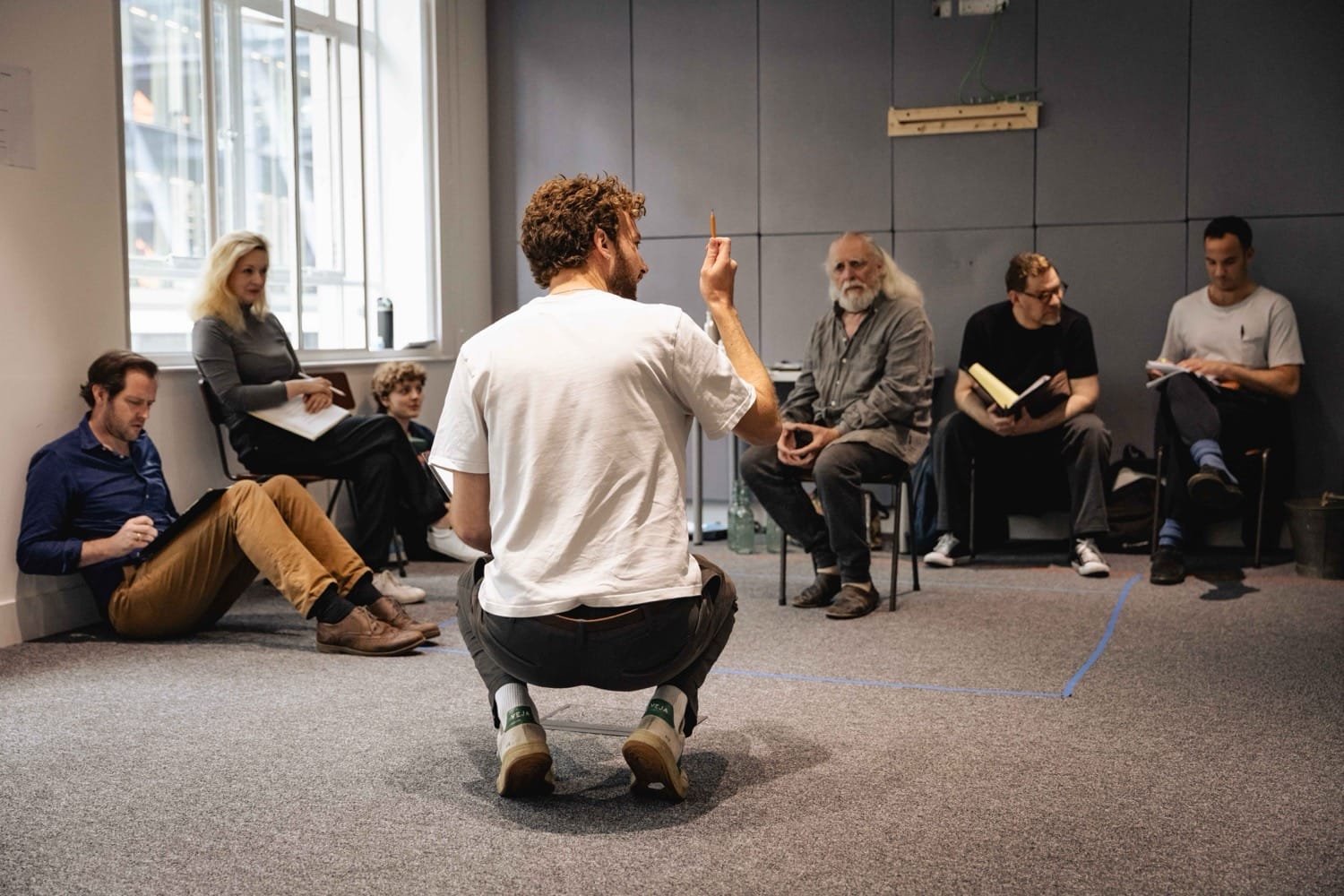
A big thing is focusing on the characters, finding the dynamics between them and making them real enough that the audience buys into them too. We’re creating a whole village with six people – it’s a whirlwind but the actors are incredible and I think one of the joys of the play for an audience will be watching these amazing performers conjure all these characters with minimal costume changes. Of course there are the jokes, but if we can get the audience to invest in the marital struggles of a couple they only met 30 seconds before, then we’re laughing. Sorry, they are laughing.
Humour is banned in the play’s village. Did working on this project make you reflect differently on the role of laughter in society today?
Absolutely. It’s very easy to be depressed about the world at the moment. Pessimism sometimes seems like the only logical response, but the play is a reminder that laughter still unites us. It makes us feel good! It’s a powerful force in society, as resistant and adaptable as people themselves. Look at the way certain elements will say you can’t make a joke about anything anymore – of course you can, it just has to be done right. This play touches on so many things, but it’s smart about it, and it’s always punching the right way.
Your past work has included staging Richard II in Parliament and Fabulous Creatures at the Arcola. How does The Statesman fit into your trajectory as a director?
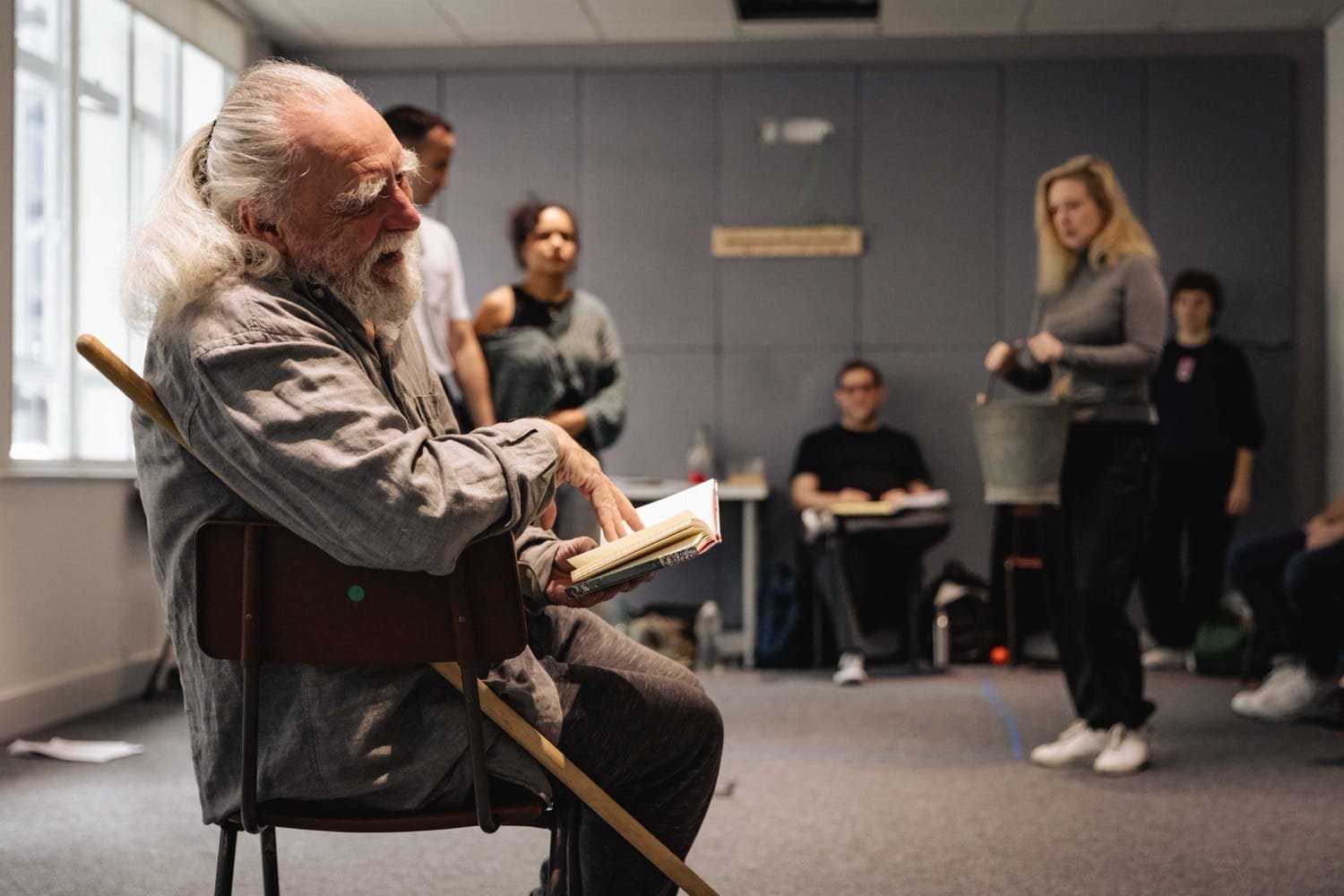
I’m certainly very excited to be working on a comedy, because it’s always the genre I’m drawn to most, even when I’m being pulled away into Shakespearean or Greek Tragedy. In the last few years I’ve been writing a lot, and it’s been so nice to be back in the thick of a rehearsal room, crouching ostentatiously with my chin in my hands. You just don’t get the chance to pose like that when you’re the writer, so I’m very grateful to Joel and Metal Rabbit for trusting me with the script.
Absurdist comedy thrives on rhythm and timing. What kind of challenges did you face guiding the actors to hit that balance between the bizarre and the believable?
You’re absolutely right that rhythm and timing are essential, but there’s a third element, the most important of all… Peter, the old man at the heart of our play, teaches it to the rest of the village in his first lesson of comedy: truth. He says: “Truth is the funniest thing”. Mostly I’ve just followed his advice: if you can find the truth, the rhythm and timing will come, and the laughs will follow. We hope.
David Fielder, Paul Westwood, and the rest of the cast bring strong personalities to the stage. How did casting shape the production?
Casting is such an integral part of any production. And we’re just blown away by our actors. We knew they were good in the auditions, but they’ve surpassed our expectations. We have a 50 year age difference in our cast but it’s been so nice to see them get on so well. They’re so talented and supportive of each other, it’s a joy to be in the room with them. I’ve got a great script and fantastic actors… What more could a director ask for?
The play explores suppression and expression. Do you see parallels between its fictional world and current global or cultural climates?
There are so many parallels with the world today. One of the things I love about the play is that every time I read it, it speaks to something new for me. From my first look at it when I was working in Russia in 2021, to now working on it in the UK in 2025, it seems to be about something new. For me, that’s the sign of a good piece; it’s not trying to be “relevant”, it’s telling a story that just is always of the moment, because it’s talking about such core themes of being human: oppression and freedom, tension and release… And telling jokes, obviously.
What do you hope audiences leave with after watching The Statesman—a laugh, a question, or perhaps both?
I want them to leave feeling like they’ve spent their hard-earned money on a good night out. Something that made them laugh, think, dare I say… cry? But in any case, we’ll have them in the bar by 8:45.
xxx
Theatro Technis, 26 Crowndale Rd, London NW1 1TT