



Columbia Road fills up every Sunday morning. The flower market trades from 8am. A set of Victorian gates stands on the same road.
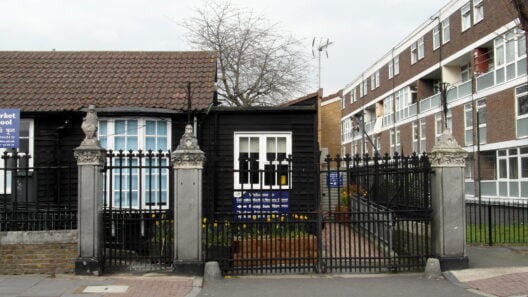
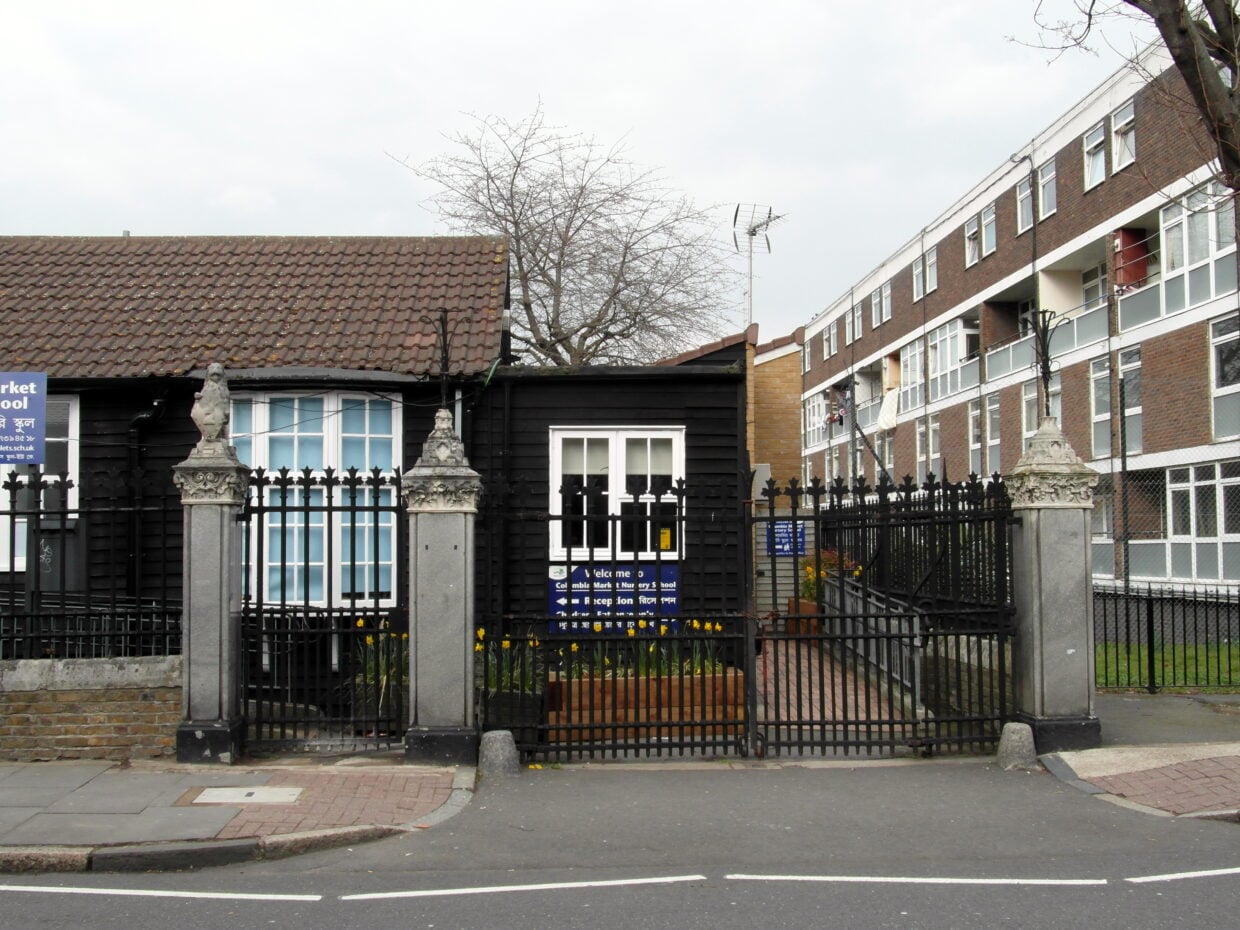
Those gates are the last piece of Columbia Market, a covered market that opened in 1869 and was demolished in 1958.
It was built for Angela Burdett-Coutts. The London Museum says it was said to have cost £200,000.
The story of the site is short and documented. Three dates carry it: 1869, the mid-1880s and 1958.
A Gothic market hall with 400 stalls opened in 1869
Burdett-Coutts lived from 1814 to 1906. The Heritage of London Trust describes her as the wealthiest woman in England in 1837.
The market was her answer to the costermongers. The London Museum says she conceived and financed it as a philanthropic attempt to take the costermongers off the streets.
The scheme was philanthropic rather than commercial. The aim was to give street sellers a fixed place to trade under cover, with housing attached.
The architect was H.A. Darbishire. The building went up in Columbia Road between 1866 and 1868, according to the Heritage of London Trust.
The trust lists 400 stalls, a market hall, a tall central tower, a gatehouse, a quadrangle and cloister walks.
That list describes a complex rather than a single shed. The stalls were one element among several.
The V&A describes a Gothic building, established in 1869 as a covered food market with 400 stalls, along with housing for the stallholders.
The housing is the part that is easy to miss. The stallholders were to live on the site as well as trade there.
It opened just east of Shoreditch Church and Hackney Road. A print in the London Museum collection, a wood engraving of 1871, is titled “Lady Burdett-Coutts delivering Columbia Market to the Lord Mayor”.
The handover to the Lord Mayor is the scene the engraving records. The print is dated two years after the market opened.
The two main sources treat the cost differently. The London Museum hedges, saying the market was said to have cost £200,000. The Heritage of London Trust gives the same figure without that hedge, as a cost of £200,000.
This article follows the more cautious wording. The figure is a reported one.
No railway connection, two closing dates and demolition in 1958
Trade did not follow. The Heritage of London Trust says the market failed because it had no good railway connection and faced too much competition from established markets such as Spitalfields and Billingsgate.
A change of use came quickly. The V&A says the building was turned into a fish market in 1870, stocked from William Burdett-Coutts’s fleet in the North Sea.
Fish was the second attempt. It lasted no better than the first.
Competition from Billingsgate meant it never prospered, the V&A says.
The closing year depends on the source. The Heritage of London Trust says 1885. The V&A says 1886. The safe reading is the mid-1880s, with both years on the record.
The buildings outlasted the market by decades. The London County Council acquired the site in 1915 and used it for workshops and warehouses, the trust says.
About thirty years passed between the market closing and the council buying the site. Workshops and warehouses then kept the structures in use.
The whole complex came down in 1958. Historic England, in its schools resources, says the market was the idea of the philanthropist Baroness Burdett-Coutts, opened in 1869, and was not a success.
Victorian schemes in east London often ran into practical problems. The Salvation Army bought the Eagle on City Road in 1882 to stop people drinking there, then found the lease obliged it to keep a licence to sell beer.
The surviving gates and the Sunday market on the same road
The gate, railings and gate piers are the only survival from the original market, the Heritage of London Trust says. They now front Columbia Market Nursery School, Columbia Road, E2 7PG.
They were restored in 2022. The trust put £15,000 towards the work, which included the original Victorian lanterns.
The lanterns are the detail to look for. They are original Victorian fittings, and they formed part of the restoration completed in 2022.
The nursery school keeps the market’s name in use. It is the clearest surviving link on the road to the 1869 building.
The road carries Burdett-Coutts’s name as well. columbiaroad.info says it was named in honour of the heiress and philanthropist, who built Columbia Market and instituted a bishopric in British Columbia.
The flower market is a separate story. columbiaroad.info says it began as a Saturday trading market, and that a Sunday market was established as the Jewish population in the area grew.
The Saturday market lapsed. The flower market evolved from there.
It now runs every Sunday from 8am to about 3pm, with the shops along the road open alongside it. Made in Shoreditch has a guide to getting there before the crowds.
Those shops will trade later than usual before Christmas, staying open until 9pm on four Wednesdays from 25 November.
Columbia Road also sits within a wider weekend market circuit in Shoreditch, with Brick Lane and Old Spitalfields nearby.
On a busy Sunday the stalls run the length of the road.
The gates stand on the pavement line and can be seen at any time. The flower market runs from 8am to about 3pm every Sunday.