




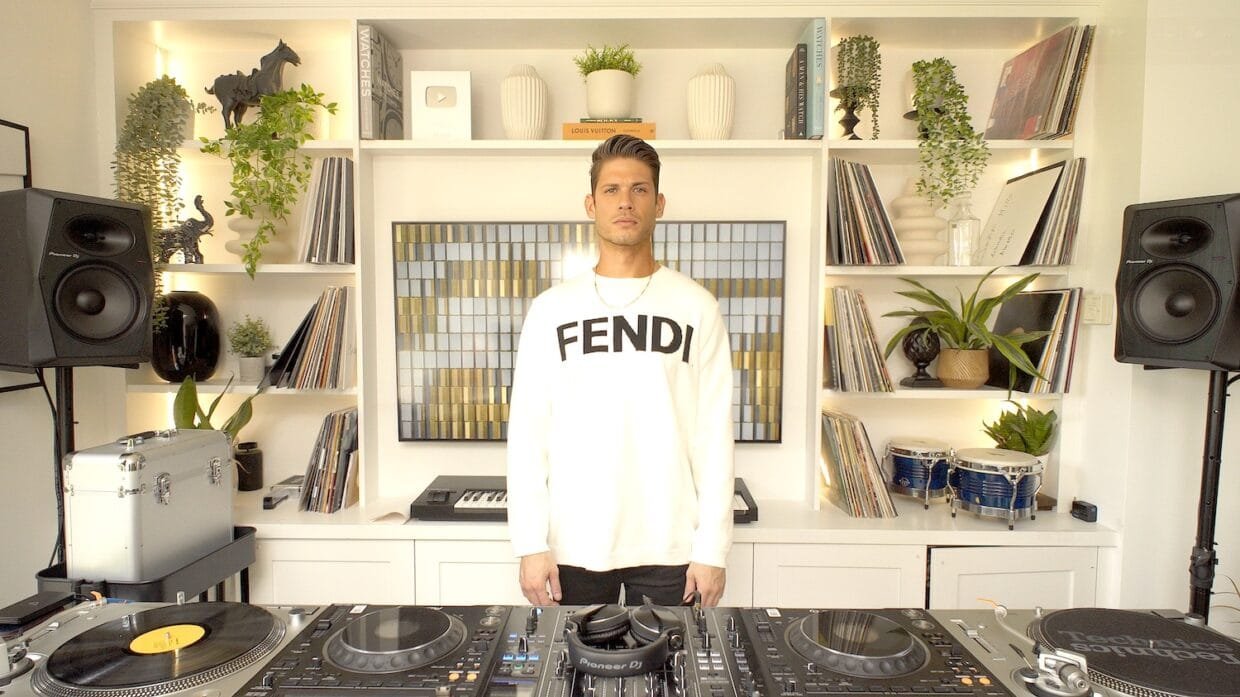
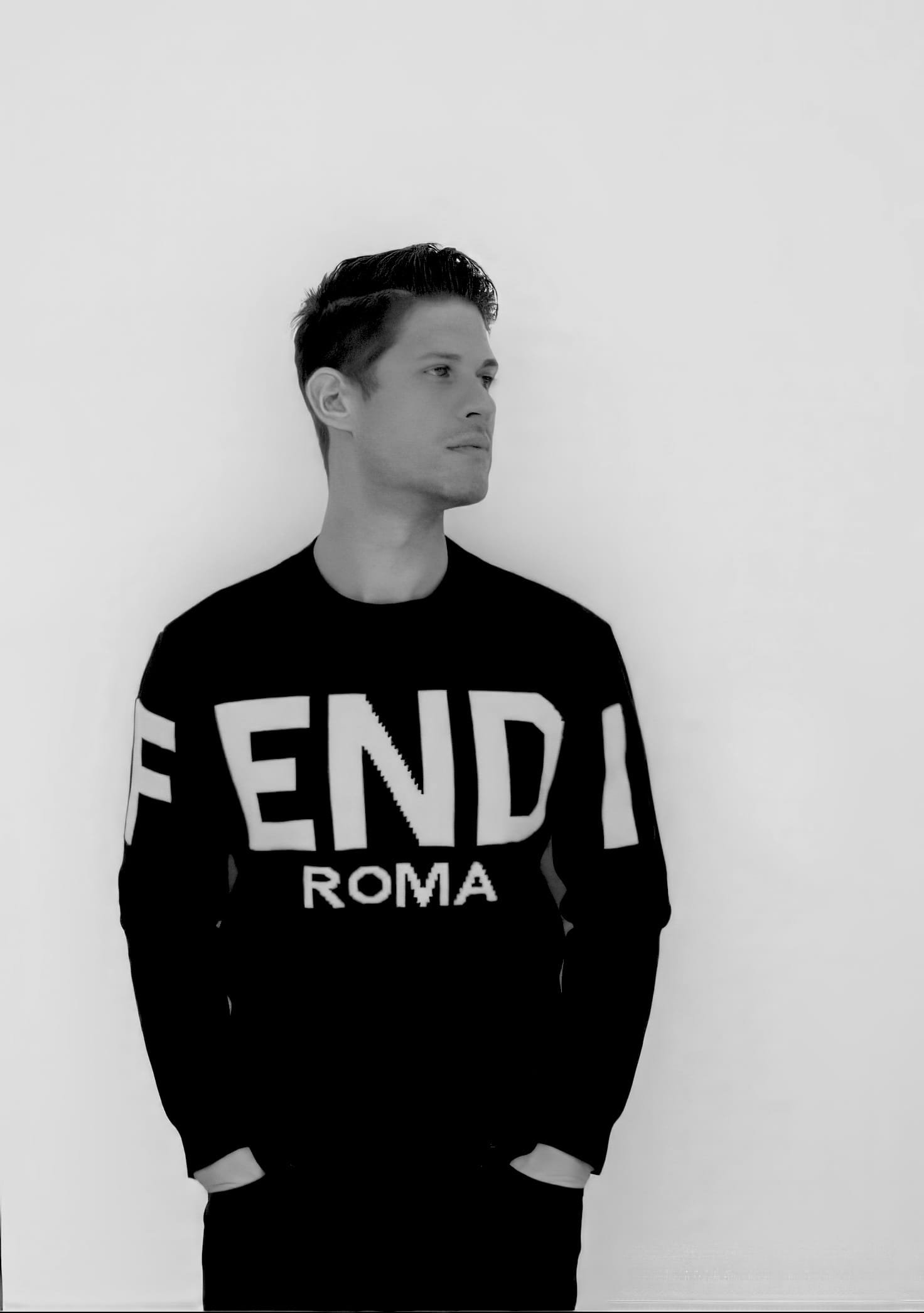
Alejandro Zamora has built a world around honesty, rhythm, and connection. His project, The White Collar Project, began not as a career move but as a lifeline during a period of depression, where the ritual of vinyl mixing offered focus and renewal. What started as unedited sets uploaded quietly to YouTube has since grown into a global community, expanding into music, streetwear, and visual art. To learn more about his journey and vision, we caught up with Alejandro for an interview.
The White Collar Project was born from a battle with depression. How did returning to vinyl mixing help you reconnect with yourself?
Mixing vinyl became my way to slow down. Beatmatching made me focus and it pulled me out of my head and into the moment. A type of meditation. It wasn’t a magic fix, but it gave me something steady to hold onto. Every time I locked two records together, it felt like proof I was still here and on the right path.
Your sets cover everything from house and techno to Latin grooves and soul. What draws you to such a wide spectrum of sounds?
I grew up in Caracas with salsa records playing at home, then later got shaped by the techno scene in London. My sets are basically a mix of those two worlds. Rhythm from my roots, machines from the clubs. If a record feels honest, whether it’s swing, grit, or soul, it earns a place in the bag.
You’ve built a community of over 160,000 YouTube subscribers with almost no promotion. Why do you think these mixes resonate so deeply?
They’re just long vinyl sets, no tricks or heavy edits. The sets are real. I don’t chase trends; I just play how I feel in the moment. People can tell when it’s real, and I think that’s what connected. The channel grew because it felt human, not polished or pushed.
Vinyl-only mixing feels almost rebellious in the digital age. What does the physicality of vinyl give you that digital never could?
Vinyl gives you friction and weight. There’s risk in it though. You can’t just scroll and drop a track; you have to really feel it. When two records lock together by touch, it’s a rush no screen can match. I’m not against digital at all, I’ll use it if it really helps the story but vinyl keeps me honest and fully present with the music.
The White Collar Project has expanded into streetwear and art. How do fashion and visual art complement the music you create?
For me, they’re all connected. Music is flow and energy, clothes are texture and attitude, visuals are space and balance. Put them together and you build a whole world. That’s why The White Collar Project had to live across music, design, and art. It’s all the same language expressed in different ways.
You’ve said music gave you a voice when words failed. How do you see electronic music functioning as therapy for both artists and audiences?
For artists, it’s the ritual that saves you. The ritual of picking records, cueing, blending. For listeners, it’s like company without pressure: a pulse in the dark that says, “you’re not alone.” When someone messages saying a mix helped them, it feeds back and it keeps me going. That exchange is what The White Collar Project is built on.
London, and especially Shoreditch, has long been a hub for underground sounds. How has the city shaped your creative vision?
Shoreditch showed me contrast. You’d have a tiny basement club next to an art gallery, or a second-hand shop next to a brand new studio. That clash of grit and gloss taught me to love opposites. It’s like dropping Latin rhythms over Detroit style drums. The streets there always felt like a mixtape. I love it!
Looking ahead, what’s next for The White Collar Project—new collaborations, live events, or directions you’re excited to explore?
Right now, I see three paths:
– Vinyl-first live sessions with guest musicians. Small rooms, no screens, just proper sound.
– A/V editions of the mix series, pairing sets with original visuals and art drops to match the mood.
– The label arm, pressing 12″s from artists who tell stories through groove, built for long blends.
And through it all, I’ll keep building the community side around mental health because this project started as a lifeline, and that will always stay at its core.