


Alfred Hitchcock’s career began in a former power station beside the Regent’s Canal in Hoxton. The building on Poole Street had been built to power the Great Northern and City Railway. In 1919 it was turned into a film studio, and Hitchcock, then a young advertising copywriter from Leytonstone, was hired to design the title cards for its silent films.
It was called Islington Studios, although it stood on the Shoreditch side of the borough line. The Friends of Islington Museum describe Poole Street as “a quiet road on the border between Islington and Shoreditch (now Hackney)”.
From title cards to director
The studio was opened by Famous Players-Lasky, the production arm of Paramount, which wanted a British base. Hitchcock had sent it drawings for title cards and was taken on in 1919. English staff there were encouraged to try other jobs, and he also worked as a co-writer, art director and production manager on silent films.
When the Americans pulled out, Michael Balcon’s new company, later Gainsborough Pictures, took over the studio. According to the Friends of Islington Museum, it paid £14,000 in instalments. Hitchcock stayed on as an assistant director, and Balcon later gave him his own films to direct.
The Lodger, released in 1927, was his first thriller and the film that made his name. It also contains his first recognisable cameo. In its final scene the lodger is chased by a mob, and the museum’s history says that mob was played by Poole Street residents, each paid half a crown for 30 minutes of filming.
A train across Europe, filmed in Hoxton
The studio’s biggest success of the 1930s, the museum says, was Hitchcock’s The Lady Vanishes (1938), a mystery set on a train crossing Europe. The whole film was shot at Gainsborough’s Poole Street studio, according to the Friends of Islington Museum.
The studio had a dangerous feature. Its chimney was said to be the third tallest in London, and when war broke out in 1939 there were fears that a bomb would bring it down through the roof. Production moved for a time to Gainsborough’s other studio at Lime Grove in Shepherd’s Bush.
Rank closed the studio in 1949. The building became a warehouse for a whisky firm and later for carpets.
What is there now
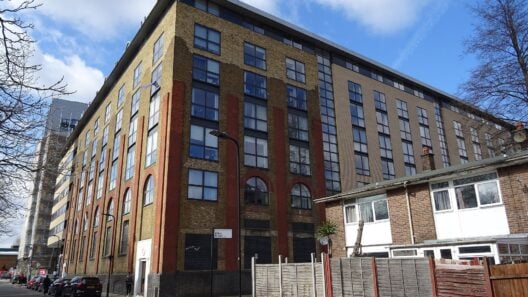
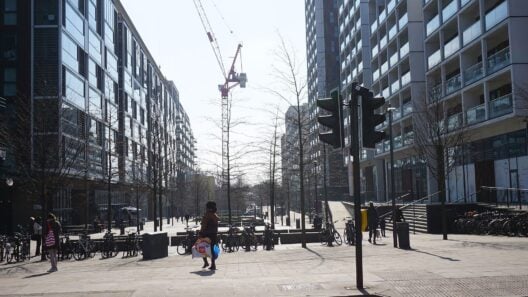
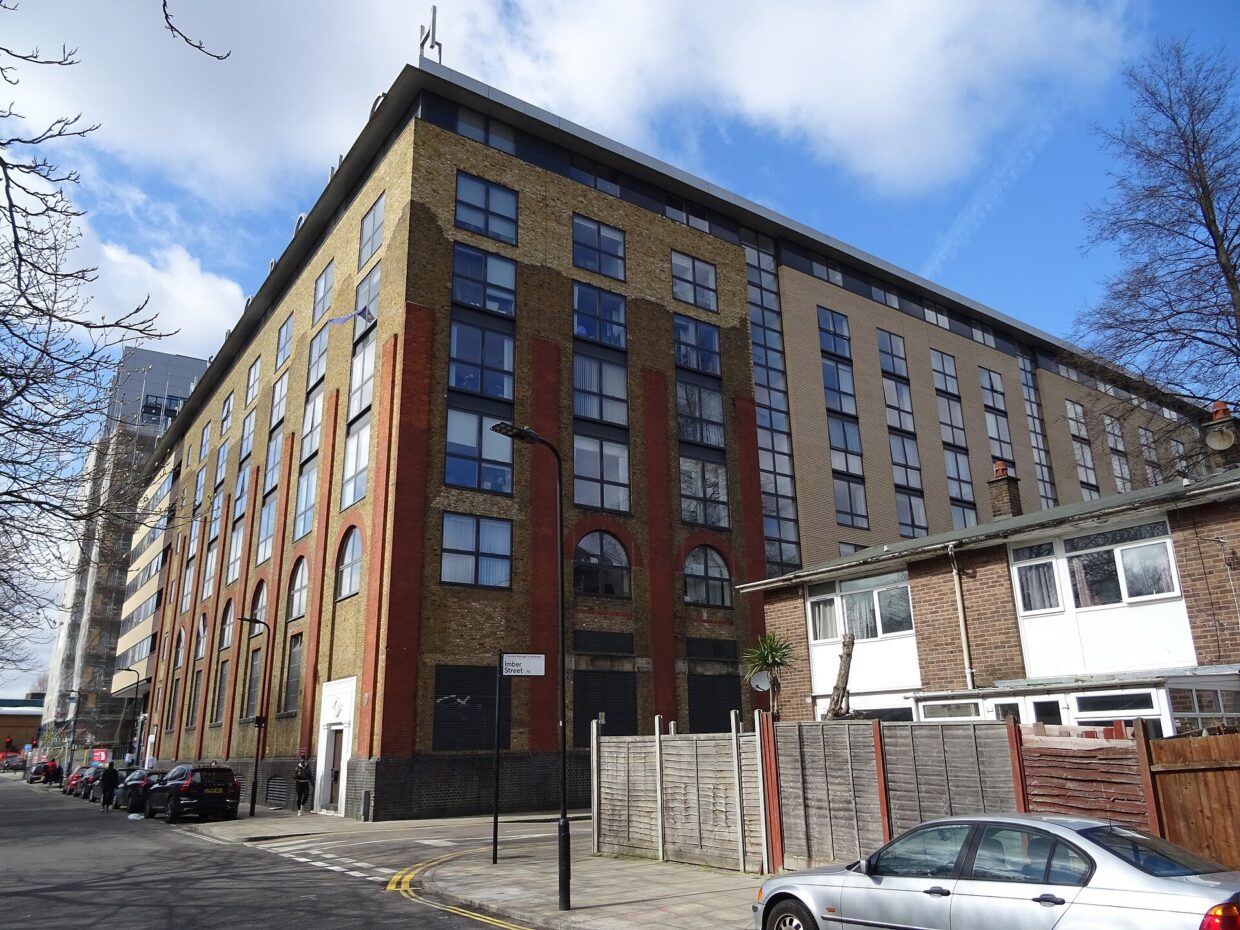
The site was turned into flats, also called Gainsborough Studios, designed by Munkenbeck and Marshall and completed in 2004. Before the work, the Almeida Theatre staged two Shakespeare productions with Ralph Fiennes in the empty building in 2000, and a Hitchcock season closed it in 2003.
A large sculpture of Hitchcock’s head by Antony Donaldson stands in the courtyard. A Hackney Council plaque on the Poole Street front marks the studio, though the museum points out that it wrongly lists The Wicked Lady, which was filmed at Lime Grove.