



For two centuries a private asylum stood on Hoxton Street. Hoxton House took its first patient in 1695 and closed in 1902, and in 1815, the year Parliament investigated it, it held 484 people.
Of those, 16 were Royal Navy officers and 136 were seamen or marines, according to Lost Hospitals of London, which draws on the evidence given to the House of Commons select committee on madhouses in 1815. The other 332 were private patients and paupers sent by parishes.
A district known for its madhouses
The Miles family bought the business in 1715 and kept expanding it. After 1784, Sir Jonathan Miles joined neighbouring properties to form the Hoxton House Lunatic Asylum, the Survey of London records. Lost Hospitals of London says it then had 2 acres of grounds between Pitfield Street and Kingsland Road.
Hoxton had several such houses, including Whitmore House and Holly House. By 1816 Hoxton House had nearly 500 patients and was larger than either Bethlem or St Luke’s, the historian Elaine Murphy wrote in History Today.
The Navy sent sailors who had become insane in service from 1792. A naval surgeon, James Veitch, found the bedrooms “close, crowded and unventilated”, and some patients were chained to benches, Lost Hospitals of London records. Murphy wrote that the proprietors would put three in a bed “when pushed”.
Charles Lamb’s six weeks
The essayist Charles Lamb was a patient there in 1795-96, according to Murphy. In May 1796 he wrote to his friend Samuel Taylor Coleridge: “The six weeks that finished last year and began this, your very humble servant spent very agreeably in a madhouse at Hoxton. I am got somewhat rational now, and don’t bite any one.”
James Hadfield, who tried to shoot George III in 1800, was also held at Hoxton House, Murphy wrote, along with other criminal patients from Newgate.
What is left
The Navy moved its patients to Haslar in Gosport in 1818, but the asylum went on taking private and pauper patients. It was licensed for 325 people in 1871 and closed in 1902. The London County Council built Hoxton House school on the site in 1911.
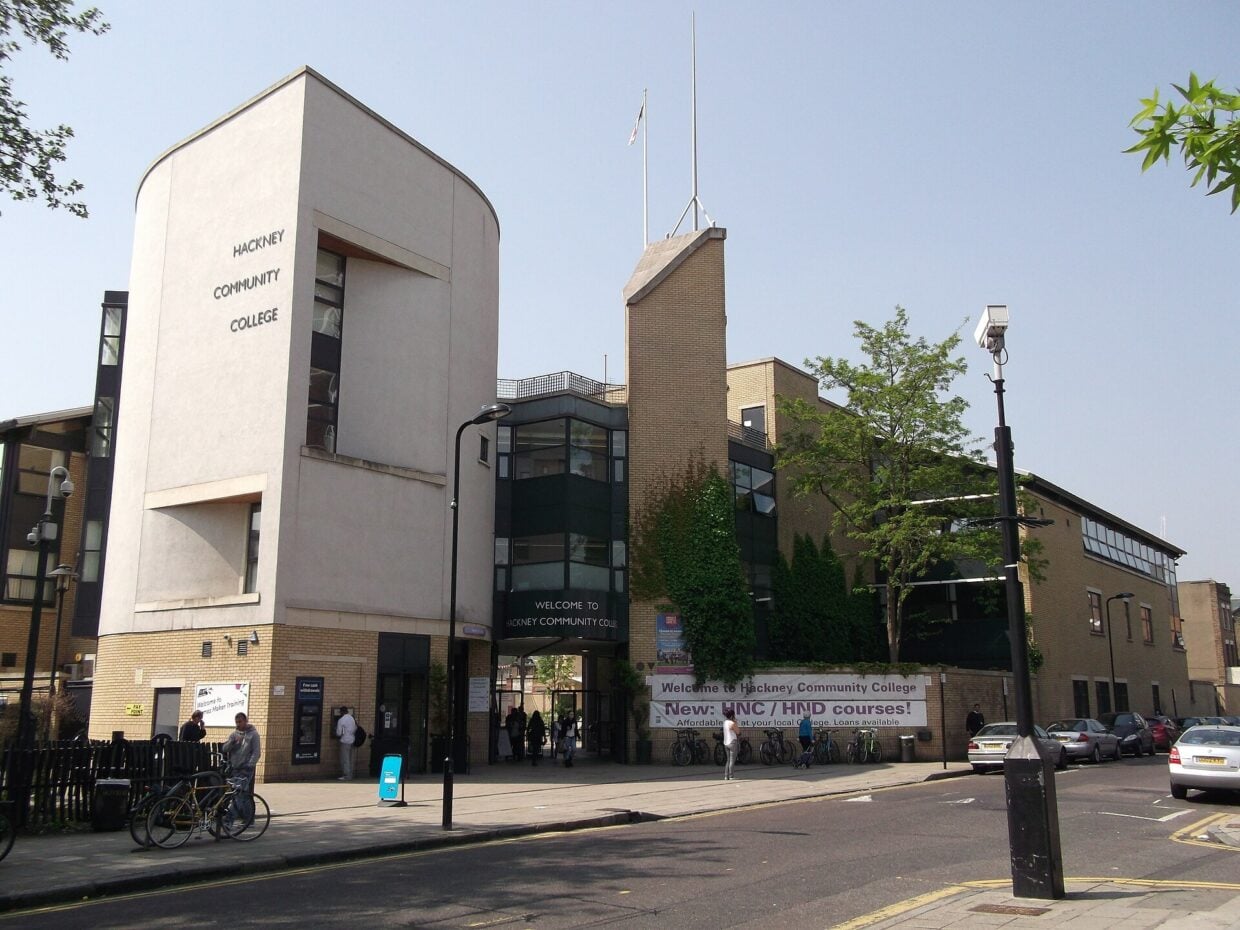
The only building that survives is 34 Hoxton Street, a four-storey brick house that is now flats. Most of the site is taken up by the college whose main entrance is on Falkirk Street.