


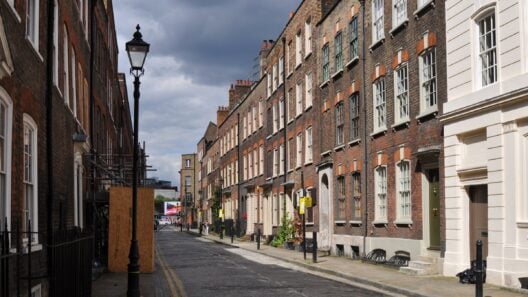
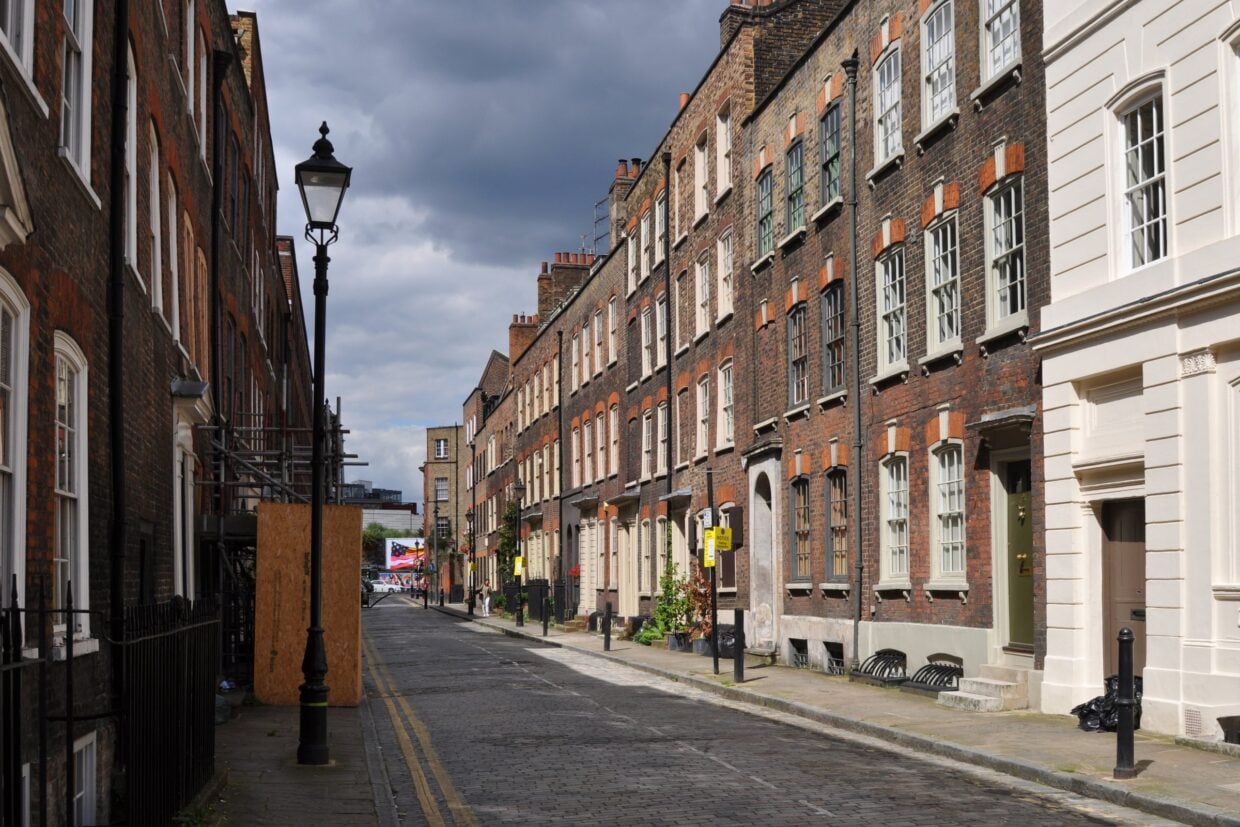

In 1977 the architectural historian and BBC presenter Dan Cruickshank bought a Spitalfields house built in 1727. He paid a reported £15,000 for a building that had stood empty for about 20 years and whose owner wanted it pulled down.
Cruickshank gave the year himself in a Daily Mail Weekend interview published on 7 April 2017. The price, the empty years and the demolition plan come from his own account in The Telegraph of 18 August 2011, published under the heading World of Dan Cruickshank, historian and broadcaster.
“I bought this house in 1977 while campaigning against the demolition of 18th-century houses here,” he told the Mail. “It was a dramatic battle and I squatted in some properties with other members of The Spitalfields Trust to stop the developers.”
The Mail interview, by Angela Wintle, ran under a headline describing him as the historian and TV presenter, 67, in the dining room of his Georgian home in east London. Its caption said: “Dan bought his home in East London in 1977 while campaigning against the demolition of 18th-century houses there”.
The Spitalfields Trust is the conservation body Cruickshank helped start. By his own account it bought east London houses that were at risk of demolition, repaired them and sold them on.
The Telegraph said he was a founding member of Save Britain’s Heritage, the conservation campaign group, in 1975, when he was 25, and that he and other Georgian building enthusiasts campaigned to save Georgian houses in east London from demolition, sometimes squatting in the properties. The paper described him as a television presenter and author of books on historical architecture, and said he was still an active member of the Georgian Group.
Where the money came from
Cruickshank told the Telegraph how the first purchases were funded. “I co-wrote with Colin Amery a book called The Rape of Britain in 1975, about how redevelopment was ruining British towns,” he said.
“Patrick Trevor-Roper, the surgeon and philanthropist, was so impressed that he gave us £10,000 to start the Spitalfields Trust. So we bought our first house, a massive mansion on Fournier Street, that was at risk from demolition. We did it up and sold it for a profit.”
That Fournier Street mansion was the Trust’s first purchase and a separate building from the one Cruickshank went on to live in. Neither the Mail nor the Telegraph names the street of his own house. Other historic buildings in the same east London streets have their own stories, including Truman’s Black Eagle Brewery on Brick Lane and Angela Burdett-Coutts’s Columbia Market, opened in 1869.
His account continued: “We did that with a few properties, then I bought this house, which was built in 1727, for £15,000. It had been empty for 20 or so years and the owner wanted to demolish it.”
Listing is the official designation given to buildings of special architectural or historic interest. Cruickshank said the house already carried it. “It was listed as a historic building, but no one cared until I bought it,” he told the Telegraph.
His chronology runs from 1975 to 1977. The Rape of Britain and Save Britain’s Heritage both came in 1975, Trevor-Roper’s £10,000 followed, then the Fournier Street mansion and a few more properties, then the 1727 house in 1977.
“This house was built in 1727 and first occupied by French Huguenot silk weavers,” Cruickshank told the Mail. The Huguenots were French Protestants.
By 1977 the house was 250 years old, and on his own account it had spent about 20 of those years standing empty.
A different house from 18 Folgate Street
Cruickshank’s house is a private home, and the two interviews do not give its address. Made in Shoreditch reported on 16 November 2026 that Dennis Severs bought 18 Folgate Street for £18,000 in 1979, two years after Cruickshank’s purchase. Severs was a different owner at a different address, and that house is still open for silent visits lasting 45 minutes.
The Mail said Cruickshank lived in the house with his partner, the painter Marenka Gabeler, and their son Alexander, who was then nearly three.
The Telegraph gave his age as 61 in August 2011. He told the paper how Spitalfields had changed since he moved in.
“Spitalfields is such a different place now from when I moved in. Back then the market worked all night, lorries came in from all over Europe, barrows went up and down the cobbles at all hours, and in the morning the streets were full of abandoned fruit and vegetables,” he said. “I would collect the crates and burn them to keep warm.”