



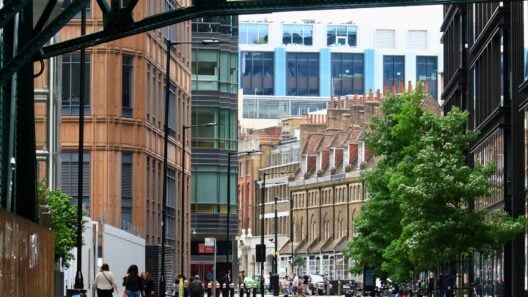
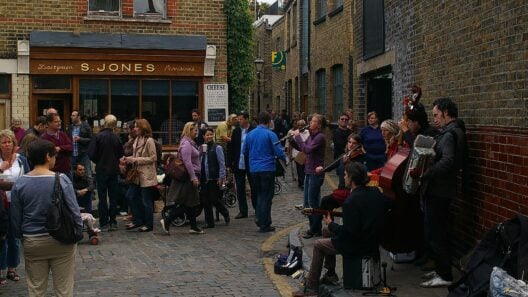
Brick Lane runs north from Whitechapel, through Spitalfields and the eastern edge of Shoreditch, to beyond Bethnal Green Road. In one walk it takes in 24-hour beigel bakeries, curry houses, one of the UK’s largest vintage markets, a former brewery turned creative complex and a single building that has been a church, a synagogue and a mosque.
This guide covers what is on the street in 2026, with every named business checked against its own website or listing in October, and the history that explains why the street looks the way it does.
A short history of Brick Lane
The street is named after the brick and tile making that once went on in the fields here. Its modern character comes from three waves of people who settled around it.
The Huguenots. French Protestant refugees settled in Spitalfields in large numbers from the late 17th century, many of them silk weavers. In 1743 to 1744 they built a chapel, the Neuve Eglise, on the corner of Brick Lane and Fournier Street.
Jewish East London. By the late 19th century the area was home to a large Jewish community, many of them from Eastern Europe. In 1897 the same corner building became a synagogue, according to its Historic England listing.
Bangladeshi Brick Lane. From the second half of the 20th century, families from Bangladesh, many from the Sylhet region, made the area their home, and the southern end of the street became known for its curry houses. In 1976 the building on Fournier Street became a mosque, the Brick Lane Jamme Masjid. It is listed at Grade II*. On 4 May 1978 Altab Ali, a Bangladeshi textile worker, was murdered in a racist attack near Brick Lane. The park near the southern end of the street was renamed Altab Ali Park in 1998 in his memory, according to Tower Hamlets Council.
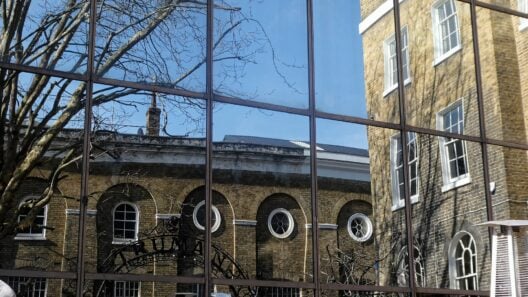
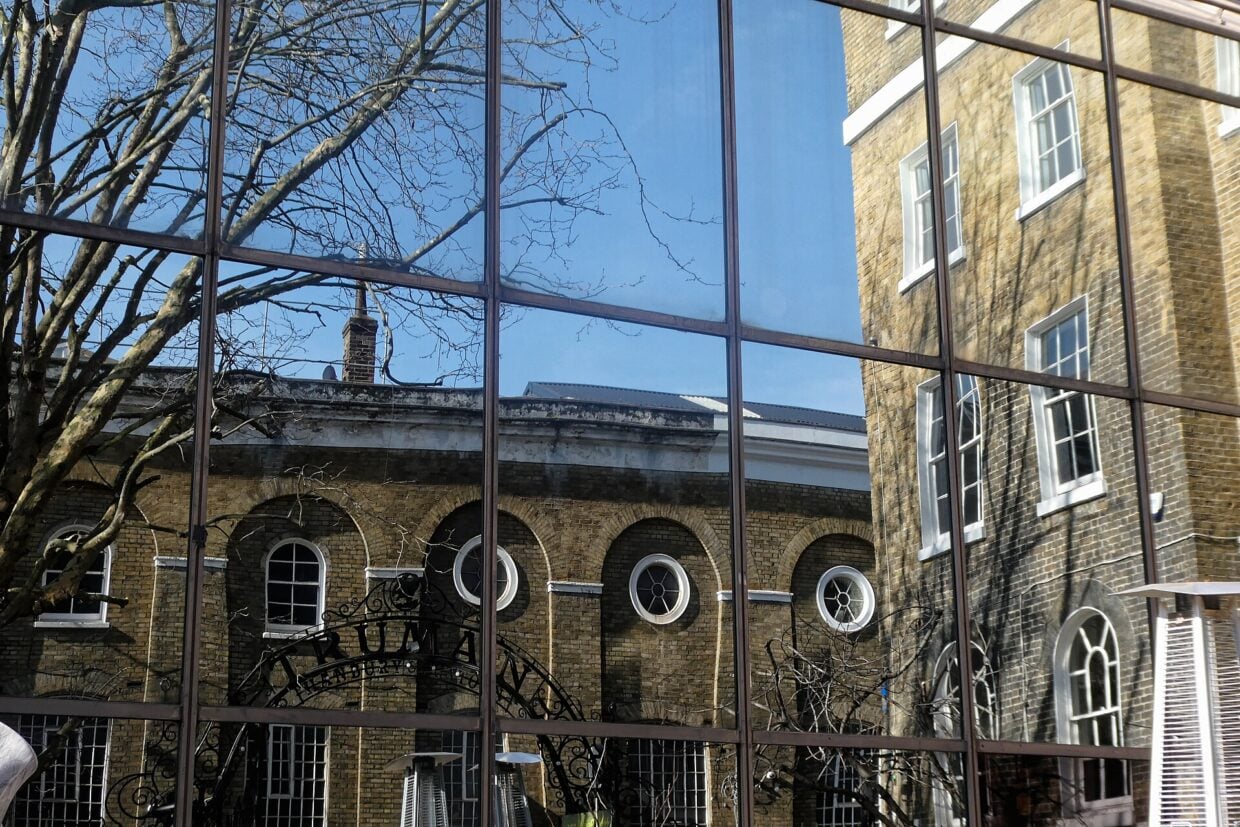
The brewery. Brewing on Brick Lane goes back at least to 1683, when Joseph Truman is recorded as a brewer “of brick lane”, according to the Survey of London. The Black Eagle Brewery grew into one of London’s largest. It closed in 1989 and the site, now known as the Old Truman Brewery, was turned into offices, studios, shops, markets and event spaces.
Beigels at any hour
The northern end of Brick Lane is famous for two beigel shops a few doors apart.
Beigel Bake, 159 Brick Lane, E1 6SB. Open 24 hours a day, seven days a week, and baking since 1979. The salt beef beigel is the usual order.
The Beigel Shop, 155 Brick Lane, E1 6SB. The shop with the yellow sign, also open 24 hours, 365 days a year.
Curry houses and other places to eat
Most of the curry houses are on the southern stretch, below Hanbury Street, under the Banglatown arch. Many offer bring-your-own drinks.
Aladin, 132 Brick Lane, E1 6RU. A long-running curry house with a bring-your-own-drinks policy. Open from noon to 11pm Monday to Thursday, to midnight on Friday and Saturday, and to 10pm on Sunday.
In September 2025 the Brick Lane Curry Festival brought more than 22,500 people to the street.
The food offer on the street is no longer only curry.
Yun Gui Chuan, 76 Brick Lane, E1 6RL. Hong Kong-style rice noodles in a pork broth simmered for eight hours, open noon to 9pm Tuesday to Sunday. Its founder spoke to Made in Shoreditch.
Katsute100, 147 Brick Lane, E1 6SB. A Japanese tea room with a bookable tatami room in the basement, open 11am to 8pm daily. See the Katsute100 guide.
Upmarket, 83 Brick Lane, E1 6QR. Once the Sunday Upmarket, now a daily street-food hall with more than 40 traders inside the Truman Brewery.
For a wider choice, see the best restaurants in Shoreditch and the vegan restaurants guide.
Vintage, records and books
Brick Lane Vintage Market, F Block, 85 Brick Lane. The Truman Brewery describes it as the largest vintage market in the UK, with more than 100 traders.
Rokit has two shops on Brick Lane, and Vintage Basement is at 7 Cheshire Street, the quieter road off the top of Brick Lane. Atika is round the corner at 55 to 59 Hanbury Street.
Backyard Market, 146 Brick Lane, runs at weekends with independent fashion, jewellery and art. Next door, the Tea Rooms sells antiques, books and records on Saturdays and Sundays.
Rough Trade East on Dray Walk, inside the Old Truman Brewery, is one of London’s biggest independent record shops. Made in Shoreditch wrote about the shop in 2013.
Brick Lane Bookshop, 166 Brick Lane, is an independent bookshop, and Libreria is at 65 Hanbury Street.
The vintage shops guide and the Shoreditch shopping guide have more.
Street art
The side streets off Brick Lane, especially Hanbury Street, Fashion Street, Princelet Street and the area around Sclater Street, carry some of East London’s best-known murals. Pieces change often as walls are repainted. Made in Shoreditch has interviewed several artists who have painted in the area, including Mr Cenz and the Brazilian artist Cranio. The self-guided Shoreditch street art walk gives a route that starts close to Brick Lane.
Nights out
93 Feet East, 150 Brick Lane, inside the old brewery, puts on gigs and club nights. Made in Shoreditch marked 25 years of 93 Feet East.
All Star Lanes on Brick Lane has six bowling lanes, arcade games, karaoke booths and bars, and opens until midnight or later most nights.
For more late venues, see the Shoreditch nightlife guide and the rise of Shoreditch listening bars.
Brick Lane in the archive
Made in Shoreditch has been writing about Brick Lane since 2011. The archive includes the poet Sammy Brough’s Brick Lane poem, a 2013 piece on the changing faces of Brick Lane, and an interview with the collector and artist Viktor Wynd. In late 2025 artists turned part of the street into a trail of murals and installations to promote the film Wicked: For Good, covered in Wicked Yellow Brick Lane.
Getting there
Shoreditch High Street station on the London Overground is the closest to the northern end of the street. Aldgate East on the District and Hammersmith & City lines is closest to the southern end. Liverpool Street is about a ten-minute walk away. Sunday is the busiest day, when the markets are all open and the street is crowded from late morning.
On a Sunday, Brick Lane combines well with Columbia Road Flower Market, a 15-minute walk north, which trades from 8am to 3pm.