


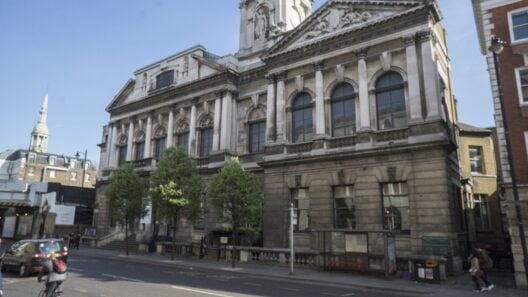
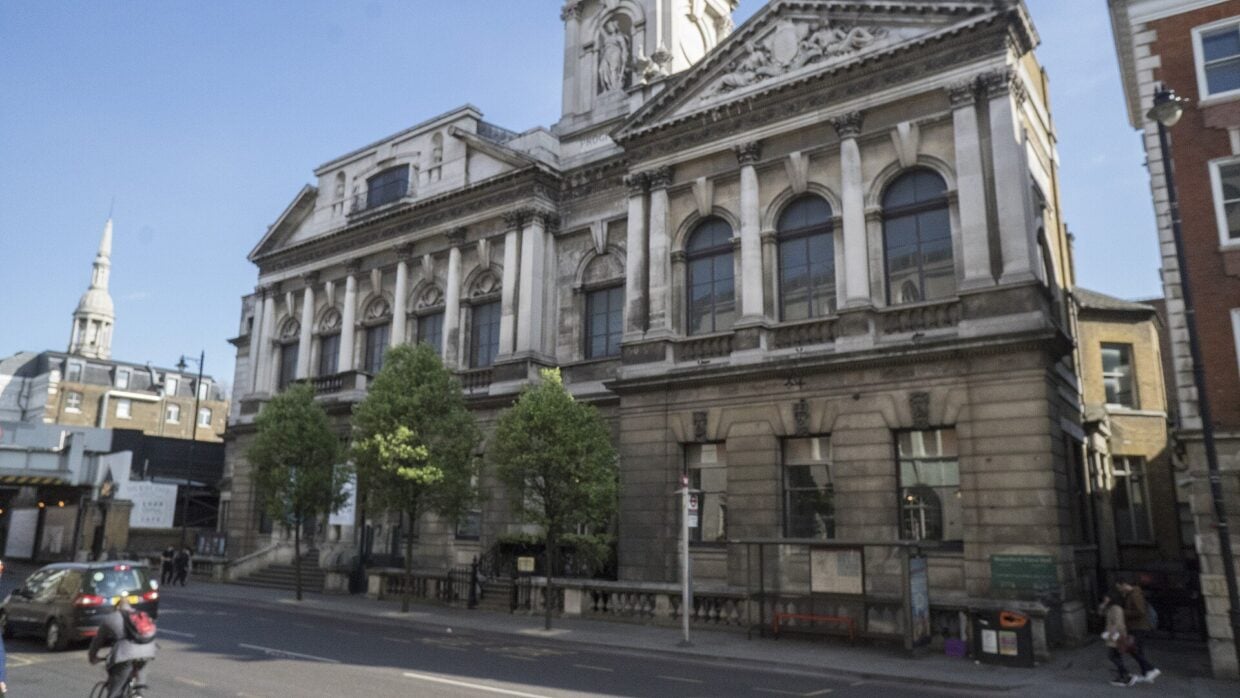
On Monday 12 November 1888, the inquest into the death of Mary Jane Kelly opened at Shoreditch Town Hall on Old Street. By the end of the afternoon it was over. The coroner heard 12 witnesses and the jury returned its verdict the same day.
Kelly, aged about 25, had been found dead three days earlier in her rented room at 13 Miller’s Court, off Dorset Street in Spitalfields. She is generally regarded as the last of the five canonical victims of Jack the Ripper. Her inquest was held in the Vestry, the room that is now the hall’s Council Chamber.
“This is not my district”
The hearing began with a protest from the jury. The Daily Telegraph’s report the next day records one juror saying: “I do not see why we should have the inquest thrown upon our shoulders, when the murder did not happen in our district, but in Whitechapel.” Another said: “We are summoned for the Shoreditch district. This affair happened in Spitalfields.”
The coroner for North-East Middlesex, Dr Roderick Macdonald, who was also an MP, refused to discuss it. “I may tell the jurymen that jurisdiction lies where the body lies, not where it was found,” he said. Kelly’s body had been taken to the mortuary next to St Leonard’s, Shoreditch Church, which was in his district. Once sworn, the jurors were taken to view the body there and the room in Miller’s Court, then returned to the hall.
Twelve witnesses
The witnesses included Joseph Barnett, who had lived with Kelly; her landlord, John McCarthy, who said she owed 29 shillings in rent; neighbours who had heard her singing and, later, a cry of “murder”; the police surgeon George Bagster Phillips; and Inspector Frederick Abberline, the last to give evidence.
Macdonald then told the jury it was “very unnecessary for two courts to deal with these cases, and go through the same evidence time after time”, and that the police were content to take the case on. The foreman said the jury had heard enough. The verdict was “wilful murder against some person or persons unknown”.
The speed was criticised. The Daily Telegraph said on 14 November that the inquest had closed before more witnesses could be heard. That evening, a labourer named George Hutchinson went to Commercial Street police station with a detailed description of a man he said he had seen with Kelly. The jury never heard it.
A crowded room
Shoreditch Town Hall had opened in 1866 as the parish’s vestry hall. A journalist at the Kelly inquest wrote that the room “barely sufficed to accommodate the jury and many representatives of the press who attended”, the hall’s own history project notes.
A week later, on 19 November, Kelly’s coffin left Shoreditch Church for St Patrick’s Roman Catholic Cemetery in Leytonstone. Several thousand people gathered outside the church to watch. The hall, now an arts venue, reaches its 160th year in 2026.